 Save
Save My neighbor Fatima taught me to make chorba on a cold winter afternoon when she noticed my apartment smelled like nothing but instant soup. She arrived with brown paper bags of ingredients and a knowing smile, saying this was the soup her grandmother made whenever anyone needed warmth from the inside out. Within an hour, my kitchen transformed—the spices bloomed, the broth deepened to amber, and I understood why she'd insisted it was worth the time. Now, whenever someone visits on a chilly day, this is what I make.
I made this for my work team during a particularly gloomy week, and watching everyone's expressions shift from tired to genuinely content as they tasted it reminded me why comfort food matters. One colleague asked for the recipe three times. Another admitted she'd been eating the same sad salad for lunch all month and hadn't realized how much she needed something warm.
Ingredients
- Lamb shoulder (500g, cut into 2cm cubes): This cut becomes beautifully tender when simmered and adds richness that makes the broth taste like it's been simmering for days, not just an hour.
- Onion (1 large, finely chopped): The foundation—don't skip this step or rush it, as it's what the whole flavor builds on.
- Carrots and celery (2 each, diced): These aren't just filler; they create a subtle sweetness that balances the spices.
- Potato and zucchini (1 medium potato, 1 zucchini, diced): They soften into the broth and give the soup body without heaviness.
- Tomatoes (1 large fresh, peeled, plus 400g canned): Use both—the fresh adds brightness and the canned provides depth and acidity to anchor the spices.
- Garlic (2 cloves, minced): Add it with the softer vegetables so it doesn't burn; burnt garlic turns bitter instantly.
- Tomato paste (2 tbsp): This is your secret depth—let it cook for a full two minutes with the spices so it loses any tinned edge.
- Fresh coriander and parsley (1 bunch each, chopped): Reserve half before chopping; you'll stir some in at the end and scatter the rest on top for brightness and freshness.
- Spices (cumin, coriander, paprika, cinnamon, black pepper, turmeric, chili flakes): These are the soul of the dish—toast them mentally as you add them, and don't be shy with the amounts.
- Olive oil (2 tbsp): Use good oil; you'll taste it in the first few minutes when you brown the lamb.
- Water or stock (1.5L): Stock makes it richer, but water lets the spices and meat shine; both are right.
- Vermicelli or small soup pasta (60g): Add this near the end so it doesn't become mushy and absorb all the broth.
Tired of Takeout? 🥡
Get 10 meals you can make faster than delivery arrives. Seriously.
One email. No spam. Unsubscribe anytime.
Instructions
- Brown the lamb slowly:
- Heat oil over medium heat and let it warm until it shimmers slightly. Add lamb in batches—don't crowd the pot or it steams instead of browning. Let each side spend a couple of minutes developing that golden crust. This takes patience, but it's where the flavor starts.
- Build the base:
- Once lamb is browned, add onions, garlic, carrots, celery, and potato. Stir occasionally and let everything soften for about five minutes. You'll know it's ready when the onions start to turn translucent and the whole pot smells inviting.
- Bloom the spices:
- Stir in tomato paste, then add all your spices and salt. Cook for exactly two minutes—you'll notice the smell shift from raw spice to warm and fragrant. This step cannot be rushed or skipped.
- Add the tomatoes:
- Stir in fresh diced tomato and canned tomatoes, then add the zucchini. The mixture will look chunky and textured; that's exactly right.
- Simmer gently:
- Pour in your water or stock and bring everything to a boil. Then immediately turn the heat down to low, cover the pot, and let it simmer for a full hour. Skim off any foam that rises in the first few minutes. The soup will darken, the lamb will become tender, and the flavors will meld into something deeper than their individual parts.
- Finish with pasta:
- Add vermicelli and simmer uncovered for ten to twelve minutes, stirring occasionally. The pasta should be tender but not falling apart; taste a piece to be sure.
- Final touch:
- Stir in chopped parsley and coriander, then taste and adjust salt. Sometimes a pinch more cumin or a tiny sprinkle of cinnamon rounds everything out perfectly.
 Save
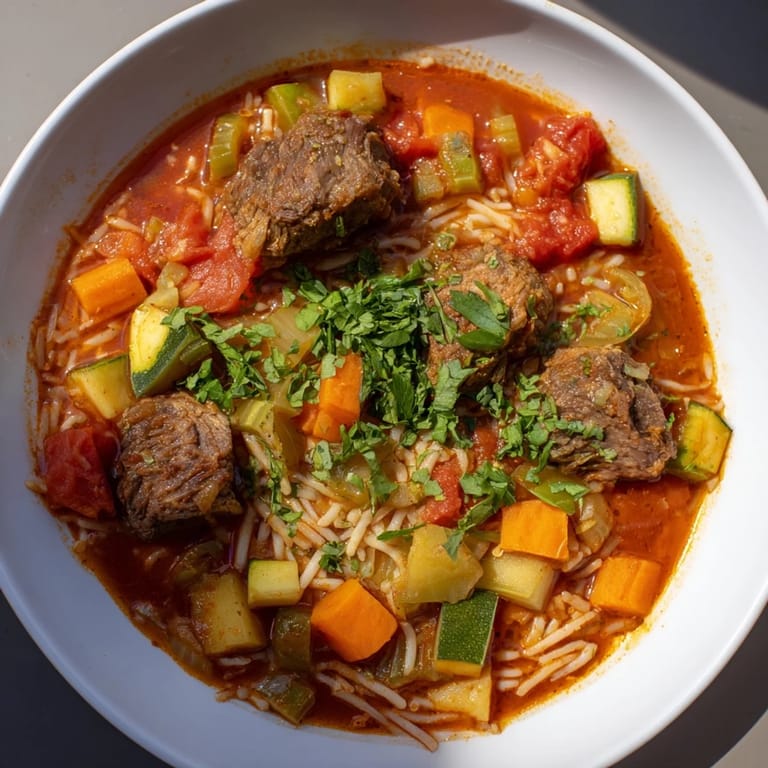
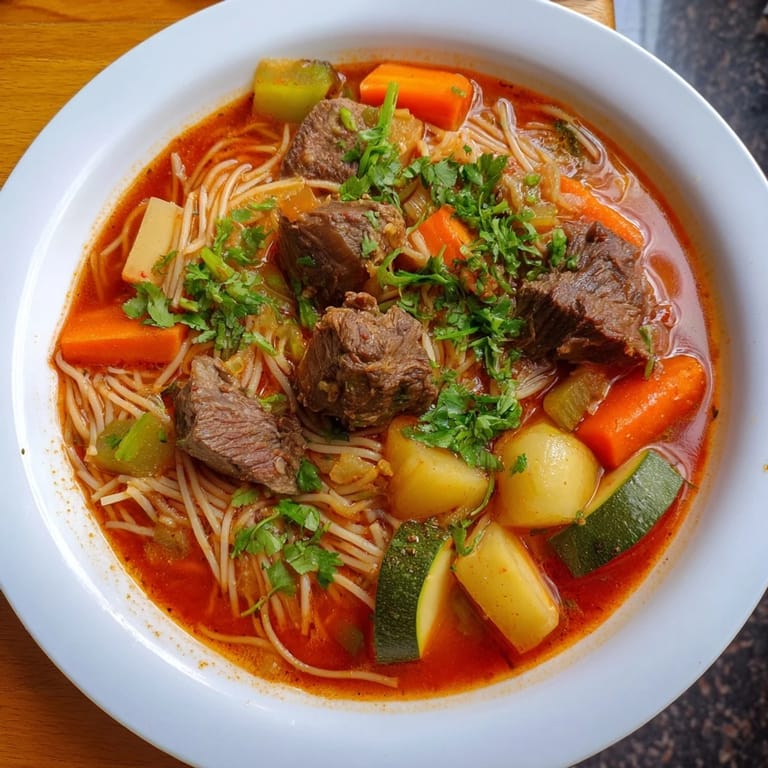
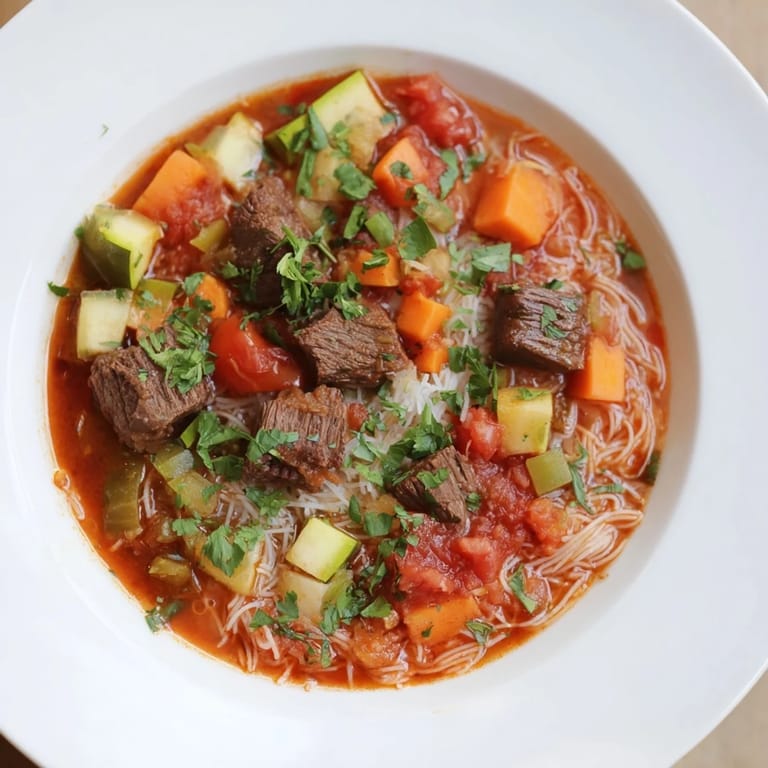
Save There's a moment near the end of cooking when you lift the lid and the steam hits your face, and the soup has transformed from separate ingredients into something whole and complex. That's when you know it's working. It's also when I usually pour myself a small bowl and sit down, just to be sure it's actually as good as my kitchen smells insist it is.
Variations That Work
Chorba is forgiving in ways that make it perfect for improvisation. Chicken thighs can replace lamb for something lighter and quicker—reduce the simmering time to thirty minutes since chicken doesn't need as long to become tender. Chickpeas add protein and texture without changing the essential character of the dish. Some people stir in a handful of white beans or lentils near the end. My coworker swears by adding a small red pepper for sweetness, and she's right. The spices are what tie everything together, so as long as you have cumin, coriander, and paprika, you're on solid ground.
Serving and Storage
Serve this soup in deep bowls with crusty bread, flatbread, or torn pita nearby for dipping. A squeeze of fresh lemon just before eating brightens everything and makes the spices pop. This soup keeps beautifully for three days in the refrigerator and actually improves as the flavors settle and deepen. Reheat gently on the stovetop, adding a splash of water or stock if it's thickened too much. It also freezes well for up to two months, though I rarely have any left to freeze.
Why This Tastes Like Home
Chorba exists in that perfect space between humble and impressive—it's simple enough to make on a Tuesday night but tastes like someone spent all day on it. The spice blend is warm rather than hot, comforting rather than challenging. Each spoonful has multiple textures: tender lamb, soft vegetables, silky broth, and that little resistance from the pasta. It's the kind of dish that fills you up but doesn't leave you heavy, and it always tastes better when shared than when eaten alone.
- Taste as you go—salt especially matters because it's what makes all the other flavors sing.
- If you have time, make it a day ahead and reheat it; the flavor deepens overnight.
- Save those herb garnishes for the end; they're what make each bowl feel fresh and bright.
 Save
Save This soup reminds me that the best meals are often the simplest ones—good ingredients, a little patience, and the warmth of sharing something nourishing with people you care about. Make it this week.
Recipe Questions & Answers
- → What cut of meat is ideal for this dish?
Lamb shoulder cut into small cubes works best, offering both tenderness and rich flavor after slow simmering.
- → Can I substitute the lamb with another protein?
Yes, chicken can be used for a lighter variation without compromising the dish's aromatic profile.
- → What spices give this dish its distinctive flavor?
Aromatic spices include cumin, coriander, paprika, cinnamon, turmeric, and a dash of chili flakes for mild heat.
- → How long should the soup simmer?
Simmering for about 1 hour allows the flavors to develop fully and the meat to become tender.
- → What type of pasta is used in this preparation?
Vermicelli or small soup pasta is added toward the end to provide a pleasant texture without overpowering the broth.
- → Are there any recommended garnishes?
Fresh chopped parsley and coriander, along with lemon wedges, enhance freshness and balance the rich flavors.