 Save
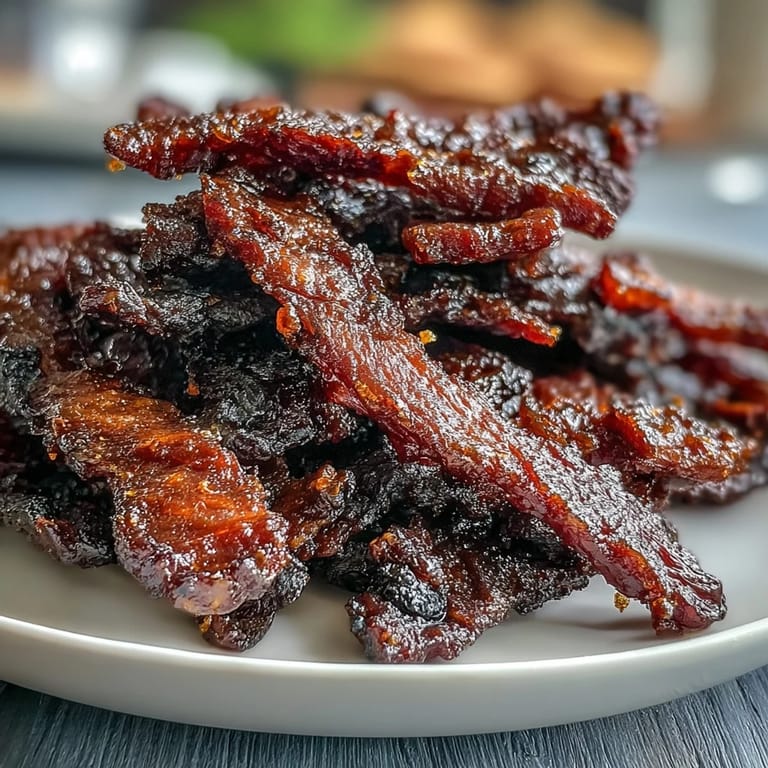
Save My neighbor showed up one Saturday with a smoker and a jar of black currant jam, convinced they belonged together in jerky. I was skeptical until that first bite—the sweet-tart fruit playing against smoky beef, with just enough heat creeping in at the end. Now I make batches whenever I need something that tastes like someone really thought about it, because honestly, most jerky tastes like it gave up halfway through.
I made this for my partner's work potluck and watched people gravitate toward it like they'd been waiting for permission to enjoy jerky that tastes adventurous. Someone actually asked for the recipe written down, which felt like winning something.
Ingredients
- Lean beef (top round, flank, or sirloin), thinly sliced against the grain: Slicing against the grain makes the final jerky tender to chew instead of tough, and using lean cuts means less fat that can go rancid during storage.
- Black currant jam or preserves: This is the secret weapon—it brings a sophisticated tartness and natural sweetness that balances the savory and smoky notes beautifully.
- Soy sauce (or tamari for gluten-free): Use tamari without apology if you're avoiding gluten; the flavor stays rich and the texture of your marinade stays consistent.
- Worcestershire sauce: The umami backbone that makes people think they're tasting something complex when really you've just layered flavors smartly.
- Apple cider vinegar: This cuts through the sweetness and brightens everything, plus it helps with the marinating process by tenderizing the meat slightly.
- Brown sugar, smoked paprika, garlic powder, onion powder: These build depth and warmth without overpowering the black currant's unique character.
- Black pepper, kosher salt, cayenne pepper: Season generously—the salt helps draw moisture out during smoking, while cayenne adds a finish that lingers pleasantly.
- Cherry wood chips: Cherry smoke is milder and slightly sweet, which pairs perfectly with the black currant without competing for attention.
Tired of Takeout? 🥡
Get 10 meals you can make faster than delivery arrives. Seriously.
One email. No spam. Unsubscribe anytime.
Instructions
- Make the marinade:
- Whisk black currant jam with soy sauce, Worcestershire, apple cider vinegar, brown sugar, smoked paprika, garlic powder, onion powder, black pepper, salt, cayenne, and water until everything dissolves into a smooth sauce. You want no lumps of jam—just a glossy, dark liquid that coats the back of a spoon.
- Marinate the beef:
- Submerge all the beef slices in that marinade, making sure nothing is peeking out. Cover and refrigerate for at least 8 hours—overnight is even better because the flavors deepen and the marinade starts breaking down the muscle fibers.
- Prepare for smoking:
- Pull the beef from the marinade and pat each slice dry with paper towels—this step matters more than people realize because excess moisture will steam the jerky instead of letting it dry properly. Discard the marinade.
- Arrange on racks:
- Lay beef pieces in a single layer on wire racks or dehydrator trays without overlapping; they need air circulation on all sides to dry evenly. If they touch, they'll stick together and the edges won't crisp.
- Set up your heat:
- Get your smoker or oven to 160°F and if you're smoking, add cherry wood chips according to your equipment's instructions. The low temperature is crucial because high heat will cook the jerky rather than dry it gently.
- Smoke and dehydrate:
- Let the jerky sit for 4 to 6 hours, flipping halfway through so it dries evenly on both sides. It's done when it bends without snapping but doesn't feel moist when you press it—there should be just a whisper of pliability left.
- Cool and store:
- Let everything cool to room temperature before sealing it away, because warm jerky trapped in a container will create condensation and invite mold. An airtight container in the fridge keeps it fresh for two weeks, or vacuum-seal it for a month.
 Save
Save There's something about making your own jerky that shifts how you think about snacking. It becomes something you reach for mindfully instead of absently, and honestly, that's when food tastes best.
Why Black Currant Works Here
Black currant is tart and slightly floral in a way that feels fancy but isn't pretentious—it doesn't overwhelm the beef like other jam flavors might. The tartness also acts as a natural preservative alongside the salt and smoke, which is why this jerky stays good for weeks. If you can't find black currant, you could experiment with blackberry preserves, but you'll lose that distinctive edge that makes people ask what they're eating.
The Smoking Technique That Changes Everything
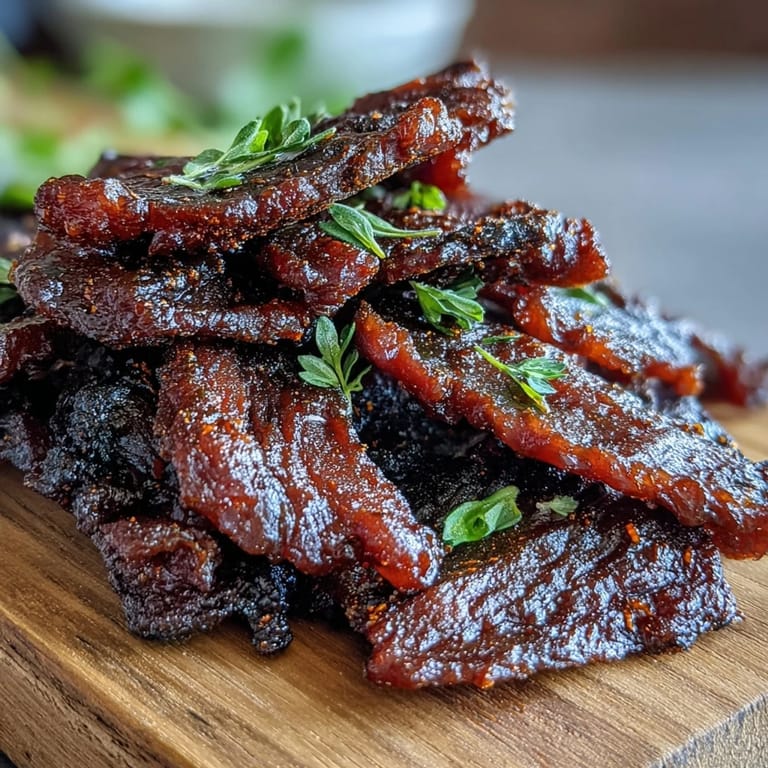
Most people either over-smoke their jerky until it tastes like an ashtray, or under-smoke it so the effort was pointless. The trick I learned is smoking hot and fast for the first 2 hours when the meat is still wet enough to actually absorb smoke flavor, then switching to just heat for the remaining time. This gives you that beautiful smoke ring without the burnt, one-note taste.
Storage and Serving
Store this in the coldest part of your fridge and it'll stay perfect for two weeks, though honestly it rarely lasts that long once people know you have it. For longer storage, vacuum sealing extends it to a month, and if you're feeling paranoid about moisture, throw a small silica packet in the container.
- Eat it straight from the container as a protein snack, or tear pieces into a salad for unexpected texture and depth.
- Pack it for hikes, road trips, or desk drawers because it travels better than fresh meat and tastes infinitely better than gas station options.
- Slice it thinner next time if you prefer it more tender, thicker if you like chewing resistance—jerky is forgiving once you know your preference.
 Save
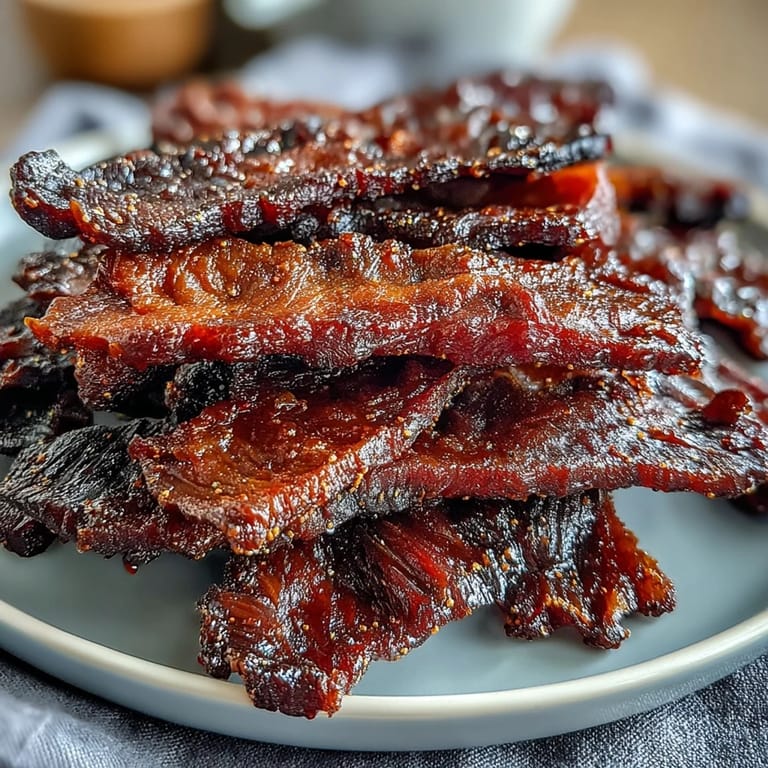
Save This jerky lives in that perfect space where you feel like you've made something sophisticated but it required nothing more than a smoker and patience. Once you've got a batch, you'll find reasons to make it again.
Recipe Questions & Answers
- → What cut of beef works best for jerky?
Lean cuts like top round, flank steak, or sirloin are ideal because they have minimal fat. Fat doesn't dehydrate well and can make the jerky spoil faster. Always slice against the grain for tenderness.
- → How long should I marinate the beef?
Marinate for at least 8 hours, though overnight (12–24 hours) yields the most flavorful results. The black currant and soy sauce need time to penetrate the meat fibers.
- → Can I make this without a smoker?
Yes, use your oven set to its lowest temperature (usually 160–170°F) with the door slightly cracked open. You won't get the cherry wood smoke flavor, but the texture will still be excellent.
- → How do I know when jerky is done?
Properly dried jerky should be dry to the touch but still slightly pliable when bent. It shouldn't snap or break. If it's still soft or moist, continue drying.
- → How should I store the finished jerky?
Cool completely, then store in an airtight container or vacuum-sealed bag in the refrigerator for up to 2 weeks. For longer storage (up to 1 month), vacuum seal and freeze.
- → Is this jerky gluten-free?
It can be—simply substitute tamari for the soy sauce and ensure your Worcestershire sauce is certified gluten-free. The black currant jam and spices are naturally gluten-free.