 Save
Save There's something about autumn that makes me crave butternut squash soup, but it wasn't until a friend brought a thermos of it to a chilly farmers market that I understood why it mattered so much. The golden color alone was enough to make you want to wrap your hands around the bowl, but that first spoonful—silky, warm, tasting like the season itself—changed how I thought about simple soups. I spent the next week trying to recreate it, tweaking proportions and testing different roasting times until my kitchen smelled like nutmeg and sage every evening. This soup became my answer to that question we all ask when the weather shifts: what do I want to eat right now?
My neighbor stopped by on a rainy afternoon and caught me mid-blend, and I couldn't help but pour her a bowl while it was still steaming. She sat at my kitchen counter for an hour, just talking and sipping, and mentioned that she'd never had squash soup that actually tasted like squash before—most places oversweetened theirs or turned it into something too heavy. That moment made me realize this recipe works because it lets the ingredient shine rather than burying it under cream and sugar.
Ingredients
- 1 large butternut squash (about 2.5 lbs), peeled, seeded, and cubed: Roasting unlocks the squash's natural sweetness; don't skip this step or you'll miss the whole point.
- 1 medium yellow onion, chopped: This adds depth without being noticeable—it's there to support the squash, not compete with it.
- 2 cloves garlic, minced: Just enough to whisper in the background; too much and you've lost the delicate balance.
- 4 cups vegetable broth: Use the good kind if you can; it makes a real difference when the ingredient list is this short.
- 2 tbsp olive oil: Split between roasting the squash and sautéing the base; it's what gives everything those golden, tender edges.
- 1 tsp sea salt: Add it in stages and taste as you go—this lets you control the final flavor.
- 1/4 tsp ground black pepper: Freshly cracked if possible; it brings brightness to all that warmth.
- 1/2 tsp ground nutmeg: This is the secret ingredient that makes people ask what you put in it; don't be shy.
- 1 tsp dried sage (or 1 tbsp fresh sage, chopped): Fresh sage is worth using if you can find it—it tastes like autumn smells.
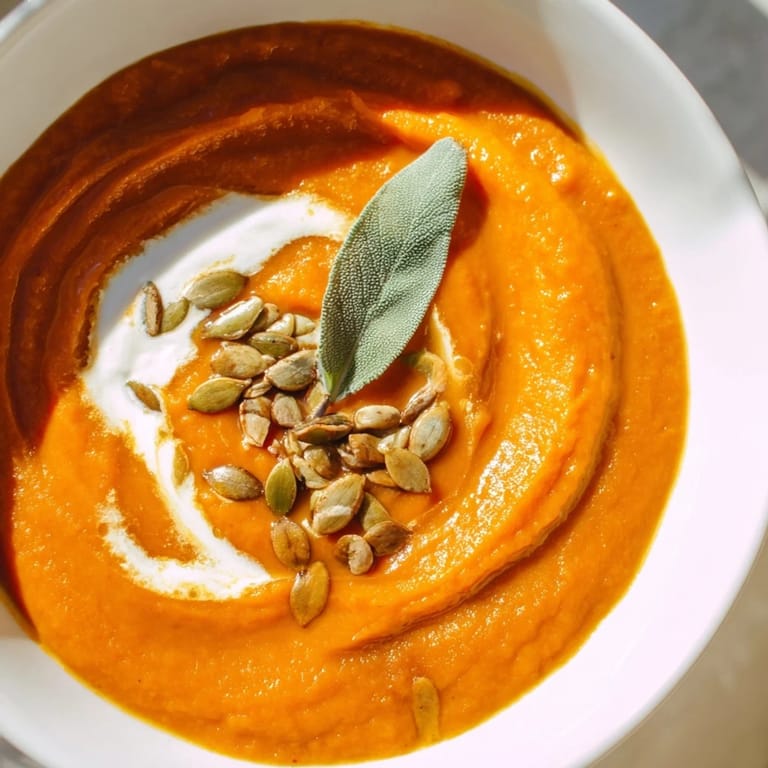
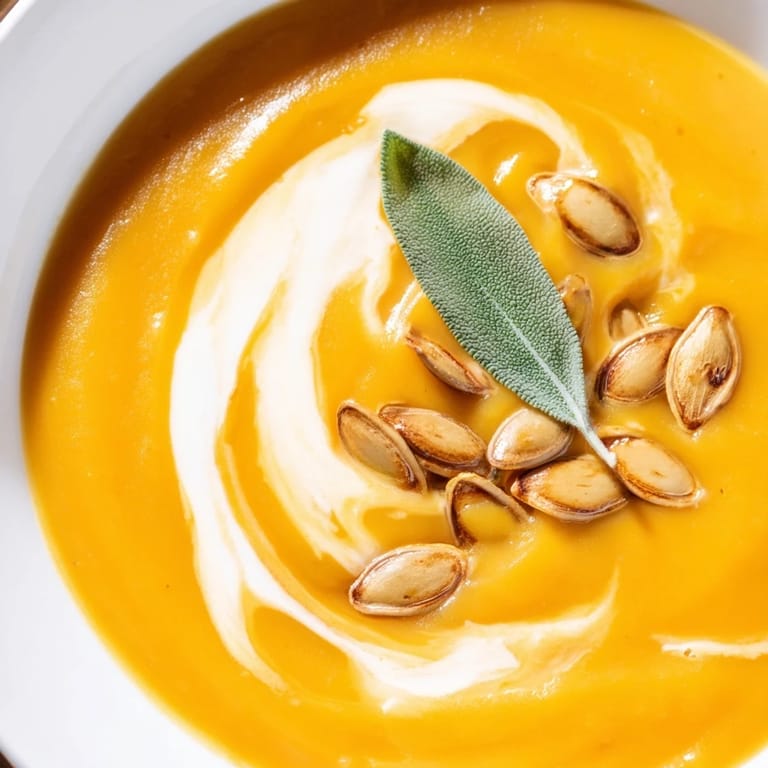
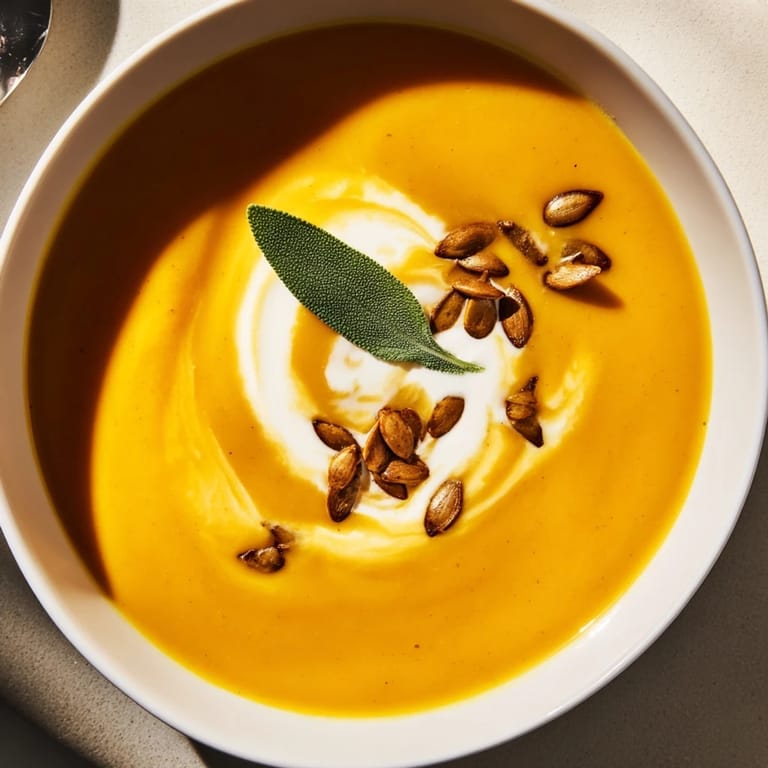
- 1/4 cup heavy cream or coconut milk, optional: A swirl just before serving adds richness and a beautiful visual contrast.
- Roasted pumpkin seeds, optional garnish: These add a satisfying crunch that makes people feel like they're eating something special.
- Fresh sage leaves, optional garnish: A leaf or two on top turns a weeknight dinner into something with presence.
Tired of Takeout? 🥡
Get 10 meals you can make faster than delivery arrives. Seriously.
One email. No spam. Unsubscribe anytime.
Instructions
- Get your oven ready and season the squash:
- Preheat to 400°F and toss your cubed squash with a tablespoon of olive oil, salt, and a pinch of pepper. The seasoning at this stage is important because it lets the squash brown properly and caramelize into something deeper than just roasted vegetables.
- Roast until the edges turn golden:
- Spread everything on parchment and slide it in for 30 to 35 minutes, stirring halfway through. You're looking for pieces that are fork-tender with caramelized corners—that's where all the flavor lives.
- Build the aromatic base:
- While the squash roasts, warm your remaining tablespoon of olive oil in a large pot over medium heat. Sauté the chopped onion until it turns translucent and soft, then add the garlic and let it cook just long enough to become fragrant.
- Combine everything and simmer:
- Add the roasted squash to the pot with the onion and garlic, then stir in the sage and nutmeg before pouring in your broth. Bring it to a boil, then lower the heat and let it simmer gently for about ten minutes so the flavors can get to know each other.
- Blend until silky:
- Remove from heat and use an immersion blender to turn everything into something smooth and velvety. If you're using a countertop blender, work in batches and be careful with the heat; the soup is still very hot.
- Taste and adjust:
- Take a moment to taste what you've made, then add more salt or pepper if it needs it. This is your chance to make it exactly right for your palate.
- Serve with intention:
- Ladle into bowls and top with a drizzle of cream, a scatter of pumpkin seeds, and a sage leaf if you have it. These finishing touches matter more than they seem to.
 Save
Save I made this soup for my sister during her first week in a new city, and she texted me months later saying she'd been trying to recreate it and finally gave up, asking me to teach her. We spent an afternoon cooking together, and I watched her face when she realized how simple it really was—how the magic wasn't in some secret technique but in patience and good ingredients. That's when food stops being just sustenance and becomes the thing that connects you to the people you love.
The Importance of Roasting
I used to think roasting was an unnecessary extra step, something fancy people did to show off. Then I made this soup both ways in the same week—one batch with boiled squash, one with roasted—and the difference was undeniable. Roasting concentrates the squash's natural sugars and coaxes out this deep, almost nutty flavor that boiling simply can't achieve. The caramelized edges add complexity, and somehow the soup just feels more substantial, more intentional. Once you taste the difference, you'll never want to make it any other way.
Sage and Nutmeg: The Flavor Pairing That Works
There's a reason these two spices show up together in autumn cooking—they were practically made for each other. The earthiness of sage grounds the soup while the warmth of nutmeg lifts it, and together they make the squash taste more like itself rather than masking it. I learned this the hard way by overseasoning a batch with cinnamon and clove, which turned it into something that tasted more like dessert. Now I understand that restraint is the real technique here; a gentle hand with the spices lets the squash be the star.
Making It Your Own
This soup is a canvas, and once you understand the foundation, you can paint however you like. Some days I want it as written, silky and pure; other days I add a pinch of cayenne for warmth, or a touch of apple cider vinegar for brightness. I've made it with coconut milk for friends who don't eat dairy, and it's just as lovely—creamier, almost, in a different way. The beauty of a simple recipe is that it gives you room to be creative without losing what makes it work.
- A swirl of crispy sage oil adds a sophisticated touch and smells incredible.
- For extra depth, toast the nutmeg and sage in the pot before adding anything else.
- Leftover soup freezes beautifully for up to three months—future you will be grateful.
 Save
Save This soup has become my autumn anchor, the thing I make when I want my kitchen to feel like a warm, safe place. Every time I smell the nutmeg and sage coming together, I'm reminded that sometimes the most comforting things in life are also the simplest.
Recipe Questions & Answers
- → How do I roast butternut squash evenly?
Cut the squash into uniform cubes and toss with olive oil and seasoning. Roast at 400°F, turning once halfway through to ensure even caramelization.
- → Can I substitute fresh sage with dried sage?
Yes, dried sage works well but use about one-third the amount of fresh sage to maintain balanced flavor.
- → What is the best way to achieve a silky texture?
Use an immersion blender or countertop blender to puree the cooked squash mixture until smooth and creamy.
- → How can I make this dish vegan-friendly?
Replace heavy cream with coconut milk for a dairy-free, vegan-friendly version without sacrificing creaminess.
- → What spices enhance the aromatic profile of this dish?
Nutmeg and sage provide warm, earthy notes that complement the natural sweetness of roasted butternut squash.