 Save
Save There's something about the way carrots soften in a pot that feels like watching a sunset happen in real time. My neighbor brought over a bunch of homegrown carrots one afternoon, bright orange and still dusted with soil, and I found myself standing at the stove wondering what to do with them besides the usual roast. That's when this soup revealed itself to me, born from curiosity and a can of coconut milk I'd been saving. The first sip felt like wrapping my hands around a warm mug on a chilly day, and I've made it dozens of times since.
I made this for my partner on a rainy Tuesday when neither of us felt like leaving the house, and somehow a simple bowl of soup became the whole evening. We sat by the window, watching water stream down the glass, and talked about absolutely nothing important while the soup cooled just enough to eat. That's when I realized certain foods aren't really about hunger at all.
Ingredients
- Olive oil: Start with just a tablespoon to gently coax the flavors from your aromatics without heaviness.
- Medium onion, chopped: This is your flavor foundation, and taking time to let it turn translucent makes all the difference.
- Garlic cloves, minced: Two cloves keeps things subtle, but don't skip the minute of cooking after adding them or they'll taste raw.
- Carrots, peeled and sliced: About 600 grams of these sweet vegetables is the heart of the soup; use the freshest you can find since they're the star.
- Small potato, peeled and diced: This adds body and helps the soup feel more substantial without cream.
- Vegetable broth: Use 750 milliliters of good quality broth, the kind that actually tastes like vegetables and not salt.
- Coconut milk, full-fat: One 400-milliliter can, and yes, full-fat is worth it because that's where the flavor lives.
- Ground ginger: A teaspoon of the dry version, or if you have fresh ginger, grate a tablespoon for a more vibrant warmth.
- Ground coriander: Half a teaspoon adds a subtle earthiness that makes people ask what the secret ingredient is.
- Ground cumin: Another half teaspoon that rounds out the spice profile with toasty depth.
- Chili flakes: Just a quarter teaspoon if you want it, barely noticeable but creates a gentle heat.
- Salt and black pepper: Season at the end when you can taste exactly how much you need.
- Fresh cilantro or parsley: Optional but transforms the bowl into something restaurant-worthy.
- Toasted coconut flakes: A handful scattered on top adds texture and reminds you what you're eating.
- Lime juice: A squeeze at the end brightens everything and makes the carrots taste even sweeter.
Tired of Takeout? 🥡
Get 10 meals you can make faster than delivery arrives. Seriously.
One email. No spam. Unsubscribe anytime.
Instructions
- Heat and soften:
- Warm the olive oil in your pot over medium heat, then add the chopped onion and let it sit for 3 to 4 minutes, stirring occasionally, until it becomes soft and translucent. You'll know it's ready when you can barely see the individual pieces.
- Build the aroma:
- Add your minced garlic and ginger, stirring constantly for just one minute until the whole kitchen smells like something good is happening. This brief moment of toasting brings out their warmth without letting them turn bitter.
- Toast the vegetables:
- Throw in your carrot slices and diced potato, cooking for 2 to 3 minutes so they start to caramelize slightly. This step adds a subtle depth that boiling alone won't give you.
- Coat with spices:
- Sprinkle in the coriander, cumin, and chili flakes if you're using it, stirring until every piece of vegetable is touched by the spices. You want the oil to carry these flavors throughout the pot.
- Simmer to tenderness:
- Pour in your vegetable broth and bring everything to a boil, then immediately lower the heat, cover it, and let it simmer for 20 minutes until the carrots and potato are so soft they fall apart easily. This is your time to step away and do something else.
- Add the coconut:
- Stir in the coconut milk gently and let it heat through for 2 to 3 minutes, but don't let it boil or the cream can separate. You're just warming it through to marry with the broth.
- Blend to velvet:
- Using an immersion blender, purée the soup right in the pot with long, slow passes until it's completely smooth and silky. If you're using a countertop blender, work in batches and hold that lid firmly because hot soup has opinions about escaping.
- Season to perfection:
- Add salt and pepper to taste, then finish with a squeeze of fresh lime juice that will brighten everything instantly. Taste as you go because this is your moment to make it exactly how you like it.
- Serve with intention:
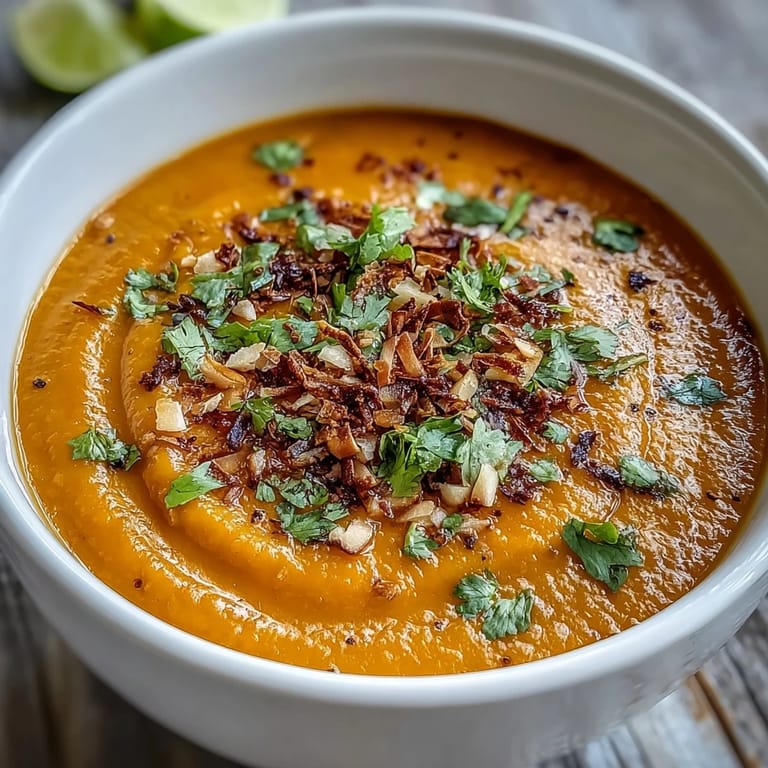
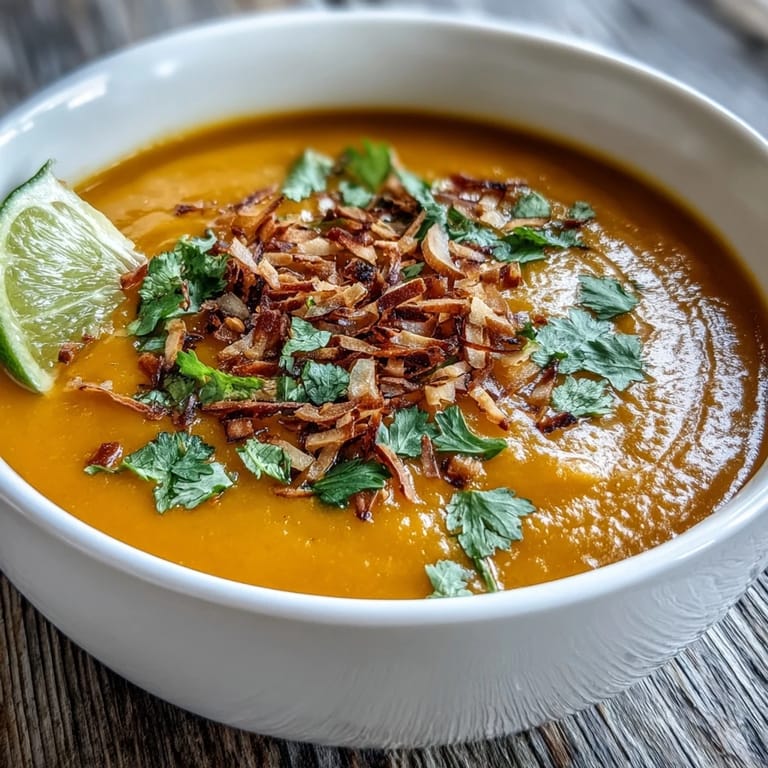
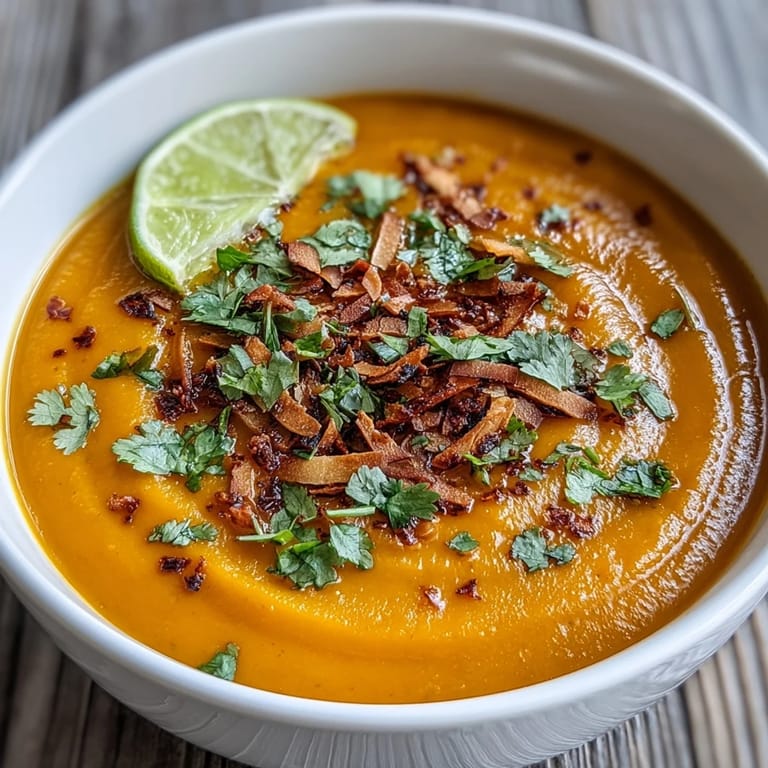
- Ladle the soup into bowls and add whatever garnish speaks to you, whether that's cilantro, toasted coconut flakes, or just a pinch more chili flakes. Let people see the effort you've put in.
 Save
Save A friend who usually avoids anything vegetable-forward came back for seconds without prompting, and that's when I knew this soup had crossed over from simple to memorable. Sometimes the smallest meals create the biggest moments.
When Carrots Become Luxury
There's a shift that happens when you treat humble ingredients with respect. These carrots, softened by time and coconut milk, transform into something that feels indulgent even though there's not a speck of cream in sight. The sweetness becomes more pronounced, the color deepens, and suddenly you're tasting terroir in every spoonful instead of just a vegetable.
The Blending Philosophy
I learned the hard way that blending hot soup can be dangerous, especially if you're impatient or distracted. The immersion blender is your safest bet because you keep everything contained in the pot, but if you go the countertop route, let the soup cool for a few minutes first and fill that blender less than halfway. Some of my best kitchen lessons have come from minor disasters.
Variations That Whisper Rather Than Shout
Once you've made this soup a few times, you'll start hearing its potential. A diced apple folded in with the vegetables adds a subtle sweetness that makes you pause mid-spoonful trying to identify it. Some nights I roast the carrots first in a hot oven, letting them caramelize before they hit the pot, which deepens everything. The soup is flexible enough to whisper secrets rather than announce changes loudly.
- If you roast carrots first, toss them with olive oil and salt, then roast at 400 degrees for 20 minutes until the edges are golden and sweet.
- A tablespoon of tamari or soy sauce added with the broth brings a subtle umami depth that rounds out the spices beautifully.
- Serve it chilled on hot afternoons with a drizzle of coconut cream and fresh mint for a completely different personality.
 Save
Save This soup has become my go-to when I want to cook something that feeds both body and something quieter inside. It's proof that simple ingredients, given time and intention, become something worth remembering.
Recipe Questions & Answers
- → Can I make this soup ahead of time?
Absolutely. This soup keeps beautifully in the refrigerator for up to 4 days and actually develops deeper flavors as it sits. Reheat gently over medium-low heat, stirring occasionally. You may need to add a splash of broth or coconut milk if it thickens too much overnight.
- → How do I get the smoothest texture?
Use an immersion blender directly in the pot for easiest blending, or work in batches with a countertop blender—just be careful with hot liquids. For restaurant-smooth results, strain the soup through a fine-mesh sieve after blending. Roasting the carrots beforehand also adds depth and natural sweetness.
- → Can I freeze this carrot coconut soup?
Yes, freeze in airtight containers for up to 3 months. Thaw overnight in the refrigerator before reheating. Note that coconut milk can separate slightly when frozen—just whisk well while reheating to restore the creamy consistency. The texture remains delicious.
- → What can I serve with this soup?
Crusty bread, warm naan, or toasted baguette slices are perfect for dipping. For a heartier meal, serve over steamed jasmine rice or quinoa. A simple green salad with citrus vinaigrette balances the richness beautifully. Roasted chickpeas or spiced nuts make excellent crunchy toppings.
- → How can I adjust the spice level?
Start with the optional chili flakes omitted for a mild version. Add gradually to taste, or incorporate fresh minced ginger instead of ground for a brighter heat. A pinch of cayenne works too. For cooling contrast, top with extra coconut milk, yogurt (if not vegan), or avocado slices.
- → Can I use light coconut milk instead?
Yes, though the soup will be less rich and creamy. For a compromise, use half light and half full-fat coconut milk. Alternatively, replace some liquid with puréed white beans or additional potato for body without all the fat. The flavor remains delicious either way.