 Save
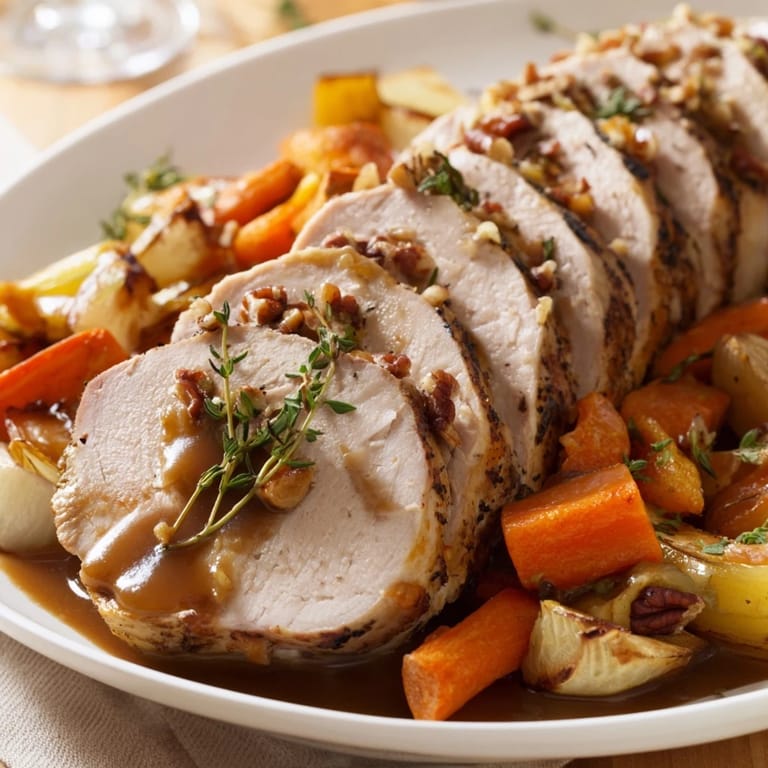
Save I'll never forget the year my grandmother decided to reimagine our Thanksgiving centerpiece. Instead of the traditional separate dishes scattered across the table, she arranged everything in beautiful, linked chains across a massive platter—turkey slices overlapping with golden roasted root vegetables like a edible map of connection. It was her way of honoring the Mayflower's journey while reminding us that a meal, like history, is made of countless linked moments. That Thanksgiving, Chains of the Mayflower became our family's most meaningful dish, one that tastes like gratitude and belonging.
I remember helping my mom arrange the first batch on our pale blue ceramic platter. Her hands moved with such intention, overlapping each slice and vegetable piece like she was telling a story with food. By the time we finished, everyone at the table went quiet for a moment, just taking it in. That's when I realized this dish does something special—it makes people pause before they eat, the way certain moments deserve to be witnessed.
Ingredients
- Boneless turkey breast, skin on (1.5 kg): The skin is your secret weapon for keeping the meat juicy while creating that gorgeous mahogany exterior. Look for one with good marbling and never skip the resting period afterward.
- Olive oil (4 tbsp total): The quality here matters more than you'd think. A decent olive oil helps the seasonings cling to everything and creates better browning on the vegetables.
- Dried thyme and sage (1 tsp each): These herbs are the backbone of autumn flavor. Don't use fresh here—dried concentrates the earthiness in exactly the right way.
- Roasted root vegetables (carrots, parsnips, sweet potatoes, celery root): Cut everything to roughly the same size so they roast evenly. The variety of roots gives you different textures and colors that make the platter sing.
- Smoked paprika and ground cumin (1 tsp and ½ tsp): These spices add depth without overpowering. They're what make people ask what you did differently this year.
- Chicken or turkey stock (500 ml): Homemade is best if you have it, but quality store-bought works. This becomes your gravy's foundation, so choose accordingly.
- Fresh parsley and toasted pecans (for garnish): Don't skip the garnish—the bright green and nutty brown colors complete the visual story of the dish.
Tired of Takeout? 🥡
Get 10 meals you can make faster than delivery arrives. Seriously.
One email. No spam. Unsubscribe anytime.
Instructions
- Prepare your theater:
- Start by preheating your oven to 200°C (400°F). This matters more than it sounds—you want that oven humming and ready, so when the turkey goes in, it begins its transformation immediately.
- Anoint the turkey:
- Pat your turkey breast dry with paper towels, then rub it generously with olive oil as if you're giving it a blessing. Work the thyme, sage, salt, and pepper all over, getting into every crevice. Let it sit for a few minutes so the seasonings really cling.
- Begin the roasting:
- Place the turkey skin-side up in your roasting pan. As it roasts for 1 hour 15 minutes, you'll notice the kitchen filling with the most incredible aroma. Check it at the 45-minute mark—if the skin is browning too quickly, tent it loosely with foil. The turkey is ready when a meat thermometer inserted into the thickest part reads 74°C (165°F).
- Rest like you mean it:
- This is non-negotiable. Remove the turkey from the oven and let it rest for 15 minutes, loosely covered. This is when the magic happens—the juices redistribute, and when you slice it, it will be impossibly tender.
- Golden the roots:
- While the turkey rests, toss your root vegetables with olive oil, smoked paprika, cumin, salt, and pepper. Spread them on a baking sheet in a single layer and get them into the oven for 40-45 minutes. Stir them halfway through. You're looking for edges that are caramelized and dark, interiors that are creamy when you press them.
- Build the gravy:
- In a small saucepan over medium heat, melt butter and whisk in cornstarch until it's completely smooth. This prevents lumps. Slowly pour in your stock while whisking constantly—this is the moment where patience pays off. The mixture will thicken beautifully. Add soy sauce, taste, and season with salt and pepper.
- Compose the masterpiece:
- On your largest serving platter, begin arranging. Start with a row of turkey slices slightly overlapping like roof shingles. Nestle the roasted vegetables between and around them in a chain-like pattern. Drizzle the gravy gracefully over everything, then finish with a shower of fresh parsley and toasted pecans. Step back and admire what you've created.
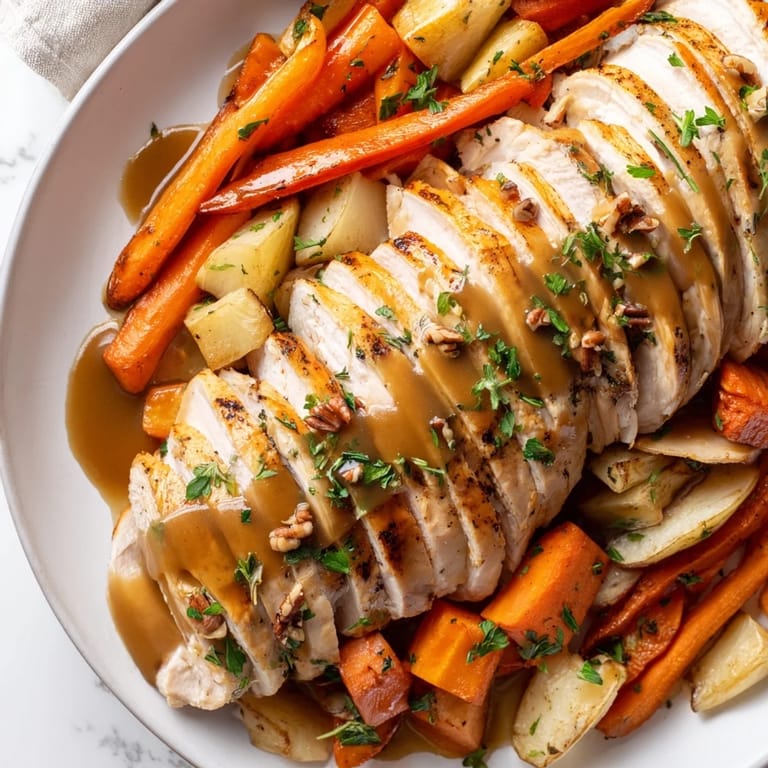 Save
Save Years later, I watched my young nephew carefully arrange his plate, mimicking the chain pattern with his own vegetables and turkey. He looked up and asked if this was how people connected at Thanksgiving, with their food linking them together. In that moment, I understood why my grandmother invented this dish. It wasn't just about making Thanksgiving different—it was about making the meaning visible.
The Story Behind the Chains
The visual concept of linking foods in chains comes from reflecting on the Mayflower journey—not as a single event, but as a series of connections that built a community. When you arrange the turkey and vegetables in overlapping rows, you're quite literally showing how one moment, one meal, one gathering connects to the next. It's a meditation disguised as a dinner presentation. Every time I've made this, someone asks about the arrangement, and I get to tell them the story. Food that asks questions is food worth serving.
Adapting for Your Table
The beauty of this dish is its flexibility. If you're cooking for vegetarians, swap the turkey for portobello mushroom caps that you've marinated and roasted until deeply caramelized—they'll have a rich, meaty quality that satisfies everyone at the table. For color and earthiness, add roasted Brussels sprouts or beets to the vegetable mix. Some years I add both and the platter becomes even more visually striking. If someone at your table loves tangy contrasts, a small bowl of cranberry sauce served alongside creates the perfect foil to the rich gravy.
Building Flavor Through Technique
The secret to this dish's depth lies in how each component develops its own flavor before they come together. The turkey gets its golden, herb-crusted exterior from dry seasoning and proper roasting. The vegetables caramelize at high heat, their natural sugars concentrating into something almost candy-like. The gravy builds from browned bits and develops body from the cornstarch. When they finally meet on the platter, they're not just sitting together—they're harmonizing. This is why rushed cooking shows. When every element has time to become its best self, the whole thing elevates.
- Toast your pecans yourself if you have time—store-bought roasted nuts lose their vigor, but toasting them fresh brings back their life
- Make sure your platter is warm when you compose the dish, not hot enough to hurt, but warm enough that the gravy doesn't immediately congeal
- Serve this dish as the centerpiece of your table, not on individual plates—the presentation is part of what makes it meaningful
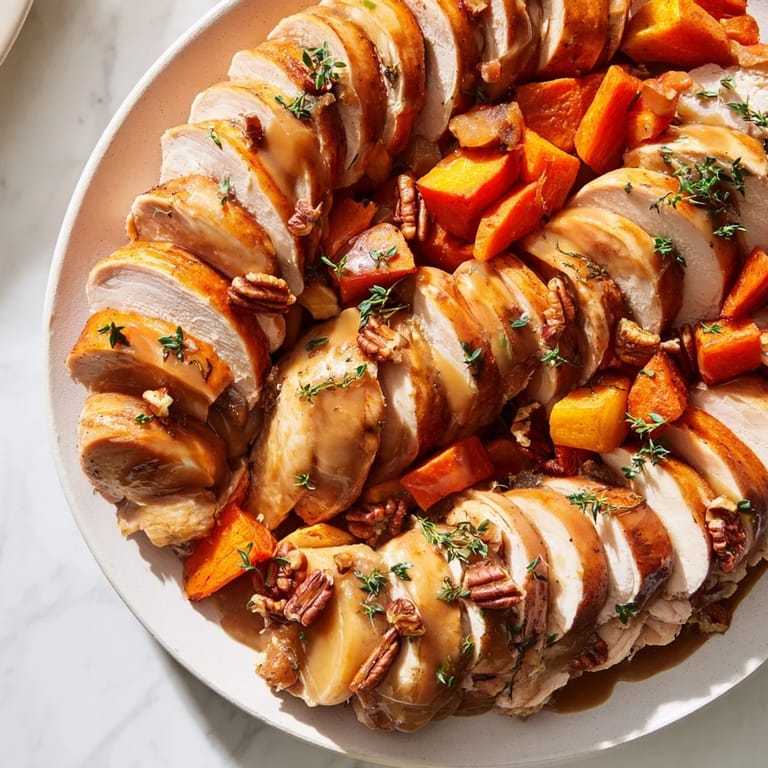 Save
Save Every time I serve Chains of the Mayflower, I think about how a recipe can be more than instructions—it can be a love letter to your table, a way of saying that you believe in connections and gathering. This dish does that.
Recipe Questions & Answers
- → What vegetables are used in this dish?
The dish uses carrots, parsnips, sweet potatoes, and celery root, all roasted with warming spices.
- → How is the turkey prepared for roasting?
The turkey breast is rubbed with olive oil, dried thyme, sage, salt, and pepper before roasting until tender and juicy.
- → What spices enhance the roasted root vegetables?
Smoked paprika and ground cumin add earthy, smoky notes to the roasted vegetables.
- → How is the gravy thickened and flavored?
Butter and cornstarch create a smooth base for the gravy, which is enriched with stock and a splash of soy sauce for depth.
- → Can this dish be adapted for vegetarian diets?
Yes, replacing turkey with roasted portobello mushrooms and using vegetable stock in the gravy makes it vegetarian-friendly.