 Save
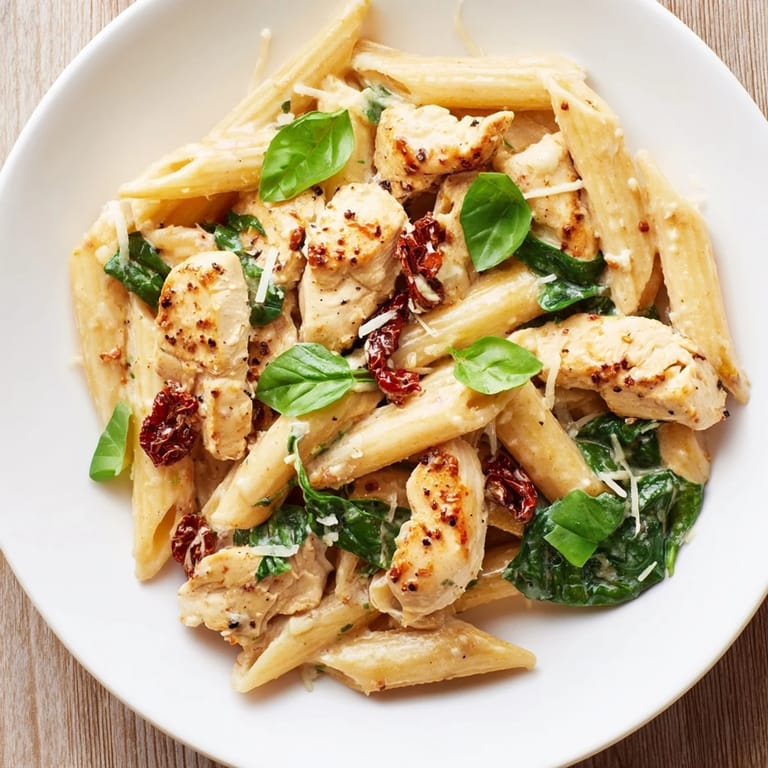
Save There's something about the smell of garlic hitting hot butter that makes you want to cook. I was standing in my kitchen on a Tuesday evening, nothing special planned, when I found a container of sun-dried tomatoes in the back of my pantry and suddenly knew exactly what I wanted to make. Creamy Tuscan Chicken Pasta has this magical quality—it tastes like you spent hours in the kitchen, but truthfully, it comes together in less than an hour. The first time I made it, my roommate walked in just as the cream was swirling into the pan, and I watched her face change. That's when I realized this wasn't just dinner; it was the kind of dish that feels like a small celebration.
I made this for my mom on a random Thursday, and she asked for the recipe before she'd even finished eating. She's not someone who typically cooks, but something about how the spinach melts into the cream and the sun-dried tomatoes add that little brightness made her want to try. Now it's her go-to when she needs to impress without fussing, and somehow that makes me happier than any compliment could.
Ingredients
- Penne or fettuccine, 350 g (12 oz): I prefer penne because the tubes trap that creamy sauce perfectly, but fettuccine works beautifully too—use whatever pasta feels right to you.
- Boneless, skinless chicken breasts, 2 large: Look for breasts that are roughly the same thickness so they cook evenly; if one is noticeably thicker, gently pound it out.
- Olive oil, 2 tbsp: Use a neutral olive oil here, not your fancy finishing oil—you need heat tolerance and clean flavor.
- Unsalted butter, 2 tbsp: This is where the sauce gets its silky richness, so don't skip it or substitute it lightly.
- Garlic, 3 cloves minced: Mince it yourself if you can; jarred garlic sometimes tastes a bit tinny next to the delicate cream.
- Sun-dried tomatoes in oil, 120 g (3/4 cup) drained and sliced: These are the secret flavor bomb—they add sweetness and umami that makes people wonder what your special ingredient is.
- Chicken broth, 120 ml (1/2 cup): Use low-sodium if you have it; you'll control the salt level as you finish the dish.
- Heavy cream, 240 ml (1 cup): Do not use half-and-half here if you want that luscious coating on every strand—the fat content matters.
- Parmesan cheese, 60 g (2 oz) grated: Freshly grated if possible; pre-grated sometimes has additives that prevent it from melting as smoothly.
- Fresh baby spinach, 80 g (3 cups): Baby spinach wilts faster and more evenly than larger leaves, which means less chance of tough pieces in your final dish.
- Red pepper flakes, 1/4 tsp optional: A pinch of heat cuts through the richness and makes all the flavors snap into focus.
- Fresh basil or parsley, chopped for serving: This is your finishing touch—don't skip the fresh herb garnish, as it brightens everything.
Tired of Takeout? 🥡
Get 10 meals you can make faster than delivery arrives. Seriously.
One email. No spam. Unsubscribe anytime.
Instructions
- Boil the pasta:
- Fill a large pot with water, add salt until it tastes like the sea, and bring it to a rolling boil. Add your pasta and cook until just al dente—not soft, but tender enough to bite through easily. Before you drain it, scoop out about half a cup of that starchy water and set it aside; you'll use it to adjust the sauce later.
- Season and sear the chicken:
- While the pasta cooks, pat your chicken breasts dry with paper towels, then season them generously on both sides with salt, pepper, and dried Italian herbs. Get your skillet smoking hot with olive oil, then lay the chicken in carefully and let it sit undisturbed for 5 to 6 minutes—this is how you get that golden, slightly crusty exterior. Flip, cook another 5 to 6 minutes until the meat is cooked through, then slide it onto a plate to rest.
- Build the sauce base:
- In that same skillet, melt butter over medium heat and listen for it to smell nutty and warm. Add your minced garlic and let it sizzle for just about a minute, stirring constantly so it doesn't brown—you want it fragrant and golden, not bitter.
- Add the sun-dried tomatoes:
- Toss in those beautiful sun-dried tomatoes and stir them around for another minute, letting their oil mix with the butter and garlic. You'll notice the whole kitchen starting to smell incredible—that's the moment you know you're on the right track.
- Deglaze and create the cream sauce:
- Pour in your chicken broth and use a wooden spoon to scrape up every caramelized bit stuck to the bottom of the pan; that's pure flavor. Turn the heat down to low and slowly stir in your heavy cream, making sure it blends smoothly, then add the Parmesan and red pepper flakes if you're using them. Let this bubble gently for 2 to 3 minutes until it's noticeably thicker and coats the back of a spoon.
- Wilt the spinach:
- Add your fresh spinach handful by handful, stirring gently as each batch softens into the sauce. It looks like a lot of greens at first, but they shrink down to almost nothing and turn silky.
- Bring it all together:
- Slice your rested chicken into thin strips, then add it back to the skillet along with your drained pasta. Toss everything gently so every piece of pasta gets coated in that dreamy sauce, adding splashes of your reserved pasta water as needed to loosen things up to your liking. Taste it, adjust salt and pepper, and you're done.
 Save
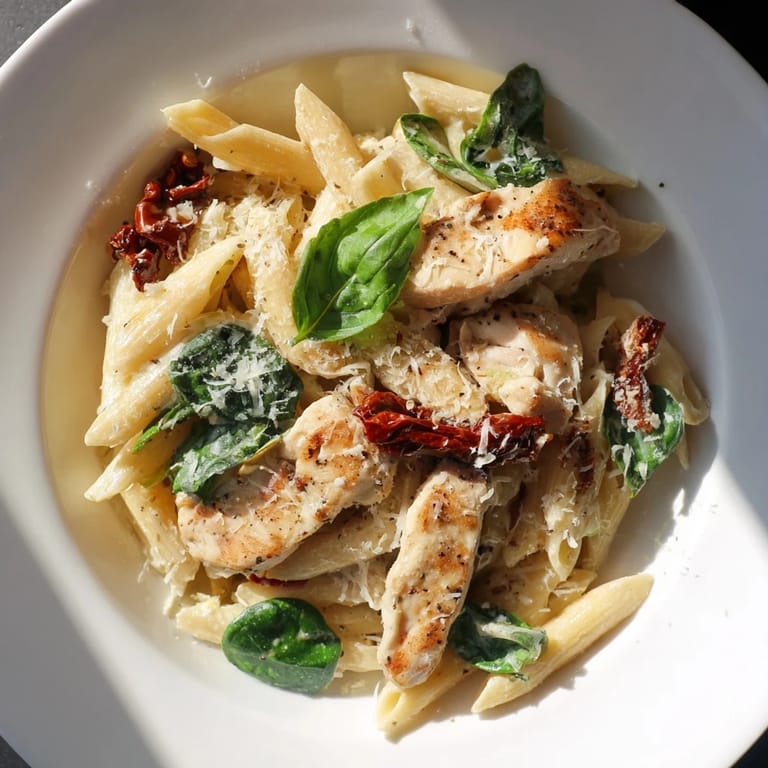
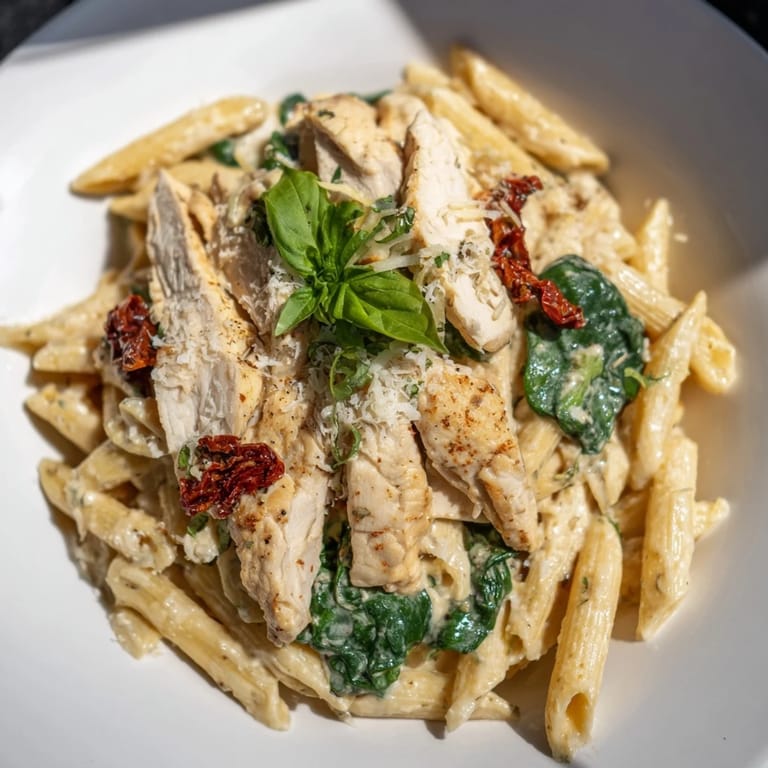
Save There's a moment when you toss everything together and watch the cream coat each strand of pasta, and the spinach melts into these beautiful green ribbons, and somehow it looks more impressive than anything you could've ordered. That's the moment I remember every time I make this, and it never gets old.
Why Timing Matters
The beauty of this dish is how quickly it comes together once you understand the rhythm. Your pasta and chicken should finish cooking around the same time, and your sauce should be ready to embrace them both. I learned this the hard way by cooking the chicken first and waiting around with a pot of water boiling, watching precious energy get wasted. Now I start the water, prep my ingredients while it heats, and once the pasta goes in, I immediately start the chicken in that other skillet. By the time you're stirring the cream into the pan, everything is synced up perfectly.
The Sun-Dried Tomato Secret
Those little concentrations of sun-dried tomato flavor are doing something special here that fresh tomatoes simply can't replicate. They're sweet and tangy and deeply umami-forward, which means your sauce tastes more complex than the ingredient list suggests. I once tried this with fresh heirloom tomatoes instead because it seemed more authentic, and while they were delicious, they made the sauce taste more acidic and less elegant. That taught me that sometimes the modernized, preserved ingredient is actually the right call for a particular dish.
Serving and Customizing
Fresh basil scattered over the top right before serving makes an enormous difference—it adds a brightness that cuts through the richness and makes the whole thing feel more alive. A scatter of extra Parmesan is never wrong, and if you're feeling it, a grind of black pepper adds visual appeal and a little bite. You can also turn this into a seafood dish by swapping the chicken for shrimp (cook them for just 2 to 3 minutes per side), or even lighten it by using half-and-half instead of heavy cream if that's more your style.
 Save
Save This dish has become my answer to the question "what should we have for dinner?" on a thousand different nights, and it never disappoints. There's comfort in knowing you can create something this good whenever you need it.
Recipe Questions & Answers
- → What type of pasta works best?
Penne or fettuccine are ideal as they hold the creamy sauce well, but feel free to use your preferred pasta shape.
- → Can I substitute chicken with seafood?
Yes, grilled shrimp can be used instead of chicken for a seafood variation without altering the sauce.
- → How do I adjust the sauce consistency?
Add reserved pasta water gradually while tossing; it helps loosen and perfect the creamy texture.
- → Are there recommended herbs for seasoning?
Dried Italian herbs complement the chicken well, and fresh basil or parsley add brightness as garnish.
- → Is this dish suitable for gluten-free diets?
Use gluten-free pasta options to make the dish gluten-free while maintaining the original flavors.