 Save
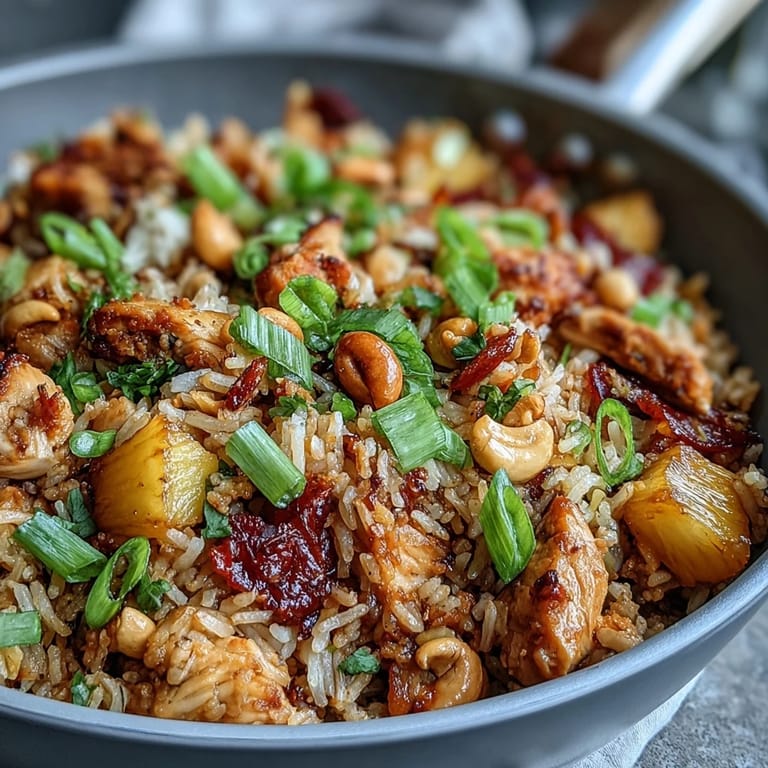
Save My kitchen smelled like sesame oil and caramelized pineapple the first time I made this, and honestly, I was just trying to use up what was in my fridge on a random Tuesday. A friend had left half a pineapple here, there was leftover rice from the weekend, and I had chicken thawing. Twenty minutes later, I had something that tasted like a vacation felt. It became the dish I make when I want something that feels both special and effortless.
I made this for my sister when she visited last summer, and she ate it straight from the wok while standing in my kitchen, asking if I could teach her before she left. There's something about fruit in savory rice that makes people slow down and actually taste their food. That afternoon taught me that the best recipes are the ones people want to steal from you.
Ingredients
- Boneless, skinless chicken breasts (2, about 300 g, diced): Dicing them into roughly the same size ensures they cook evenly and don't dry out while everything else catches up.
- Large eggs (2, beaten): The eggs create little pockets of richness throughout the rice and bind everything together beautifully when scrambled.
- Fresh pineapple (1 cup, diced): Fresh pineapple brings brightness and a subtle sweetness that canned can't quite match, though canned works in a pinch if you drain it well.
- Red bell pepper (1, diced): Besides the color, peppers add a gentle sweetness that plays well with the pineapple and savory sauces.
- Frozen peas and carrots (1 cup, thawed): Thawing them first prevents the pan temperature from dropping too much, which keeps everything cooking at the right pace.
- Green onions (3, sliced, plus extra for garnish): They add sharpness and freshness at every stage, especially nice scattered on top at the end.
- Garlic (2 cloves, minced): Minced garlic releases its flavor quickly in a hot wok, perfuming the whole dish within seconds.
- Cooked jasmine rice (3 cups, chilled, preferably day-old): This is non-negotiable—day-old rice has lost enough moisture to fry without turning mushy, and the grains separate beautifully.
- Soy sauce (3 tbsp, use gluten-free if needed): This is your salt and savory backbone; taste as you go since different brands have different intensities.
- Oyster sauce (1 tbsp): A small amount adds umami depth without overpowering, bringing a subtle sweetness that complements pineapple.
- Sesame oil (1 tbsp): Drizzle it in at the end rather than cooking with it, so the nutty flavor stays vibrant and doesn't turn bitter from the heat.
- Ground black pepper (1/2 tsp): Fresh cracked pepper makes a real difference here; pre-ground loses its sharpness.
- Salt (1/2 tsp): Start with half a teaspoon and taste before adding more since the soy sauce already brings saltiness.
- Chili flakes (1/2 tsp, optional, for heat): A whisper of heat wakes up all the sweet and savory flavors without stealing the show.
- Vegetable oil (2 tbsp, for frying): Split this between cooking the chicken and the vegetables so nothing sticks or browns unevenly.
- Roasted cashews or macadamia nuts (2 tbsp optional) and extra green onions: These additions hit right before serving, adding texture and keeping everything fresh-tasting.
Tired of Takeout? 🥡
Get 10 meals you can make faster than delivery arrives. Seriously.
One email. No spam. Unsubscribe anytime.
Instructions
- Get your mise en place ready:
- Dice everything before you turn on the heat, because once the wok gets hot, you're moving fast. Having your rice chilled and your ingredients prepped means you can actually enjoy the cooking instead of scrambling.
- Cook the chicken until it's golden:
- Heat 1 tablespoon of oil over medium-high heat and add your diced chicken, listening for that immediate sizzle that tells you the pan's ready. Cook for 5 to 7 minutes, stirring occasionally, until the pieces are cooked through and starting to brown on the edges, then move it to a clean plate.
- Scramble the eggs and push them aside:
- Add the last tablespoon of oil, pour in your beaten eggs, and let them hit the hot pan. After about a minute, gently push them around until they're just set but still tender, then move everything to one side of the pan to make room for the vegetables.
- Build the flavor base with aromatics:
- Toss in your minced garlic, diced red pepper, and sliced green onions, stirring constantly so the garlic doesn't burn. After about 2 minutes, when it all smells incredible, you'll know the flavors are releasing.
- Add the rest of the vegetables and fruit:
- Stir in your thawed peas, carrots, and fresh pineapple, keeping everything moving for another 2 to 3 minutes. The pineapple will start to soften and release its juices, creating little pockets of sweetness.
- Bring the rice in and break up any clumps:
- Add your chilled rice to the pan, breaking apart any clumps with your spatula or wooden spoon as you stir. This takes a minute or two, but it's worth it because clumpy rice won't fry evenly. Return the cooked chicken to the pan at this point.
- Bring everything together with sauce:
- Pour in the soy sauce, oyster sauce, and sesame oil, along with the salt, pepper, and chili flakes if you're using them. Stir everything together for 3 to 4 minutes, making sure every grain of rice gets coated and the chicken heats back through.
- Taste and adjust:
- Remove the pan from heat and taste a bite, adjusting salt or soy sauce as needed since seasoning preferences vary. This is your chance to make it exactly the way you want it before plating.
- Finish with garnish:
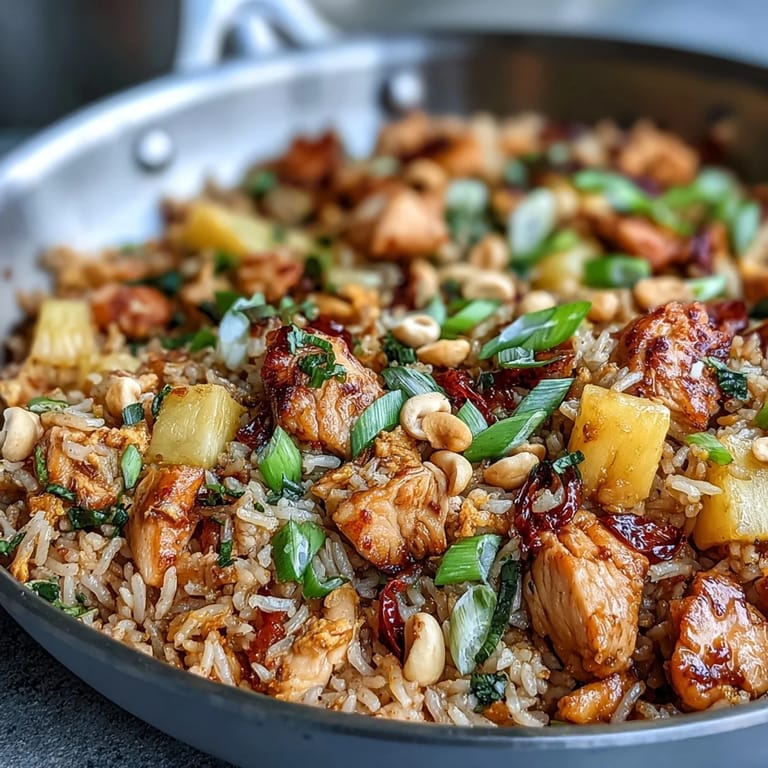
- Top each serving with roasted cashews or macadamia nuts and a scatter of fresh green onions for color and crunch. Serve immediately while the rice is still warm and the garnishes haven't had time to soften.
 Save
Save There was a night when I made this for myself after a long, frustrating day, and by the time I sat down with that warm bowl, everything felt a little lighter. Sometimes food is just food, but sometimes it's exactly what you need without having to explain why. That's what this dish has always been for me.
Why Pineapple and Rice Work Together
Pineapple seems like it shouldn't belong in savory fried rice, but the acid and sweetness actually cut through the richness of the oil and eggs while brightening everything around it. When the pineapple juice mingles with the soy sauce, something magical happens—the flavors become more dimensional, less flat. It's the same reason pineapple works on pizza or in a glaze for ham; it adds complexity rather than just sweetness.
The Science of Perfect Fried Rice
Fried rice works because you're building layers of flavor and texture in rapid succession, which means temperature control matters more than you might think. A wok or large skillet should be hot enough that ingredients sizzle immediately when they hit the pan, but not so hot that garlic or eggs burn before other things have a chance to cook. The speed of cooking at high heat also means the rice dries out slightly, giving it that desirable separated-grain texture instead of clumping. Once you understand this rhythm, you can adapt fried rice to whatever you have in your kitchen.
Variations and Swaps That Work
I've made this with shrimp when I had it thawed, and it's equally good—just cook the shrimp separately since it only needs 2 to 3 minutes. Tofu is another natural swap if you want to go meatless, though you'll want to press it first to remove excess moisture so it can brown properly. Even the vegetables are flexible; I've used snap peas, baby corn, diced zucchini, or whatever looked good at the farmers market.
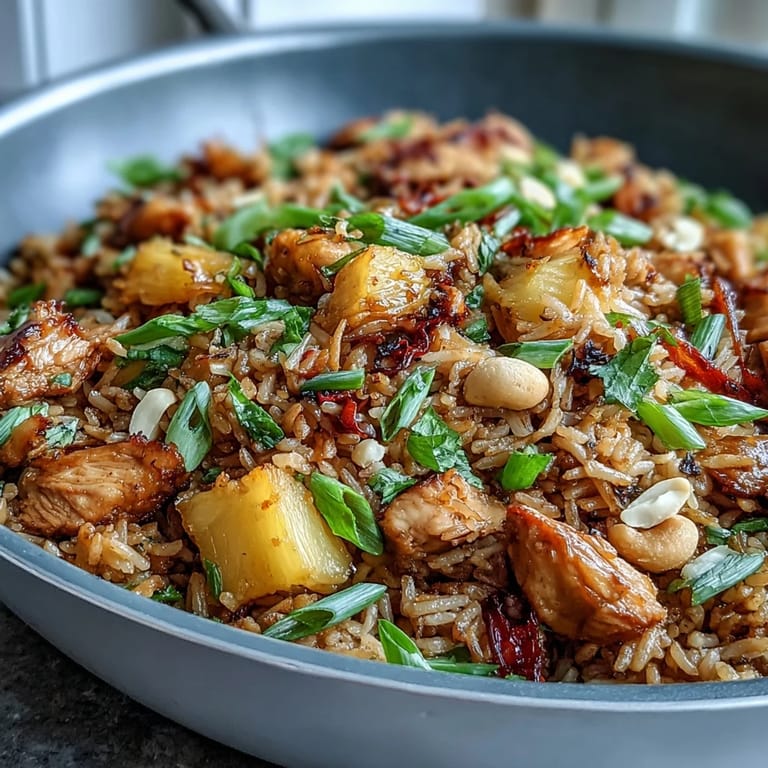
- If fresh pineapple isn't available, canned works but drain it well and pat it dry so it doesn't release extra liquid into the pan.
- Coconut aminos can replace soy sauce if you need gluten-free or soy-free, though the flavor will be slightly milder and you may need to adjust the amount.
- A splash of lime juice at the end brightens everything and adds complexity that makes people ask what your secret ingredient is.
 Save
Save This dish has a way of reminding me that some of the best meals come from working with what you have rather than following a rigid plan. Every time you make it, it tastes like home in whatever form home looks like that day.
Recipe Questions & Answers
- → What type of rice is best for this dish?
Day-old jasmine rice works best because it's less sticky and fries evenly, resulting in a desirable texture.
- → Can I substitute chicken with another protein?
Yes, shrimp or tofu can be used as alternatives for a different flavor or dietary preference.
- → How do I achieve the sweet and savory balance?
The sweetness comes from fresh pineapple, while soy sauce and oyster sauce add savory depth, creating a harmonious flavor.
- → Is it necessary to use sesame oil?
Sesame oil adds a nutty aroma and richness, enhancing the dish, but it can be omitted if unavailable.
- → What garnishes can enhance the dish’s texture?
Roasted cashews or macadamia nuts and extra sliced green onions add crunch and freshness to the final dish.