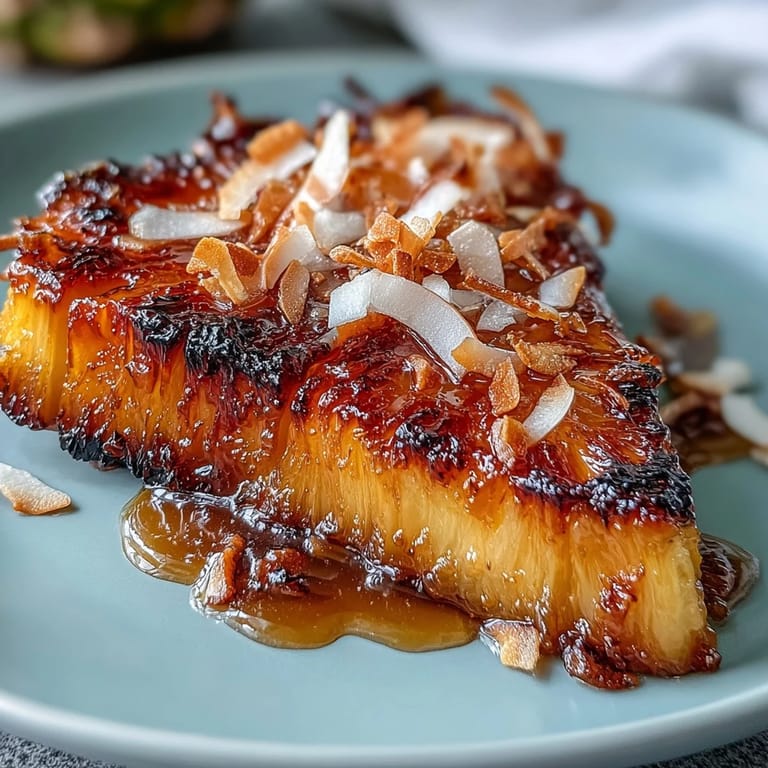
 Save
Save One sticky summer afternoon, I was standing in my kitchen with a pineapple that had been sitting on the counter for three days, getting sweeter by the hour. I had no plans for it, no recipe in mind, just a sudden urge to do something with heat and caramel. Twenty-five minutes later, my apartment smelled like a vacation, and I understood why roasting fruit felt like such a small act of magic.
I served this warm to friends on a Friday night, and someone asked if I'd made it at a restaurant before bringing it home. That question stuck with me because it reminded me that simple ingredients roasted with attention become something people actually talk about afterward.
Ingredients
- Fresh pineapple, peeled, cored, and cut into wedges: Choose one that yields slightly to pressure at the stem and smells sweet; the natural sugars concentrate beautifully when roasted, and the fruit gets softer without turning mushy if you watch it carefully.
- Honey: Three tablespoons creates that glossy, caramelized coating that makes the pineapple glow on the plate; don't skimp or substitute with less, as honey also balances the lime's brightness.
- Fresh lime juice: Two tablespoons of freshly squeezed juice cuts through sweetness with a sharp edge that makes the tropical flavor taste alive rather than cloying.
- Lime zest: One teaspoon adds tiny bursts of essential oils that you'll notice in every bite, a detail that separates this from a basic roasted fruit situation.
- Unsalted butter, melted: One tablespoon carries the glaze into every crevice and helps it brown, while the salt pinch amplifies all the other flavors without making anything taste salty.
- Unsweetened shredded coconut: A third cup toasted until golden becomes aromatic and slightly crisp, providing texture and a warm, nutty counterpoint to the juicy fruit.
Tired of Takeout? 🥡
Get 10 meals you can make faster than delivery arrives. Seriously.
One email. No spam. Unsubscribe anytime.
Instructions
- Heat your oven and prep the pan:
- Preheat to 425°F and line your baking sheet with parchment paper so the glaze won't stick and the cleanup becomes almost pleasant. This temperature is hot enough to encourage browning without drying out the fruit.
- Arrange the pineapple:
- Lay the wedges in a single layer, leaving a little space between each piece so heat can circulate and they caramelize rather than steam. If they're crowded, they'll soften but won't develop that golden, slightly crusty edge.
- Mix the glaze:
- Whisk honey, lime juice, lime zest, melted butter, and salt in a small bowl until everything combines into a smooth, glossy mixture. It should smell bright and almost floral.
- Coat the fruit:
- Brush the glaze generously over each pineapple wedge with a pastry brush, making sure to get into the natural grooves where flavor pools during roasting. Don't hold back; this is where the magic lives.
- Roast with attention:
- Slide the pineapple into the oven and roast for 18 to 22 minutes, turning the pieces halfway through so they brown evenly on both sides. You'll know they're ready when the edges are caramelized and deep golden, and the fruit is tender enough to pierce with a fork.
- Toast the coconut:
- While the pineapple roasts, place shredded coconut in a dry skillet over medium heat and stir constantly for 2 to 3 minutes until it turns golden and smells warm and nutty. Transfer immediately to a plate because it continues cooking from residual heat and burns quickly if left in the pan.
- Finish and serve:
- Arrange the roasted pineapple on a serving platter, scatter the toasted coconut over the top, and serve warm or at room temperature. The contrast between the soft, glazed fruit and the crisp, aromatic coconut is what makes this feel like something you'd pay for at a restaurant.
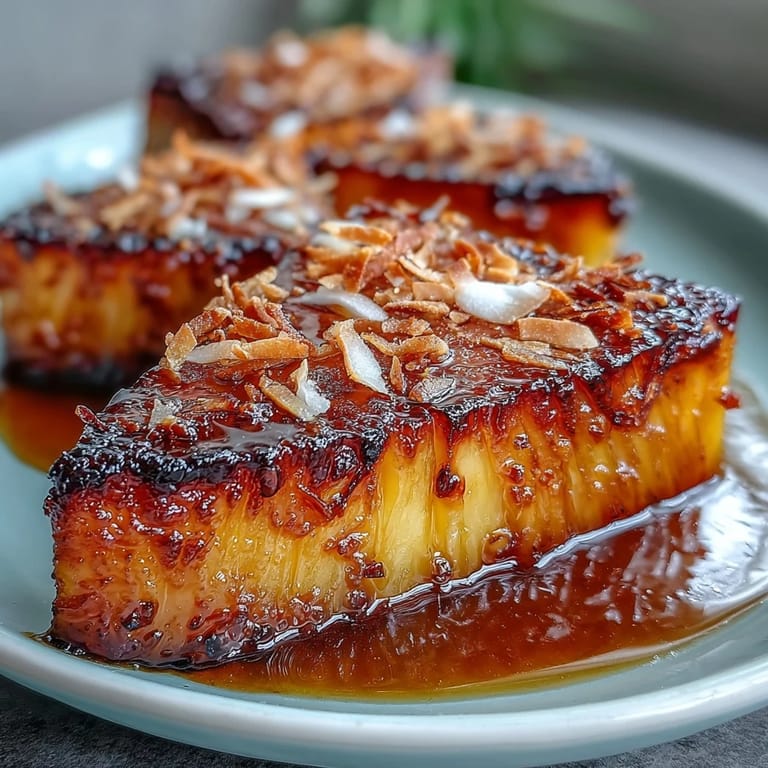 Save
Save My neighbor smelled the pineapple roasting through the wall and knocked on my door asking what I was making. Somehow sharing the final plate made the experience feel bigger than just dessert; it became a small moment of connection that stayed with both of us.
The Caramelization Sweet Spot
Roasting fruit at high heat transforms it in a way that gentle baking simply cannot. The sugars in the pineapple break down and recombine into new flavors, developing a complexity that tastes almost savory underneath the sweetness. When honey and lime join this process, they aren't just flavoring the fruit; they're participating in a chemical dance that creates something new. Watching the edges deepen from pale to amber to gold tells you exactly when to stop, and that visual cue matters more than a timer ever could.
Serving Suggestions and Pairings
Warm pineapple with melting vanilla ice cream creates a contrast between hot and cold that heightens every sensation. Greek yogurt adds creaminess without heaviness, and the tartness plays beautifully against the caramelized sweetness. You can also serve it at room temperature with a squeeze of fresh lime and a tiny sprinkle of chili powder if you want heat to edge the sweetness, or alongside a simple coconut or vanilla cake to make it feel more substantial. The flexibility is part of why this dessert works year-round and for almost any occasion.
Variations and Swaps
Maple syrup works beautifully in place of honey if that's what you have, lending an earthy depth that makes the dessert taste almost autumnal. Coconut oil replaces butter seamlessly for a dairy-free version, and the coconut flavor whispers through without overpowering. You can experiment with brown sugar instead of honey, add a tiny pinch of vanilla extract or cayenne pepper to the glaze, or even try other stone fruits like peaches or nectarines when pineapple isn't calling to you.
- Brown sugar creates deeper caramel notes and works especially well if you also add a smidge of bourbon or rum to the glaze.
- Fresh mint scattered over the finished dish adds brightness and a cool, herbal contrast to the warm fruit.
- A sprinkle of fleur de sel on top just before serving emphasizes sweetness by providing tiny moments of salt on the tongue.
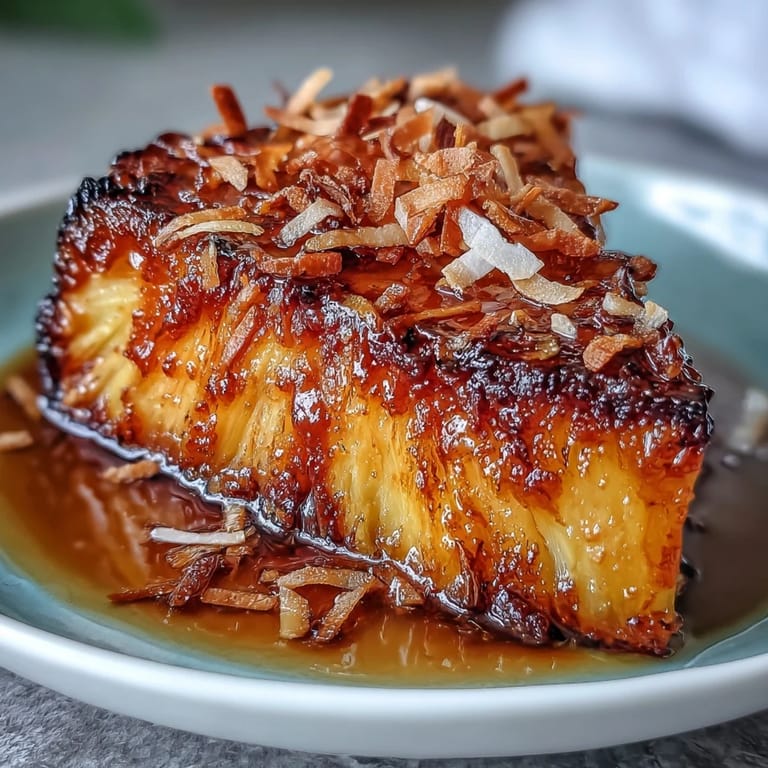 Save
Save This dessert proves that sometimes the most satisfying things come from respecting ingredients enough to let them shine. It's become my go-to when I want to feel like I've done something special without spending all afternoon in the kitchen.
Recipe Questions & Answers
- → How do I get the pineapple caramelized evenly?
Arrange the pineapple wedges in a single layer and turn them halfway through roasting to ensure even caramelization on all sides.
- → Can I substitute honey in the glaze?
Yes, maple syrup can be used as a vegan-friendly alternative to honey without compromising sweetness.
- → Why toast the shredded coconut separately?
Toasting the coconut separately brings out its natural oils and enhances its aroma and crunch before adding it as a topping.
- → Is this dish suitable for gluten-free diets?
Yes, the ingredients used are naturally gluten-free, making it suitable for gluten-free diets.
- → Can I make this dish dairy-free?
Butter can be substituted with coconut oil or a plant-based alternative to keep this dish dairy-free.
- → What serving suggestions complement this dish?
Serving the pineapple warm or at room temperature alongside vanilla ice cream or Greek yogurt adds a creamy contrast and richness.