 Save
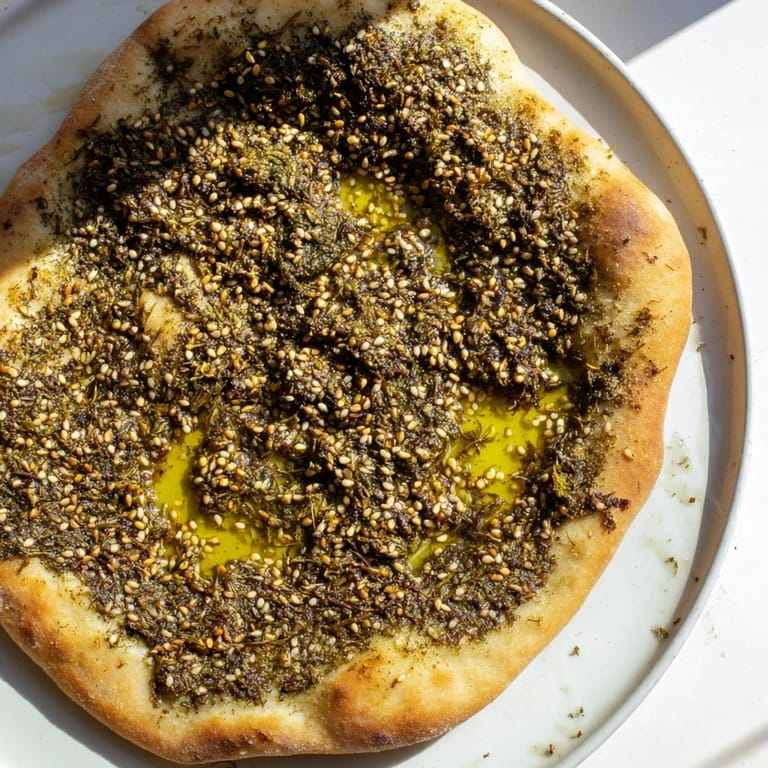
Save There's something about the smell of zaatar hitting a hot oven that transports you somewhere else entirely. I discovered this bread years ago at a small café in Beirut, where the baker would pull these golden flatbreads straight from the fire, the olive oil glistening and the spice blend so fragrant you could taste it before it reached your lips. When I finally asked for the recipe, the baker's mother laughed and said it was the easiest thing in the world, which turned out to be true. Now whenever I make it, my kitchen smells like that café again, and somehow everyone who walks in suddenly feels like they belong there.
I made this for a dinner party once where someone showed up saying they were too tired to eat, and halfway through the first piece they suddenly became very awake and very talkative. That's when I understood that food this simple and this good has a quiet power. Now I always have the ingredients on hand, because there's something reassuring about knowing you can make something genuinely delicious in the time it takes to watch a movie.
Ingredients
- All-purpose flour (2 cups): The foundation here, and honestly any good quality flour works, though I've noticed that slightly older flour (a few months in your cupboard) gives a more tender crumb than brand new flour.
- Instant dry yeast (1 teaspoon): This is the magic ingredient that makes the whole thing work—just make sure it's fresh, because old yeast will betray you silently.
- Sugar and salt (1 teaspoon each): Sugar wakes up the yeast, salt controls the rise, and together they balance the earthiness of the zaatar perfectly.
- Olive oil (2 tablespoons for dough, 1/3 cup for topping): Use a decent quality oil for the topping where you can actually taste it, but any good olive oil works fine in the dough.
- Warm water (2/3 cup): This needs to be warm but not hot—test it on your wrist like you're checking a baby's bath, and you'll get it right every time.
- Zaatar spice blend (1/4 cup): This is the soul of the bread, a tangy-herbaceous blend that varies slightly depending on where you buy it, which is part of its charm.
- Toasted sesame seeds (2 tablespoons): Toast them yourself if you have time—just a minute in a dry pan—and the difference is remarkable, like the bread suddenly wakes up.
Tired of Takeout? 🥡
Get 10 meals you can make faster than delivery arrives. Seriously.
One email. No spam. Unsubscribe anytime.
Instructions
- Mix Your Base:
- Combine flour, yeast, sugar, and salt in a bowl, then drizzle in the olive oil and slowly add warm water while stirring, watching as the shaggy mess gradually becomes intentional dough. This is the moment to know that you're not stirring chaos into order—you're inviting something alive to join you.
- Knead Into Smoothness:
- Turn the dough onto a lightly floured counter and work it for about 5 to 7 minutes, stretching and folding, until it becomes elastic and smooth and actually pleasant to touch. You'll feel the exact moment when it shifts from resistant to cooperative.
- Let It Rise Patiently:
- Oil a bowl, nestle the dough inside, cover it with something damp like a kitchen towel, and let it sit in a warm corner for an hour until it's clearly doubled. If your kitchen is cold, an oven with just the light on works perfectly, and you can even set a phone timer so you don't forget.
- Heat Your Oven:
- While the dough rises, preheat to 220°C (425°F) and line two baking sheets with parchment paper so your breads won't stick and cleanup becomes a non-event.
- Shape Into Flatbreads:
- Divide the risen dough into 4 equal pieces, roll each into a ball, then gently flatten and stretch each one into a round about 6 to 7 inches across. Don't stress about perfect circles—rustic is actually more authentic and more forgiving.
- Make Your Zaatar Paste:
- Mix zaatar, toasted sesame seeds, and olive oil in a small bowl until you have something between a spice blend and a paste, fragrant enough to make you close your eyes for a second.
- Top With Intention:
- Spread the zaatar mixture over each flatbread, leaving a small border at the edges so they crisp up golden and give you something wonderful to hold. This is the step where you can taste it all coming together, so don't rush it.
- Bake Until Golden:
- Slide everything into the hot oven for 12 to 15 minutes, watching through the window as they transform from pale and humble to deeply golden and crisp. The exact moment you pull them out matters less than the moment you smell them, and your nose will tell you when they're ready.
 Save
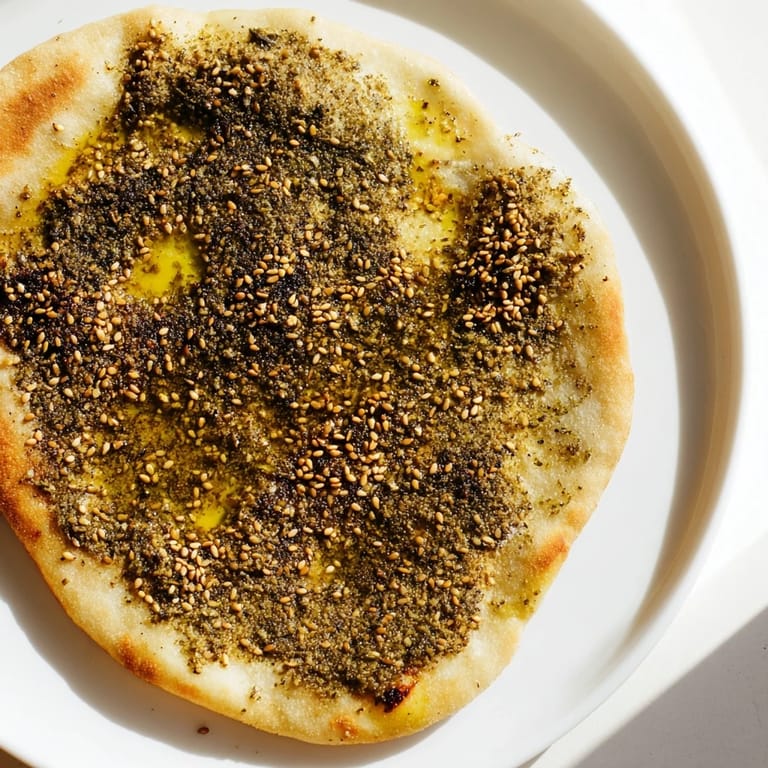
Save There was an afternoon when my daughter helped me make these, and she insisted on spreading the zaatar herself, creating these lopsided, generous-with-the-topping breads that looked nothing like the pristine circles I would have made. Hers were somehow better. That's when I realized this recipe isn't about perfection or technique—it's about the moment you share in the kitchen and the smell that fills the house.
The Magic of Zaatar
Zaatar isn't just one spice, it's a whole philosophy—usually a blend of thyme, sumac, and sesame that tastes like the Mediterranean somehow learned to be tangy and herbaceous at the same time. The sumac gives it that bright, almost lemony quality that wakes up your mouth, while the thyme grounds it in something ancient and familiar. If you've never worked with zaatar before, this bread is the perfect introduction because you taste it clearly without anything else competing for attention.
Serving and Pairing
Warm zaatar bread is best served immediately, when the olive oil is still glistening and the bread still holds onto the heat. Room temperature is perfectly fine too, and leftovers (if there are any) stay good for a day wrapped loosely in cloth. I've learned that the bread becomes something different depending on what you serve alongside it—with cool labneh and olives it's breakfast, with baba ganoush and hummus it's an appetizer, and on its own with just good butter or more olive oil it's actually a complete meal.
Small Adjustments That Make a Difference
Once you make this bread a few times, you'll start noticing how little tweaks create different results, and that's when it becomes truly yours. A slightly hotter oven gives you more crunch at the edges, while a slightly cooler one yields a softer, more bread-like texture. The amount of olive oil in the topping can vary based on your mood and your appetite, and adding a pinch of chili flakes is absolutely worth trying if you like heat.
- Let shaped dough rest for 10 minutes before topping for a fluffier, more tender interior.
- Add a small pinch of Aleppo pepper or urfa pepper to the zaatar mixture for subtle warmth without harsh heat.
- Keep a spray bottle of water nearby while baking—a quick mist of the oven at the 7-minute mark creates extra steam and crust.
 Save
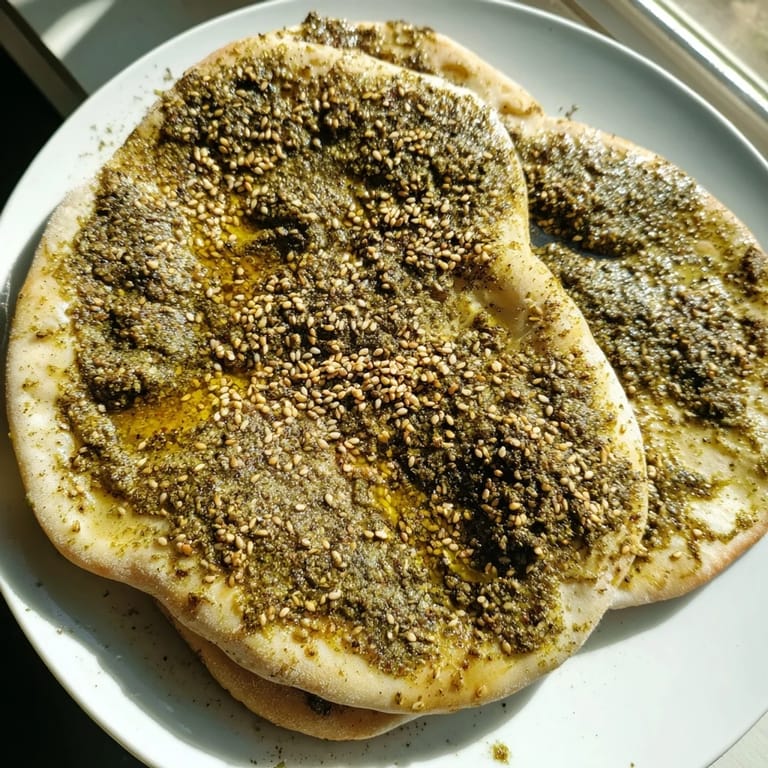
Save This bread has a way of turning ordinary moments into something worth remembering, whether you're eating it alone with your coffee or sharing it with people who matter. Once you've made it once, you'll understand why it's been made the same way for generations.
Recipe Questions & Answers
- → What is zaatar and how does it affect the flavor?
Zaatar is a Middle Eastern spice blend typically made from oregano, thyme, sumac, and sesame seeds. It adds a tangy, herbal, and slightly nutty flavor that enhances the bread's aroma and taste.
- → Can I use different flours to make the dough?
All-purpose flour works best for this bread to achieve the right texture. However, you may experiment with whole wheat or gluten-free blends, though the texture and rise may vary.
- → How should I store the baked flatbreads?
Store cooled flatbreads in an airtight container at room temperature for up to two days, or in the refrigerator for longer freshness. Reheat gently to restore crispness.
- → Is it necessary to let the dough rise for an hour?
Yes, allowing the dough to rise until doubled ensures lightness and a soft crumb. Skipping this step can result in denser bread.
- → Are there any common allergens in this bread?
This bread contains gluten and sesame seeds, both common allergens. Take care if you have sensitivities or substitute accordingly.
- → What dishes pair well with this flatbread?
It complements dips like labneh, hummus, or baba ganoush, and works well alongside salads or grilled vegetables in Middle Eastern meals.