 Save
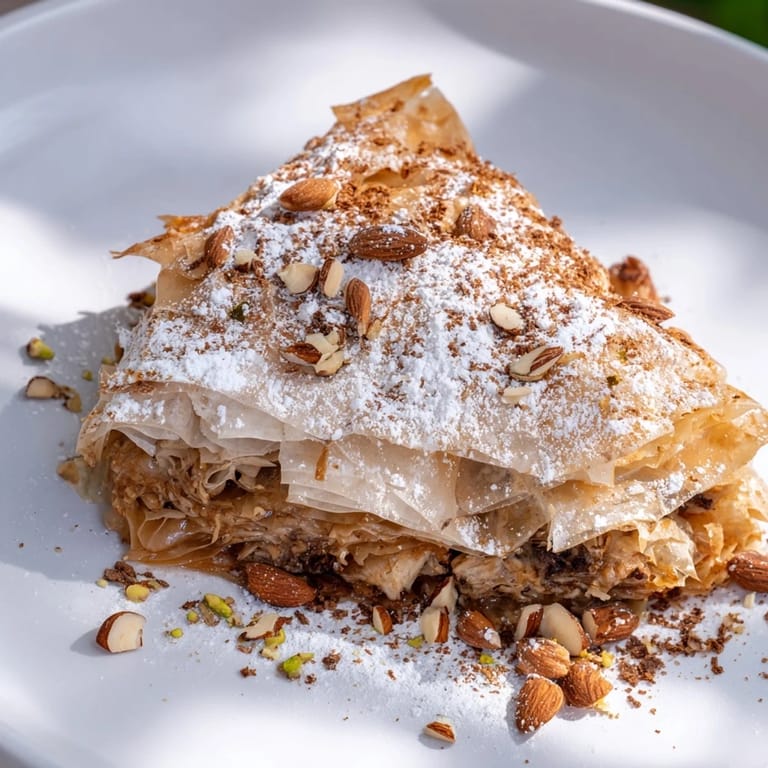
Save I first tasted Moroccan pastilla at a friend's dinner party where the hostess emerged from the kitchen looking flushed but triumphant, carrying this golden, crispy creation dusted with snow-white powdered sugar. She warned us it would be sweet and savory at once, which seemed impossible until that first bite melted on my tongue—tender spiced chicken, silky scrambled eggs, the snap of phyllo, followed by the warmth of cinnamon. It became an obsession, and after a few attempts in my own kitchen, I understood why it's considered one of the most elegant dishes in Moroccan cooking: it's actually quite achievable if you respect the layers and don't rush the spices.
My sister flew in unexpectedly one November, and I decided this was the dish to make—something that felt special enough to mark the occasion. Halfway through reducing the sauce, she wandered into the kitchen and asked what smelled like Christmas and Morocco had decided to have a conversation. By the time we assembled the pie together, brushing each sheet of phyllo with butter while she narrated her travels through the Marrakech medina, I realized this recipe had become a way to connect distant places and moments into one meal.
Ingredients
- Bone-in chicken thighs: Thighs stay moist during the long braise and have enough collagen to create a silky sauce—don't skip the bones, and don't use breasts unless you want dry meat.
- Ground ginger, cinnamon, turmeric, nutmeg, and black pepper: These aren't just background notes; they're the soul of the dish, so use freshly ground spices if possible and don't be shy with them.
- Saffron threads: Optional but worth finding; soaking them in warm water before adding awakens their floral complexity and makes every spoonful taste more authentic.
- Phyllo pastry: Keep it thawed according to package directions and cover unused sheets with a slightly damp towel so they don't dry out and crack.
- Unsalted butter: You'll use it generously for brushing phyllo, so make sure it's melted but not scorching hot when you apply it.
- Slivered almonds and fresh herbs: Toast the almonds yourself if you can; they add a textural surprise and a subtle bitterness that balances the sweetness of the finishing sugar.
- Powdered sugar and cinnamon for dusting: These aren't garnish; they're essential to the experience, creating that signature sweet-savory contrast that defines pastilla.
Tired of Takeout? 🥡
Get 10 meals you can make faster than delivery arrives. Seriously.
One email. No spam. Unsubscribe anytime.
Instructions
- Brown the aromatics and chicken:
- Heat olive oil in a large Dutch oven and let the onions and garlic turn golden and soft before adding the chicken. The spices bloom beautifully in this fragrant base, filling your kitchen with warmth as the chicken browns on each side.
- Simmer until tender:
- Cover and let the chicken cook gently in stock for 30 to 35 minutes until the meat pulls from the bone effortlessly. Listen for occasional gentle bubbles; if it's boiling hard, lower the heat.
- Shred and reduce:
- Remove the chicken to cool, then shred it carefully, discarding bones and skin. Meanwhile, let the cooking liquid reduce until it's silky and concentrated, coating the back of a spoon.
- Recombine with herbs and nuts:
- Fold the shredded chicken back into the reduced sauce along with parsley, cilantro, and toasted almonds. The mixture should smell vibrant and alive, tasting of both spice and fresh herb.
- Scramble the eggs gently:
- In a separate pan, melt butter and pour in beaten eggs, stirring slowly with a spatula until they're just barely set but still creamy. This isn't an omelet; you want soft, custard-like curds that will fold seamlessly into the chicken.
- Layer the phyllo base:
- Brush your baking dish with butter, then layer 5 sheets of phyllo, brushing each one generously. Let the edges hang over the sides; they'll fold over the filling beautifully.
- Add filling and fold:
- Spread the chicken-egg mixture evenly inside, then fold the overhanging phyllo over the top. It won't cover everything perfectly, and that's fine.
- Top and seal:
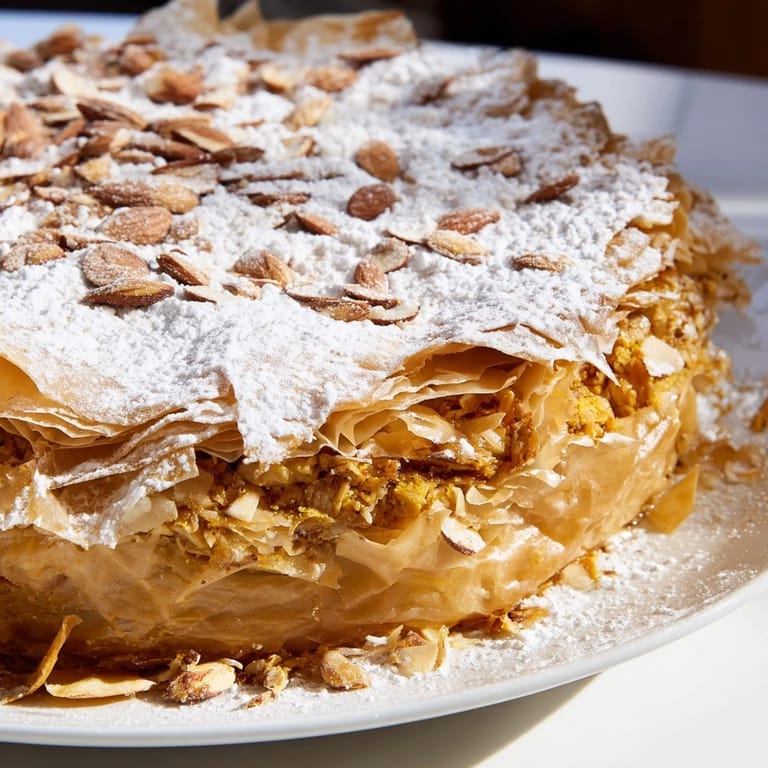
- Layer 4 more buttered phyllo sheets over the filling, tucking the edges down into the pan where they crisp beautifully. Finish with a final sheet, brush it with butter, and let it get gloriously golden.
- Bake until golden:
- At 375°F, the pastilla needs 35 to 40 minutes until the phyllo turns deep golden and crackles slightly when you listen closely. Let it rest for 10 minutes before dusting.
- Dust and serve:
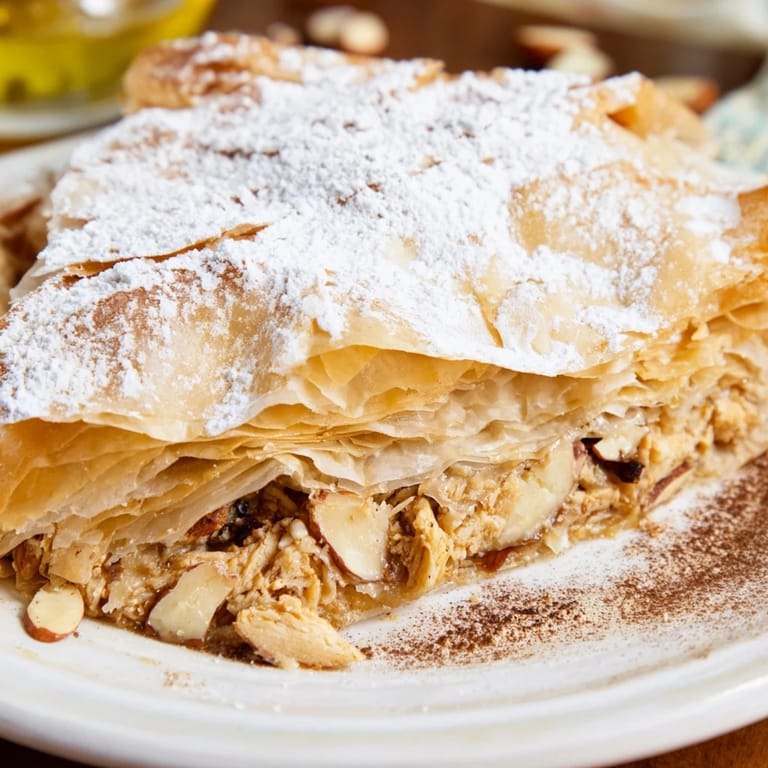
- Just before serving, sift powdered sugar generously across the top, then add cinnamon. The contrast of sweet and savory is what makes this dish unforgettable.
 Save
Save The moment I sliced into my first homemade pastilla and heard that satisfying crackle of phyllo, I understood why this dish has been served at Moroccan celebrations for centuries. It's not just about feeding people; it's about creating a memory with every layer.
Why Phyllo Is Your Friend
Phyllo has an undeserved reputation for being temperamental, but it's actually more forgiving than puff pastry or pie dough. The key is keeping unused sheets covered and working quickly but not frantically. Once you've buttered a few sheets, your hands relax and the rhythm becomes meditative. Each brush of melted butter is like painting; the phyllo will puff and crisp beautifully whether the layers are perfectly aligned or charmingly crumpled.
The Sweet and Savory Magic
The first time I made pastilla, I was skeptical about the powdered sugar and cinnamon dusting. Surely sugar on savory chicken sounded like a mistake. But that contrast is exactly what makes the dish extraordinary—as you eat, you taste sweet, then spice, then salt, then nuttiness, all within a single bite. It's the kind of flavor complexity that makes you pause between bites, trying to understand what just happened on your palate.
Variations and Traditions
In Morocco, this dish is often made with pigeon, which has darker, richer meat than chicken. If you can find squab or Cornish hen, they're closer to the traditional protein and worth seeking out. Some cooks add chopped dried apricots or dates to the filling for extra sweetness and texture, which creates an even more complex finished dish. You can also make individual pastillas in smaller phyllo cups for a more elegant plating, though they bake faster and need careful watching.
- Serve alongside a bright Moroccan salad with tomatoes, cucumbers, and a lemon vinaigrette to cut through the richness.
- Mint tea is the traditional accompaniment, and its cooling, fresh notes make a perfect counterpoint to the warm spices.
- Leftovers can be gently reheated in a low oven, though the phyllo will soften rather than remain crispy.
 Save
Save Pastilla teaches you that cooking isn't about following rules perfectly; it's about understanding why each step matters and then trusting your instincts. Make this pie once, and you'll want to make it again, and again.
Recipe Questions & Answers
- → What type of meat is best for this dish?
Bone-in chicken thighs are preferred for tenderness, but pigeon or Cornish hen can also be used for authenticity.
- → How is the spice blend prepared?
The filling uses a mix of ground ginger, cinnamon, turmeric, black pepper, nutmeg, and optional saffron soaked in warm water.
- → What is the role of the egg mixture?
Softly scrambled eggs folded into the spiced meat add moisture and richness to the filling.
- → How should the pastry be assembled?
Layer phyllo sheets brushed with melted butter, encasing the filling, then fold edges over before topping with additional phyllo layers.
- → What finishing touch gives the dish its signature contrast?
A generous dusting of powdered sugar and ground cinnamon atop the golden crust creates a unique sweet-savory harmony.
- → Are there common variations to this dish?
Some add dried apricots or dates to the filling for additional sweetness and texture.