 Save
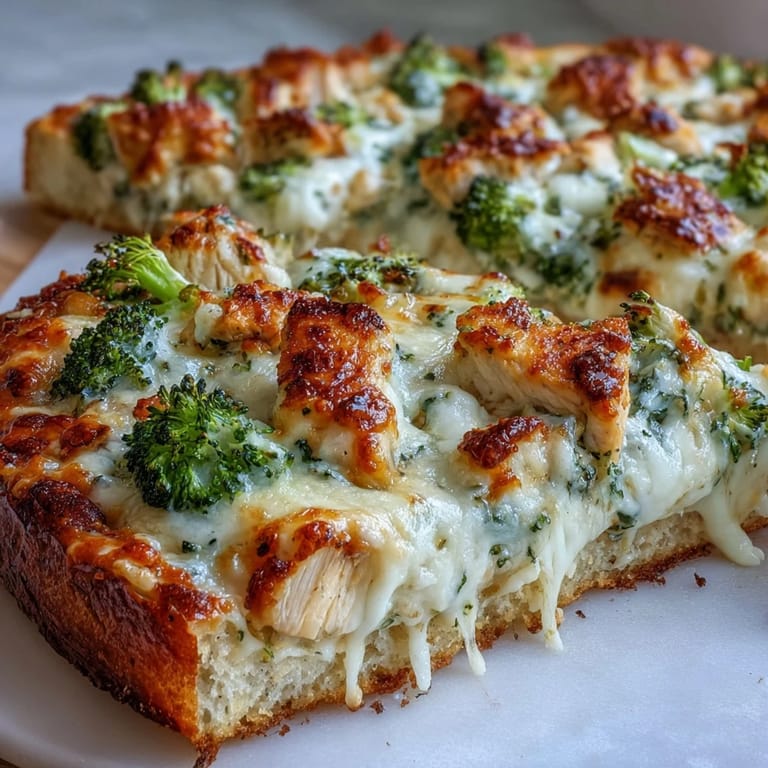
Save My neighbor stopped by one Tuesday evening with fresh broccoli from her garden, and I found myself staring at it, wondering what to do besides roast it into submission. That's when the idea hit: what if I treated it like a pizza topping instead of a side dish? I'd been making the same pepperoni pizza for years, and something about combining creamy garlic sauce with chicken and those tender green florets felt like discovering a secret menu item at a restaurant I thought I knew. The first batch came out of the oven bubbling and golden, and I haven't looked back since.
I made this for my sister's book club night, and honestly, it was the thing people kept talking about long after the wine glasses were empty. She'd texted asking if I could bring something, and this felt like the right answer—fancy enough to feel like I'd tried, but not so fussy that I'd be stressed in the kitchen while they were all laughing in the living room. One of her friends asked for the recipe before she'd even finished her second slice.
Ingredients
- Pizza dough: I use store-bought most of the time because honestly, life is short, and a good quality dough from the grocery store bakery section does the job beautifully.
- Unsalted butter: This is your sauce foundation, so don't skip it or swap it for oil—the butter creates that rich, coating texture that makes the whole thing work.
- Garlic cloves: Fresh minced garlic is non-negotiable here; the jarred stuff won't give you that aromatic punch that fills your kitchen.
- All-purpose flour: Just a couple tablespoons acts as a thickener, creating that luxurious sauce consistency without any lumps.
- Whole milk: Use actual milk, not cream, because you want something silky but not heavy enough to overwhelm the other flavors.
- Parmesan cheese: Buy the good stuff and grate it yourself if you can—it melts smoother and tastes noticeably sharper than pre-shredded varieties.
- Cooked chicken breast: Rotisserie chicken from the store is a total game-changer if you're short on time; it's already seasoned and tender.
- Broccoli florets: Blanching them first softens them just enough so they're tender when the pizza comes out of the oven, not raw or mushy.
- Mozzarella cheese: The low-moisture kind melts cleaner and browns better than fresh mozzarella, which can release too much water.
Tired of Takeout? 🥡
Get 10 meals you can make faster than delivery arrives. Seriously.
One email. No spam. Unsubscribe anytime.
Instructions
- Get your oven ready and warm:
- Crank the oven to 475°F and let it preheat fully; if you have a pizza stone, put it in now so it heats alongside the oven. A hot surface makes all the difference between a soggy middle and crispy edges.
- Shape the dough:
- Flour your surface lightly and stretch or roll the dough into a rough 12-inch circle, then transfer it to parchment paper or your pizza peel. Brush just the edges with olive oil so they'll turn golden and crispy.
- Make the sauce that changes everything:
- Melt butter over medium heat, add the minced garlic, and listen for that sizzle—about 30 seconds of toasting brings out the flavor. Sprinkle in flour, stir for a minute, then slowly whisk in milk while watching it thicken into something silky and smooth.
- Season and finish the sauce:
- Stir in Parmesan, salt, pepper, and herbs if using, cooking just until it coats the back of a spoon. Remove it from heat and let it cool slightly so it doesn't cook the cheese when you spread it.
- Build your pizza:
- Spread the sauce generously over the dough, leaving that 1-inch border so it won't burn. Scatter chicken and broccoli evenly, top with mozzarella and extra Parmesan, then drizzle with a little olive oil and red pepper flakes for a subtle heat.
- Bake until golden:
- Transfer to the oven and watch it for 12 to 15 minutes until the crust is golden and the cheese is bubbling at the edges. You'll know it's done when it smells like a proper pizzeria.
- Rest and serve:
- Let it sit for 2 minutes out of the oven so the cheese sets just slightly, then add fresh parsley, slice, and serve while everything is still warm and melty.
 Save
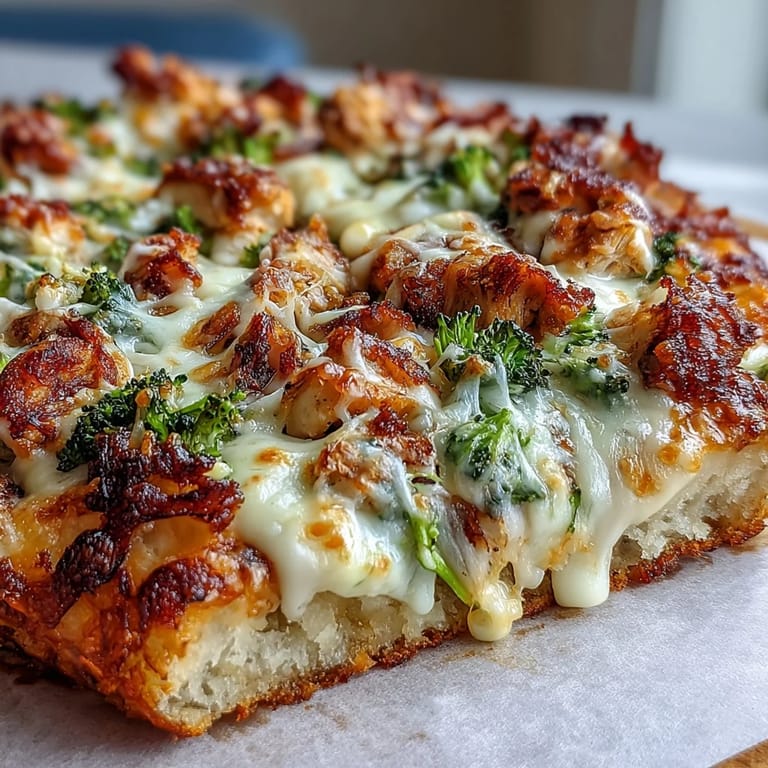
Save There's something about watching someone you care about taste something you made and seeing their face light up that makes cooking feel like more than just feeding people. My dad called it "fancy," which from him meant he was genuinely impressed, and he's not easily impressed by food.
The White Sauce Secret
The magic of this pizza really lives in that garlic-Parmesan sauce, and I've spent enough time making it to know exactly what works. The key is cooking the garlic just long enough to make it fragrant but not so long that it browns and turns bitter—literally about 30 seconds of gentle sizzling in the butter. When you add the flour, you're creating what cooks call a roux, a foundation that lets you build a sauce that's velvety instead of thin or lumpy. Whisking the milk in gradually, not all at once, keeps you from ending up with clumps that no amount of stirring will smooth out.
Broccoli as a Star Topping
I think broccoli has a reputation problem—people associate it with being forced to eat it as a kid, but on pizza it's completely different. It soaks in the garlic sauce, gets slightly caramelized at the edges, and adds a little vegetable texture that keeps things interesting instead of just tasting like cheese on bread. The florets also stay bite-sized, so you get them in nearly every slice, and they hold their shape better than mushrooms or peppers would. Blanching them first is the move that makes this work—it takes the raw edge off without turning them into mush.
Timing and Temperature Tips
Temperature matters more than you'd think with a thin-crust pizza, and 475°F hits that sweet spot between cooking the toppings and crisping the crust without burning anything. If your oven runs hot or cold, check it a minute or two earlier or later than the recipe suggests—every oven has its own personality. The 12 to 15 minute window is pretty reliable, but if you're using a pizza stone, it tends to cook a hair faster on the bottom, which is actually the whole point of using one. Keep an eye on the cheese; when it's bubbling and getting golden around the edges, you're done.
- If the crust is browning too fast but the cheese needs more time, tent it loosely with foil for the last few minutes.
- Let the pizza rest for 2 minutes after it comes out—this lets the cheese set and makes it actually sliceable instead of sliding everywhere.
- A well-heated pizza stone or baking sheet is the difference between a pizza and a bread-like disk, so don't skip that preheat time.
 Save
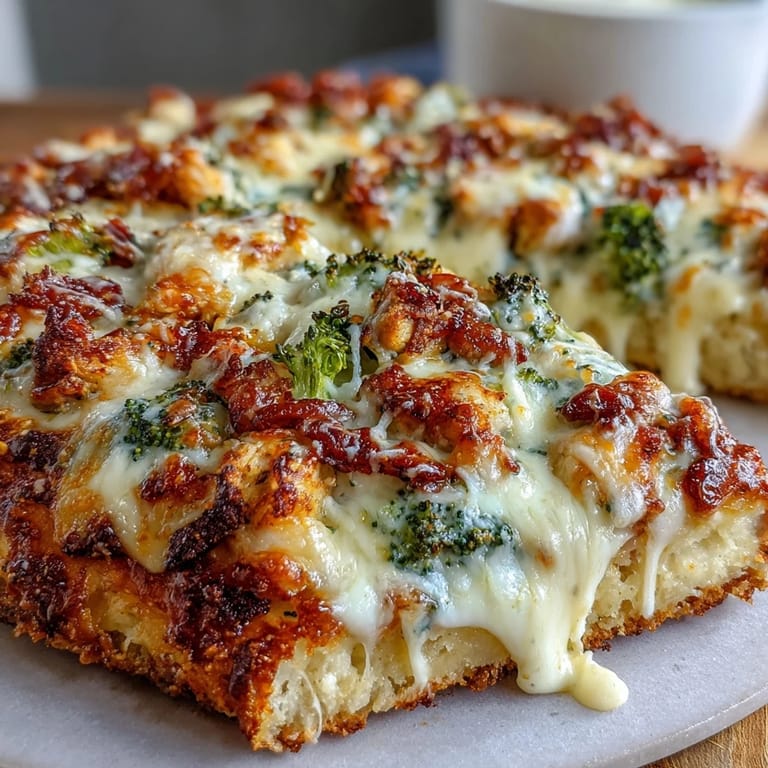
Save This pizza has become the thing I make when I want to feel like I've put in effort but not stress myself out, and somehow it always impresses. It's proof that the best dishes aren't the most complicated ones; they're the ones that balance flavors and textures in a way that feels right.
Recipe Questions & Answers
- → Can I use store-bought pizza dough?
Yes, you can use either homemade or store-bought pizza dough. Both work well for this thin-crust creation. Just ensure the dough is at room temperature before rolling for easier handling.
- → Should I cook the broccoli before putting it on the pizza?
Yes, blanch the broccoli florets briefly before adding them to the pizza. This ensures they become tender during baking without drying out or becoming too crunchy.
- → Can I make the white sauce ahead of time?
The white sauce can be prepared up to 24 hours in advance and stored in the refrigerator. Reheat gently on the stove, adding a splash of milk if needed to reach spreading consistency.
- → What other toppings work well with this combination?
Sliced mushrooms, cauliflower, or sun-dried tomatoes make excellent additions. You can also add fresh spinach or artichoke hearts for extra flavor and nutrition.
- → How do I store leftovers?
Store cooled slices in an airtight container in the refrigerator for up to 3 days. Reheat in a 350°F oven for 10 minutes or until heated through and crispy.
- → Can I freeze the assembled pizza before baking?
Yes, assemble the pizza on a parchment-lined tray and freeze until solid. Transfer to a freezer bag and store for up to 1 month. Bake from frozen, adding 2-3 minutes to the baking time.