 Save
Save My college roommate taught me to make fried rice at 11 PM after we realized we had nothing but leftover takeout rice and a bag of frozen vegetables. She worked at her family restaurant and showed me how the high heat transforms everything. We ate it standing up in her tiny kitchen, and honestly it was better than anything we had ordered earlier that week.
Last Tuesday my partner came home exhausted and I threw this together with rice from two nights ago. They asked if I had ordered from our favorite place downtown. That moment when someone thinks takeout arrived but it was just you, a hot pan, and leftovers.
Ingredients
- Cooked jasmine or long-grain rice: Day-old rice is non-negotiable here. Fresh rice turns to mush. I learned this the hard way when I tried to cut corners and ended up with savory rice pudding instead of fried rice.
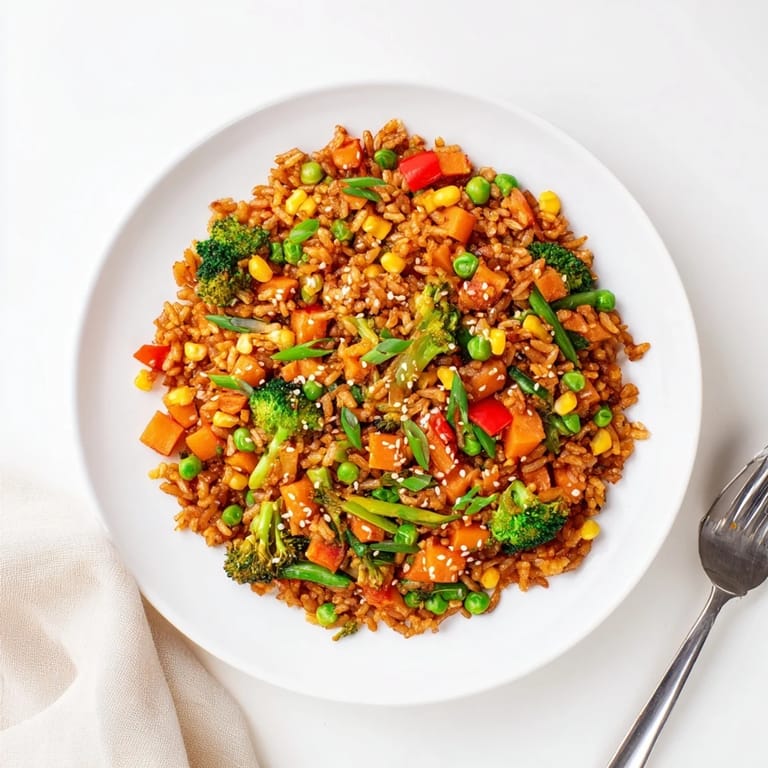
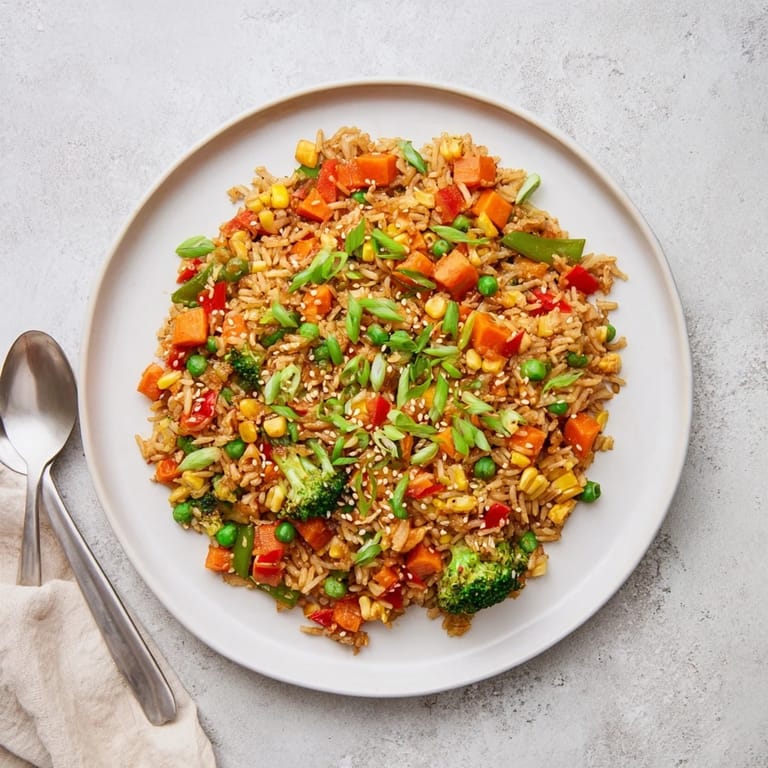
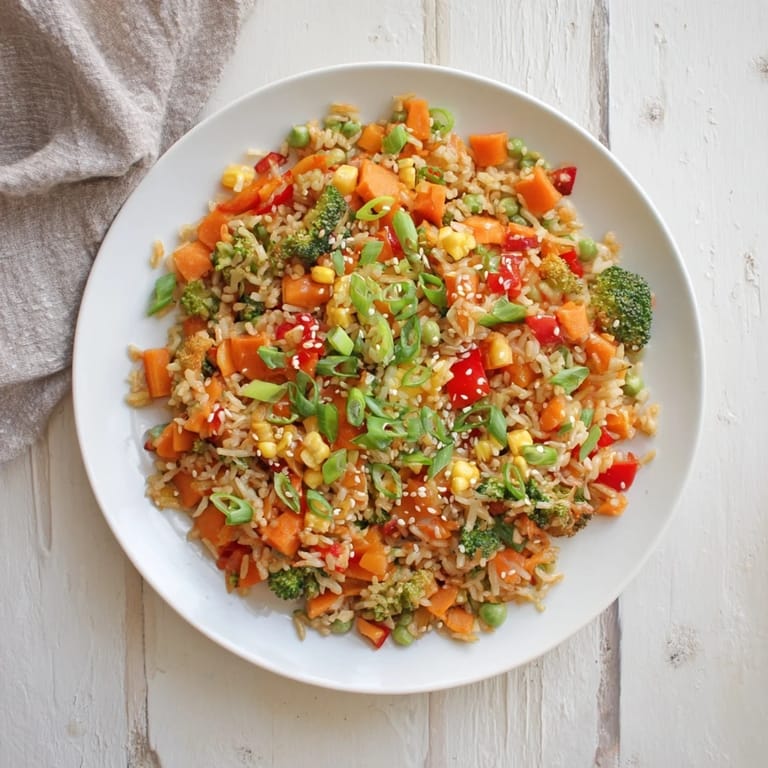
- Mixed vegetables: The combination listed here gives you every color and texture. Carrots and peppers for sweetness, broccoli for substance, peas for those little pops of brightness.
- Fresh aromatics: Garlic and ginger are the backbone. Do not use powdered versions here. The sharp punch of freshly minced ginger makes the kitchen smell like a proper restaurant kitchen.
- Soy sauce and sesame oil: Soy brings the salt and umami while sesame oil adds that nutty finish at the end. A little goes a long way with sesame oil.
Tired of Takeout? 🥡
Get 10 meals you can make faster than delivery arrives. Seriously.
One email. No spam. Unsubscribe anytime.
Instructions
- Prep your mise en place:
- Have everything chopped and measured before you turn on the stove. Once the heat is up, things move fast. Cold rice should be broken up into individual grains with your hands.
- Get your pan screaming hot:
- Heat the oil in a wok or large skillet over medium-high heat. You should see it shimmer and maybe just start to smoke. That is the temperature you want.
- Build your flavor base:
- Add the garlic and ginger first. Let them sizzle for about 30 seconds until your kitchen smells incredible. Do not let them brown or they will turn bitter.
- Cook the hard vegetables:
- Add the carrots, bell pepper, broccoli, green beans, and corn. Stir-fry for 3 to 4 minutes. You want them tender-crisp, not soft. They should still have some bite.
- Add the quick-cooking ingredients:
- Throw in the peas and most of the green onions. One minute is all these need. Keep everything moving so nothing sticks to the pan.
- Bring in the rice:
- Crank the heat to high. Add the cold rice and break up any clumps with your spatula. Let it sit for a minute between stirs so some grains get crispy and golden.
- Season and finish:
- Drizzle with soy sauce and sesame oil. Sprinkle with pepper and toss until everything is evenly coated. Taste and add more soy sauce or salt if needed.
- Garnish and serve:
- Remove from heat immediately. Top with the reserved green onions and sesame seeds if you have them. Serve hot while the rice still has that slight crunch from the high heat.
 Save
Save This recipe saved me during quarantine when fresh groceries were hard to find. I relied on frozen vegetables and whatever rice I had stashed in the freezer. Somehow it never felt like making do. It felt like a proper meal.
The Secret to Restaurant Texture
The difference between home fried rice and restaurant versions comes down to heat and moisture. High heat evaporates surface moisture from the rice, creating those crispy, toasted edges. That is why day-old rice works better. The grains have dried out just enough to crisp up without becoming hard.
Customizing Your Vegetables
The beauty of this dish is its flexibility. No carrots. Use whatever you have. Mushrooms add meatiness. Zucchini works well if you cook it briefly. Snow peas bring crunch. The key is adding vegetables in order of cooking time. Hard vegetables first, quick ones last.
Making It a Complete Meal
While this is perfect as a side, you can easily make it the main attraction. Add protein and you have a one-bowl dinner. The techniques remain the same.
- Scramble eggs in the pan before adding vegetables
- Crispy tofu cubes work beautifully if you pan-fry them first
- Leftover chicken or shrimp can be added at the very end just to heat through
 Save
Save I hope this becomes your go-to for busy nights and leftover rice. Some of the best meals start with what you already have.
Recipe Questions & Answers
- → Why use day-old rice for fried rice?
Day-old cold rice works best because the grains have dried out slightly, preventing them from becoming mushy during stir-frying. Freshly cooked rice contains too much moisture and can turn sticky or clumpy.
- → Can I use brown rice instead of white?
Absolutely! Brown rice adds extra fiber and nutrients. Just ensure it's cooked and chilled properly before stir-frying. The texture will be slightly nuttier and chewier than traditional white rice versions.
- → How do I prevent my vegetables from getting soggy?
Keep the heat high and stir-fry vegetables in batches if needed. Cook them just until tender-crisp—about 3-4 minutes. They should still have some bite and vibrant color. Overcrowding the wok can cause steaming instead of frying.
- → Can I make this gluten-free?
Yes! Simply substitute regular soy sauce with tamari or certified gluten-free soy sauce. All other ingredients naturally contain no gluten, making this an easy gluten-free option.
- → What protein additions work well?
Scrambled eggs, cubed tofu, edamame, or cooked chicken all pair beautifully. Add eggs during the last few minutes of cooking, or incorporate pre-cooked proteins when you add the rice.
- → How long does this keep in the refrigerator?
Store in an airtight container for up to 4 days. Reheat in a skillet over medium heat or in the microwave. The flavors often improve overnight as the ingredients meld together.