 Save
Save There was this Tuesday in October when I opened the fridge to find half a butternut squash staring back at me, left over from weekend roasting. My kids were asking for mac and cheese, and instead of just making the usual box version, I thought, why not roast what I already have and turn it into something golden? That first bowl—creamy, slightly sweet, nothing like the bland orange sauce I expected—changed how I think about comfort food entirely.
I made this for a potluck last year where everyone brought the same three casseroles, and watching people take a second helping of something that started as a kitchen experiment felt like the ultimate quiet victory. My mother-in-law asked for the recipe, and honestly, that meant more than any compliment.
Ingredients
- Elbow macaroni or small shells, 340 g: Small shapes hold the sauce better than long pasta, and they feel right in your spoon.
- Butternut squash, 500 g, peeled and cubed: Don't rush the peeling; a sharp vegetable peeler and patience save your knuckles.
- Olive oil, 1 tbsp: Just enough to help the squash caramelize and deepen its flavor.
- Salt and black pepper, 1/2 tsp and 1/4 tsp: Season the squash itself so it tastes like something from the start.
- Unsalted butter, 2 tbsp: The foundation of your sauce; using unsalted gives you control over the final seasoning.
- All-purpose flour, 2 tbsp: This creates the roux that thickens everything into velvet.
- Whole milk, 480 ml: Full-fat milk makes a difference; lower-fat versions thin out the sauce.
- Sharp cheddar cheese, 120 g, grated: Sharp means flavor that doesn't disappear into the background.
- Gruyère or fontina cheese, 60 g, grated: This adds depth and a subtle nuttiness that plain cheddar alone can't deliver.
- Nutmeg, 1/8 tsp: A tiny whisper that makes people ask what the secret ingredient is.
- Dijon mustard, 1/2 tsp: It won't taste like mustard; it sharpens the cheese flavors instead.
- Panko breadcrumbs, 30 g (optional topping): Stay crispy longer than regular breadcrumbs and add real texture.
- Melted butter and parmesan for topping, 1 tbsp and 2 tbsp: The optional finishing touch that turns dinner into something restaurant-worthy.
Tired of Takeout? 🥡
Get 10 meals you can make faster than delivery arrives. Seriously.
One email. No spam. Unsubscribe anytime.
Instructions
- Get the squash golden:
- Heat your oven to 200°C and toss the butternut squash cubes with olive oil, salt, and pepper. Spread them in a single layer on a baking sheet and roast for 20 to 25 minutes, stirring halfway through, until the edges are caramelized and a fork slides through easily. This roasting step is what transforms bland squash into something sweet and complex.
- Cook the pasta:
- While the squash roasts, bring a big pot of salted water to a boil and cook your pasta one minute under al dente. It will cook a bit more when it meets the hot sauce, so don't overcook it here or you'll end up with mush.
- Make the squash puree:
- Once the squash cools just enough to handle safely, put it in a blender with 1/2 cup of the milk and blend until completely smooth. A few small lumps are fine; you want silky, not gritty.
- Build the sauce base:
- Melt your butter in a large saucepan over medium heat, then stir in the flour and cook for 1 to 2 minutes until it smells nutty and looks pale golden. This roux is your canvas.
- Create the cream sauce:
- Gradually whisk in the remaining 1 1/2 cups of milk, stirring constantly and scraping the bottom of the pan so nothing sticks or burns. Keep going for 3 to 4 minutes until the sauce thickens enough to coat the back of a spoon.
- Add the squash and cheese:
- Stir in your squash puree, then add both cheeses, the nutmeg, and the Dijon mustard all at once. Keep stirring gently until the cheese melts completely and everything is smooth and glossy, then taste and adjust the salt and pepper.
- Bring it all together:
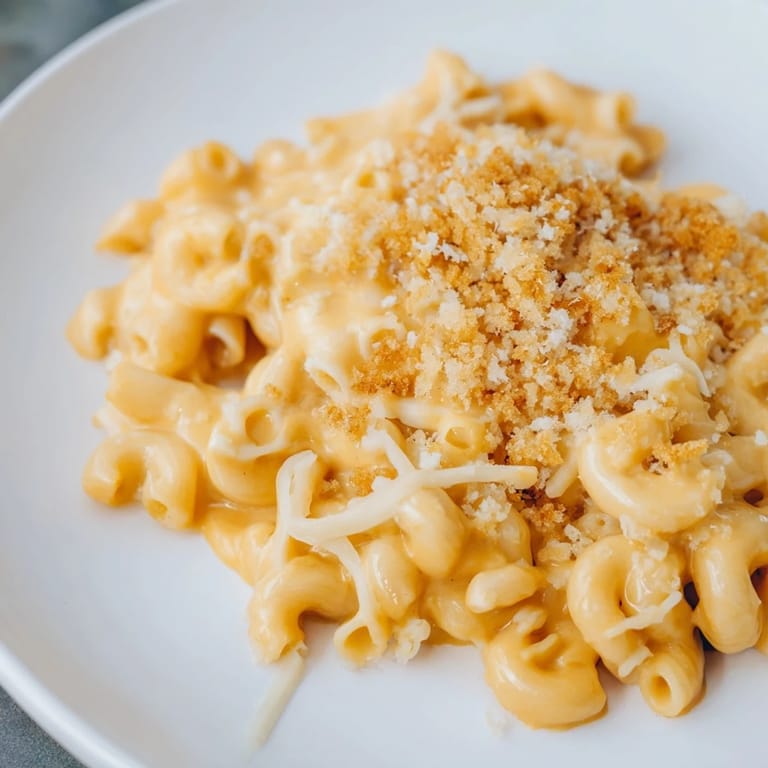
- Add the cooked pasta to the sauce and fold everything together until every piece is coated. The pasta should look glossy and orange, not dry or clumpy.
- Toast the topping (if you're using it):
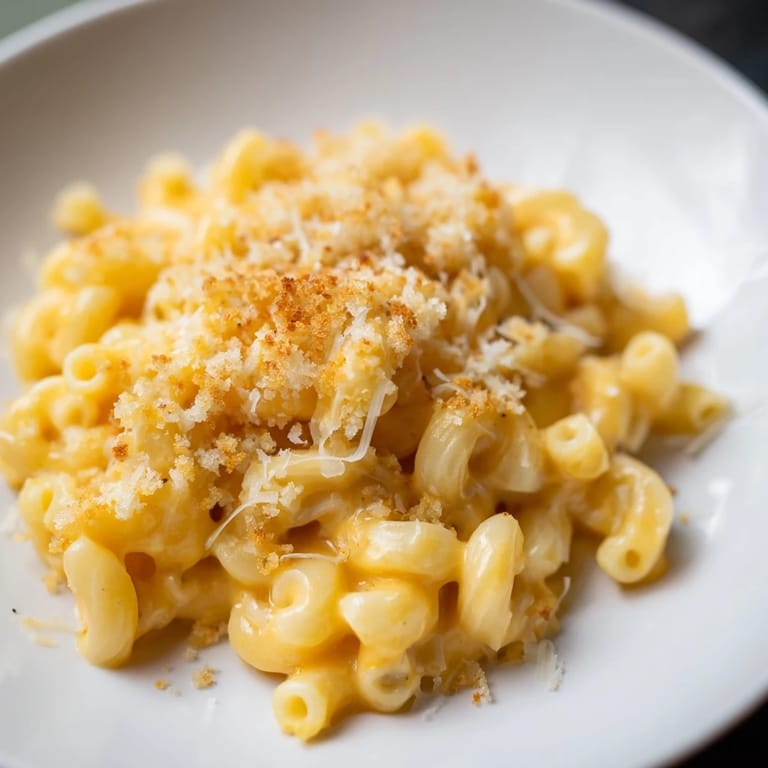
- Mix the panko with melted butter and parmesan, transfer your mac and cheese to a baking dish, scatter the breadcrumb mixture over the top, and broil for 2 to 3 minutes until it's golden and crispy. Watch it like a hawk so it doesn't burn.
 Save
Save My neighbor came over and ate three bowls of this while we sat on the kitchen counter, and somewhere between bites she told me her whole story about moving to the city for a job she hated before finding something better. That's when I realized this dish does something quiet but real—it makes people stay a little longer and talk a little deeper.
Why This Works Better Than Regular Mac and Cheese
Butternut squash acts like a secret weapon here. It adds creaminess without extra cream, brings natural sweetness that balances the cheese, and adds beta-carotene so you don't feel guilty eating an entire bowl. The puree also means you get that smooth, velvety texture without heavy cream, which would overshadow the squash entirely. It's lighter than it tastes, which is the best kind of kitchen trick.
Cheese Selection Matters
Sharp cheddar gives you real cheese flavor that cuts through the richness, and Gruyère or fontina adds a subtle nuttiness and helps the sauce stay smooth when reheated. Skip the mild stuff—it disappears into the squash and leaves you wondering if you even added cheese. I tried mozzarella once and it tasted like plain pasta with squash gravy, so learn from that mistake without making it yourself.
The Topping Question
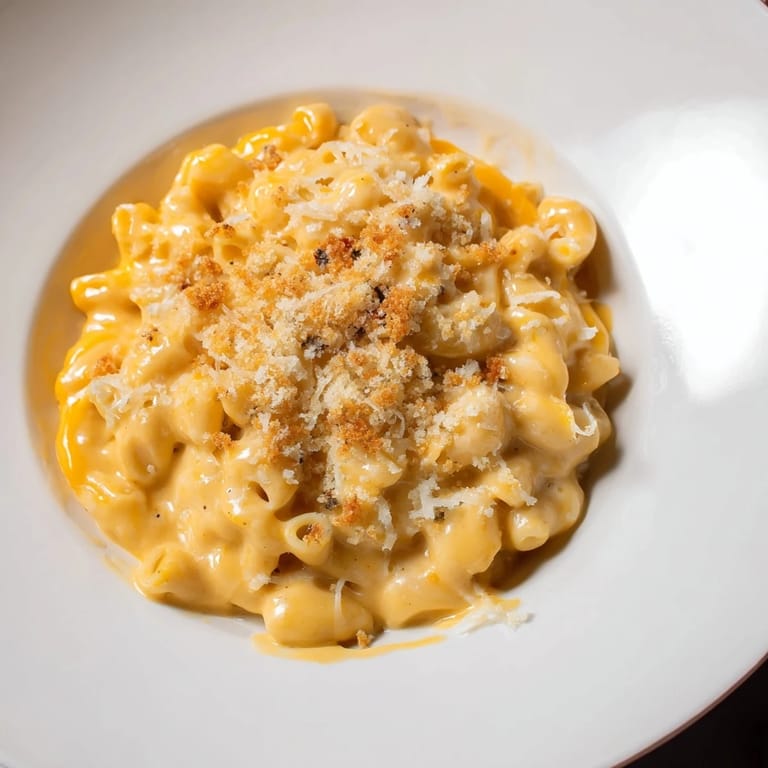
The panko topping is optional but honestly transforms this from comfort to craveable. Panko breadcrumbs stay crisp longer than regular ones, and the butter-parmesan coating makes them taste like toasted gold rather than burnt bread. If you're cooking for people who care about texture, this step takes thirty seconds and changes everything.
- Make the panko topping while the mac and cheese finishes assembling so it's ready to go straight under the broiler.
- If you don't have panko, crushed crackers or even crushed cereal work in a pinch, but panko really is superior.
- Broil for exactly 2 to 3 minutes and stay in the kitchen; the difference between golden and charred is about 45 seconds.
 Save
Save This is the kind of recipe that lives in the space between everyday and special, the kind you make when you want to feel like you tried without actually spending all day cooking. Every time I make it, someone asks for seconds.
Recipe Questions & Answers
- → How do I roast butternut squash for this dish?
Peel and cube the squash, toss with olive oil, salt, and pepper, then roast at 200°C (400°F) for 20–25 minutes until tender and caramelized.
- → Can I substitute the cheeses used here?
Yes, Gruyère can be swapped for fontina or mozzarella for a milder flavor without sacrificing creaminess.
- → What pasta works best for this dish?
Elbow macaroni or small shell pasta work well, holding sauce and providing a satisfying bite.
- → Is there a way to add extra texture to the dish?
Sprinkle a mixture of panko breadcrumbs, melted butter, and grated parmesan on top, then broil briefly for a crispy golden crust.
- → How can I enhance the nutritional value?
Add sautéed spinach or kale for greens, or stir in cooked chicken or crispy bacon for added protein.