 Save
Save I discovered this dish at a farmers market on a sunny Saturday morning, watching a caterer arrange impossibly perfect squares of white and green on a marble board. There was something almost architectural about it, like edible geometry, and I found myself staring long enough that the vendor asked if I wanted the recipe. She laughed and said it was simpler than it looked—just good cheeses, fresh herbs, and a little patience. That afternoon, I tried it myself, and the moment I piped that vibrant green herb paste into the grid, something clicked. It wasn't just food anymore; it was art that tasted like springtime.
I made this for my sister's engagement party, and I remember the moment someone said, "Did you buy this from a caterer?" followed by the slow smile when I admitted I made it myself. The whole platter disappeared in twenty minutes, and people were actually taking photos of it before eating. That's when I realized presentation isn't superficial—it changes how food makes people feel, how they remember the moment, how they remember you.
Ingredients
- Fresh mozzarella: Get the creamy kind, not the rubbery ball—it should slice cleanly and have a tender melt that balances the sharpness of the feta.
- Ricotta cheese: This is your blank canvas for spreading; use full-fat ricotta because the texture will be silky and it'll hold its shape better when piped.
- Feta cheese: Choose blocks over crumbles so you can slice neat squares; the saltiness is essential for cutting through the richness.
- Fresh basil: Pick it just before making the paste so the oils are at their peak—that smell is what makes people stop and ask what's cooking.
- Flat-leaf parsley: Don't use the curly kind; it's milder and blends into a smoother paste without those fibrous bits.
- Chives: They give a gentle onion note that you don't quite taste but definitely notice when it's missing.
- Extra virgin olive oil: This binds everything and adds richness; use one you actually love because you'll taste it.
- Garlic clove: One small one, minced fine—garlic paste can overpower, so less is more here.
- Lemon zest: This is the secret brightness that keeps everything from tasting too heavy or one-note.
- Salt and pepper: Taste as you blend the herb mixture because the cheeses already bring salt.
- Microgreens or edible flowers: Optional but worth it; they're the final flourish that makes people actually believe you're fancy.
Tired of Takeout? 🥡
Get 10 meals you can make faster than delivery arrives. Seriously.
One email. No spam. Unsubscribe anytime.
Instructions
- Blend the herb paste:
- Pulse everything together until you get a vibrant, smooth green—it should look almost jewel-like. Taste it and adjust the lemon or salt if needed; this is where the whole dish gets its personality.
- Prep your canvas:
- Line your tray with parchment paper so you can lift and move it without stress; it's a game-changer for plating confidence.
- Cut your cheese squares:
- Aim for roughly the same size, about two inches on each side. If you're worried about precision, a small cookie cutter or ruler genuinely helps and takes away the second-guessing.
- Spread the ricotta:
- Use an offset spatula for smooth, even squares, or grab a piping bag if you want crisp, clean edges. The ricotta should be about a quarter-inch thick for a proper bite.
- Build your checkerboard:
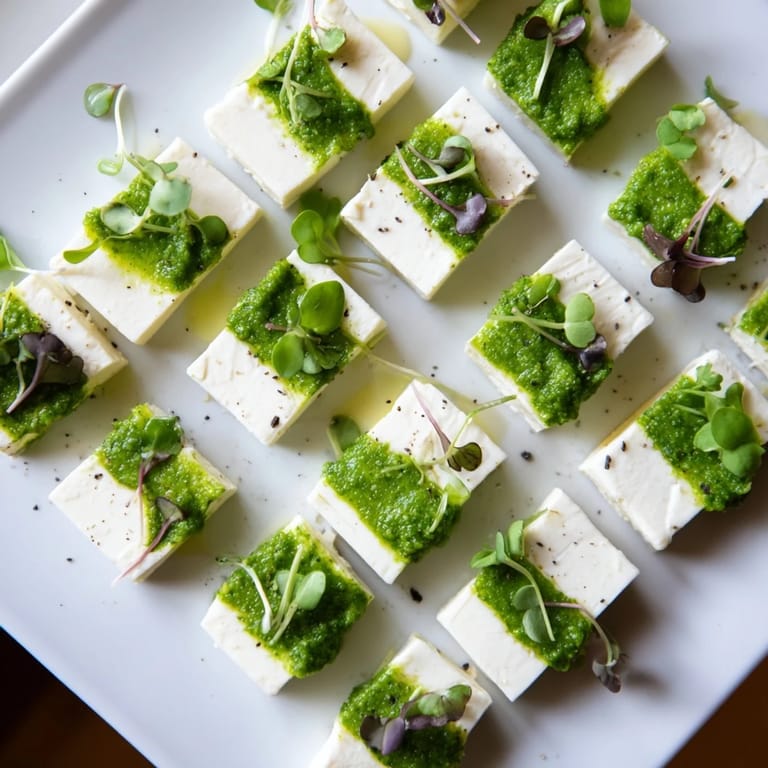
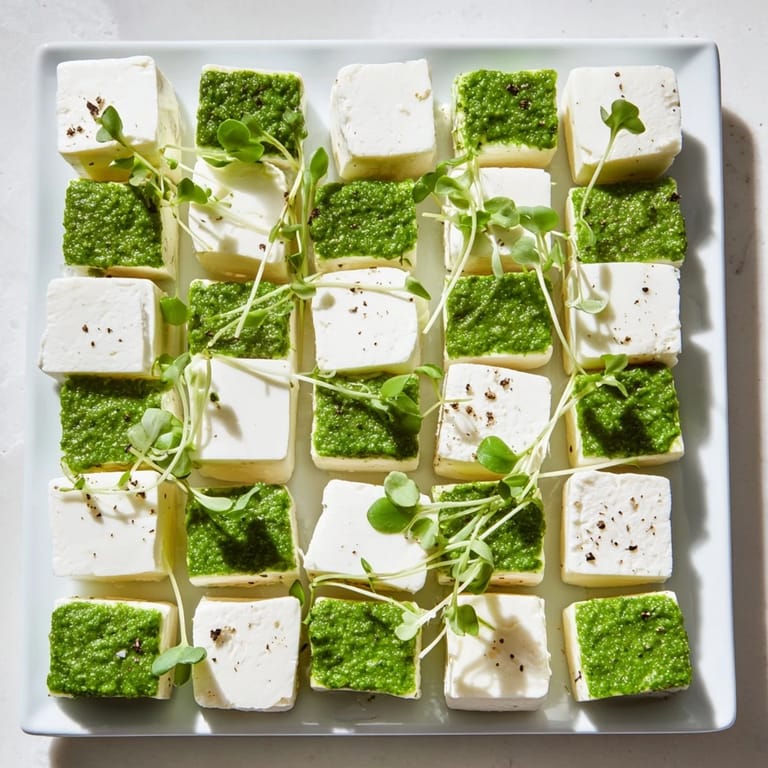
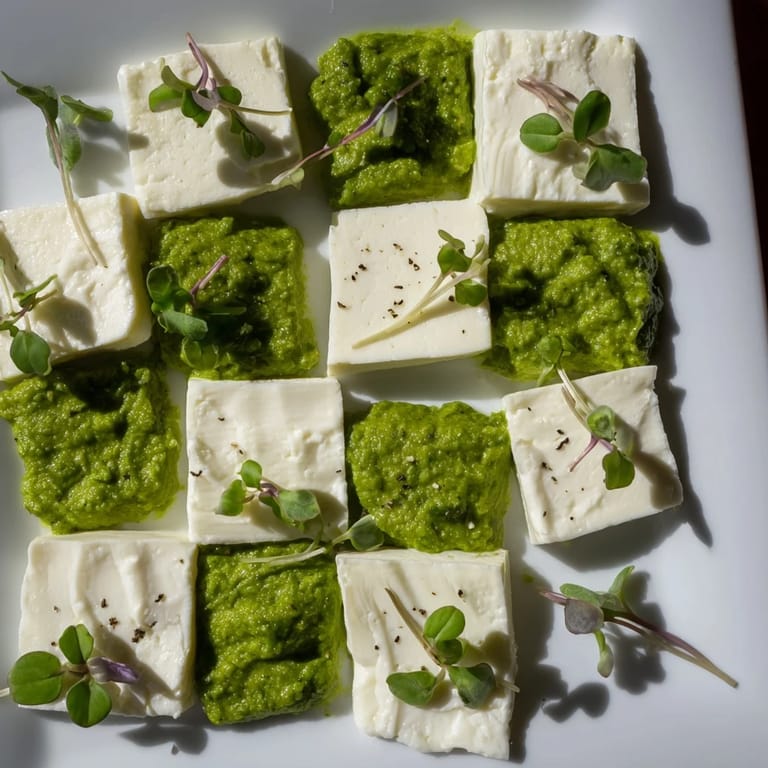
- Alternate ricotta, mozzarella, herb paste, feta in a grid pattern, keeping the lines tight. Step back every few squares to make sure it's actually looking like a checkerboard and not a color accident.
- Garnish and chill:
- Top with microgreens or a light pepper dust, then refrigerate for 10–15 minutes so everything sets slightly and looks polished. The cold also melds the flavors together just enough.
 Save
Save I remember my mom tasting this for the first time and saying, "This is the kind of thing that makes people feel like they're at a real party." That stuck with me, because she was right—it's not about being complicated, it's about intention. You took the time to make something look beautiful, and that generosity shows on the plate.
Why the Checkerboard Works
Color and pattern catch the eye before flavor does, and this dish knows that. The white squares glow against the green, and the geometry feels intentional and controlled—qualities people associate with good cooking. But the real magic is that once you bite into it, the textures and flavors are just as thoughtful as the presentation. It's not all show; the careful construction means every bite has a mix of creamy, salty, and fresh.
Swaps and Variations
I've experimented with this enough to know where you can play and where you shouldn't. Goat cheese can replace ricotta for something more tangy, and mint or dill works beautifully alongside basil if you're in the mood for something different. Some people layer thin cucumber slices or radish under the cheese for extra crunch—I did that once and everyone asked what made it taste fresher. The herb paste is the anchor, though, so don't skimp on the freshness there.
Timing and Serving
Make this an hour or two before your guests arrive so you're not stress-plating while people are already there. It stays fresh in the fridge for about four hours, which is usually plenty of time. I always serve it with good crackers, toasted bread, or a pile of fresh vegetables on the side—people want options for how they want to eat it, and having choices makes it feel more generous.
- If you're serving a crowd, consider making two smaller boards instead of one large one so people actually reach the center squares.
- Pair it with a crisp white wine like Sauvignon Blanc or a light Pinot Grigio if you're thinking about drinks.
- Set it out thirty minutes before serving so the cheeses soften slightly and all the flavors open up a bit.
 Save
Save This is one of those dishes that reminds you that food is partly about beauty, partly about flavor, and mostly about bringing people together. Make it for someone you want to impress, or make it for yourself just to feel that small satisfaction of turning simple ingredients into something that looks like it belongs in a gallery.
Recipe Questions & Answers
- → How do you achieve the perfect checkerboard pattern?
Slice the mozzarella and feta cheeses into even squares and spread ricotta with a piping bag or spatula for clean edges. Alternate these squares with the herb paste arranged in similar-sized sections on a lined tray.
- → What herbs are best for the green herb mixture?
A combination of fresh basil, flat-leaf parsley, and chives creates a bright, flavorful herb mixture that balances the richness of the cheeses.
- → Can any cheeses be substituted?
Certainly. For different flavors, try goat cheese in place of ricotta or experiment with other mild, fresh cheeses that hold shape well.
- → What are good serving suggestions?
Serve chilled with crackers, toasted bread, or crisp crudités for a refreshing and elegant starter or centerpiece.
- → How should leftover cheese and herb squares be stored?
Keep leftovers covered in the refrigerator, ideally wrapped or in an airtight container, to maintain freshness for up to two days.