 Save
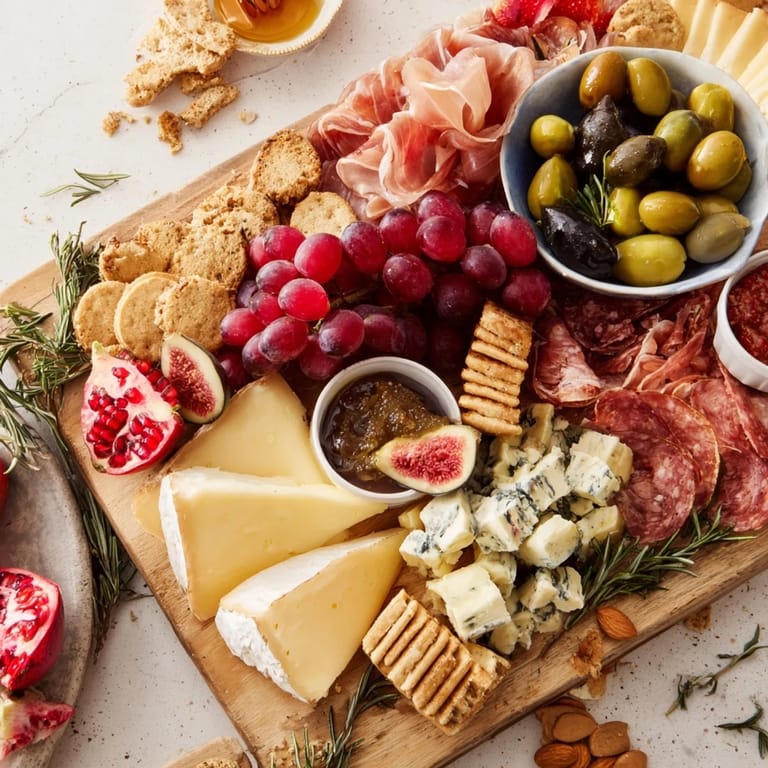
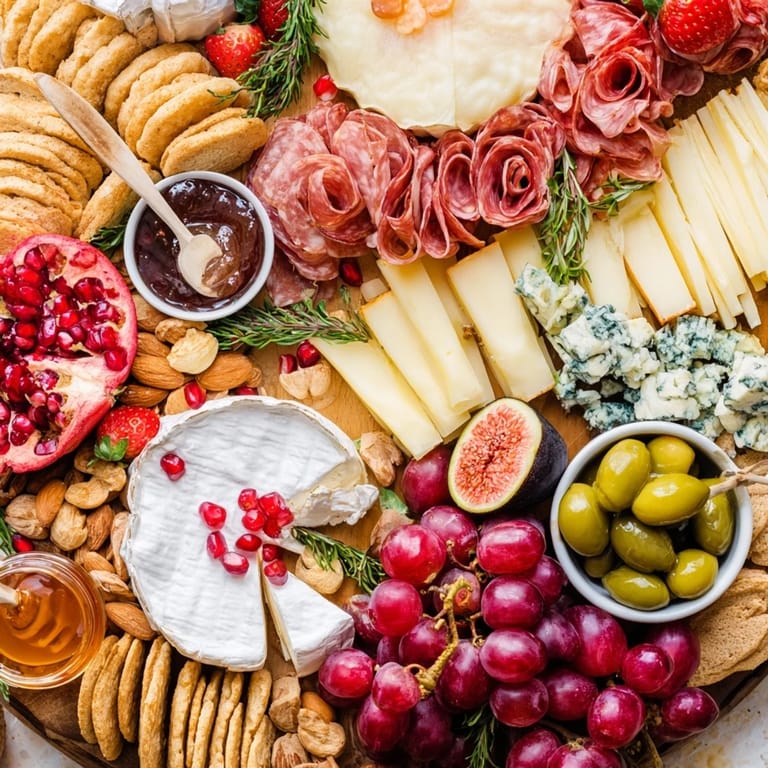
Save The first time I assembled a grazing board that actually made people gasp, I wasn't aiming for theater—I was just tired of plating individual appetizers. I draped some prosciutto over the edge of a wooden board on a whim, and suddenly my kitchen felt like a backstage moment. Something clicked. Now, whenever I want to create that same feeling of controlled chaos and elegance, I build a board that spills and cascades like velvet curtains at a grand finale.
I remember assembling this board for a friend's birthday dinner when she mentioned loving dramatic presentations but hating fussy food. The moment I let the cheese wedges tumble over the edge and draped prosciutto like fabric, she walked in and actually stopped talking. That's when I knew this board wasn't just appetizers—it was a conversation starter.
Ingredients
- Brie wedges (150 g): Cut these right before serving so they stay creamy and don't oxidize; warm Brie is irresistible on a cracker.
- Aged Cheddar sticks (150 g): The firm, waxy texture holds its shape beautifully when draped and provides a sharp contrast to softer cheeses.
- Blue Cheese chunks (120 g): Break it by hand rather than cutting—the irregular pieces look more intentional and invite people to taste bravely.
- Prosciutto (100 g): Let it come to room temperature so it folds gracefully without tearing; drape it loosely for maximum drama.
- Soppressata (100 g): Fold these slices into thirds or quarters and layer them so the pattern shows—it catches the light beautifully.
- Red grapes on the stem (1 cup): Leave them clustered; they're easier to grab and look more luxurious hanging from the board.
- Fresh figs (1 cup, halved): Wait to halve them until just before serving to prevent them from drying out or browning.
- Strawberries (1 cup, halved): Choose firm berries that hold their shape; soft ones weep and stain everything around them.
- Pomegranate seeds (1 cup): These are your jewels—scatter them last where they catch the light and add pops of ruby color.
- Baguette slices: Toast them lightly just before arranging so they stay crisp and don't absorb moisture from the board.
- Seeded crackers (150 g): Choose sturdy ones that won't crumble under the weight of cheese and toppings.
- Fig jam (1/2 cup): Warm it slightly in a small bowl so it's easy to spread; the sweetness plays beautifully against salty charcuterie.
- Honey (1/4 cup): Drizzle it over creamy cheeses or offer it in a small bowl—it's the unexpected sweetness that makes people linger.
- Marcona almonds (1/2 cup): These buttery, slightly sweet nuts are worth the extra cost; they taste like luxury.
- Olives (1/2 cup, pitted): Mix green and black for visual interest and to give guests the choice between briny and buttery.
- Fresh herbs (rosemary, thyme): Tuck sprigs between ingredients as you build—they're not just garnish, they perfume the board and guide the eye.
Tired of Takeout? 🥡
Get 10 meals you can make faster than delivery arrives. Seriously.
One email. No spam. Unsubscribe anytime.
Instructions
- Set the stage:
- Choose a large wooden or marble board and position it so the edge hangs slightly beyond the table's edge. This isn't just functional—it gives you a natural place for ingredients to cascade dramatically.
- Create the cheese foundation:
- Arrange your three cheeses in clusters around the board, leaving gaps for other elements. Let some wedges and sticks intentionally spill over the edge, as if they're mid-tumble like stage curtains.
- Drape the charcuterie:
- Fold the prosciutto loosely and layer it so the folds catch light and shadow. Let soppressata pieces overlap and cascade slightly, building height and movement across the board.
- Scatter the jewels:
- Tuck grapes, fig halves, strawberries, and pomegranate seeds into the gaps, allowing some to trail toward the board's edge. These colors and textures break up the richness and add life to the composition.
- Position the bases:
- Fan bread slices and crackers in loose arrangements so they lean against the cheeses slightly. They should feel organic, not rigid—let some overhang naturally.
- Nest the condiments:
- Place small bowls of fig jam, honey, olives, and almonds directly on the board, nestled among the other ingredients. Position them where they're visible but won't topple if someone reaches across.
- Add the finishing touch:
- Tuck fresh herb sprigs throughout—between cheese wedges, alongside the fruit, anywhere they'll catch the eye and add fragrance. Step back and look for empty spaces that feel intentional rather than forgotten.
- Serve with confidence:
- Bring the board to the table and encourage guests to graze freely. The beauty is that there's no right way to enjoy it—each person creates their own perfect bite.
 Save
Save There's a moment right after I finish arranging a board like this when I step back and see it not as separate ingredients but as a whole composition—like I've painted something edible. That feeling never gets old, especially when guests arrive and their first instinct is to pull out their phones rather than dive in.
The Theater of Arrangement
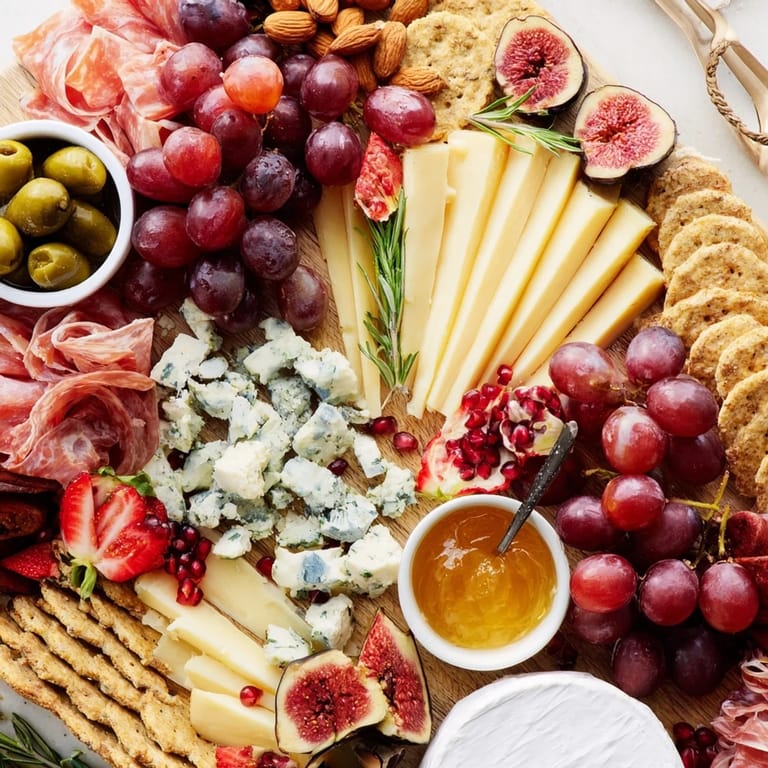
The magic of this board isn't in expensive ingredients—it's in how you make them feel dramatic. Think of yourself as a set designer. The cheeses are your main players, the charcuterie provides elegant folds and shadows, and the fruit adds splashes of color like stage lighting. When you let things cascade and overlap intentionally, even modest components feel luxurious. The eye naturally follows movement and depth, so strategically placed items that break the plane—literally hanging over the edge—feel theatrical and exciting.
Building Height and Movement
A flat, evenly distributed board reads as boring. Create vertical interest by stacking cheese, folding charcuterie into peaks, and letting fruits tumble at varying heights. When you arrange items so they seem to flow toward the table's edge, you're creating a visual narrative. This isn't chaos—it's controlled elegance. The effect is instantly more impressive than a perfectly symmetrical arrangement, and it actually makes the board easier to serve from because guests naturally reach toward the cascading pieces.
Making It Your Own
This board is a framework, not a formula. Swap in whatever speaks to your season and your guests—spring calls for asparagus and goat cheese, autumn wants roasted grapes and aged white cheddar. The principles remain the same: contrast flavors and textures, build in height, let things spill dramatically, and taste as you go. Don't be afraid to adjust until it feels right.
- Vegan versions shine with cashew cheese, marinated mushrooms, and abundance of seasonal fruits and nuts.
- If you're feeding meat lovers, double the prosciutto and add crispy pancetta for extra richness and smokiness.
- Make it a moment—pair with something to drink, dim the lights slightly, and let the board be the star of the opening act.
 Save
Save A board like this is less about feeding people and more about creating a moment where everyone pauses, admires, and then loses themselves in conversation and flavor. That's the real curtain call.
Recipe Questions & Answers
- → What cheeses work best for a grazing board like this?
Soft Brie, aged cheddar, and crumbly blue cheese provide a balanced range of textures and flavors that complement fresh fruit and savory meats.
- → How can I make this suitable for vegetarians or vegans?
Omit the charcuterie for a vegetarian option. Replace dairy cheeses with plant-based alternatives to make it vegan-friendly.
- → What tips enhance the visual appeal of the board?
Arrange ingredients so some spill over edges and folds create movement, mimicking stage curtains. Garnish with fresh herbs and edible flowers for extra drama.
- → Which accompaniments pair well on this board?
Fig jam, honey, marcona almonds, and olives add contrasting textures and flavors, elevating the overall experience.
- → How should I serve the board to guests?
Place the board near the table edge to showcase cascading layers. Encourage guests to graze and enjoy a variety of combinations.