 Save
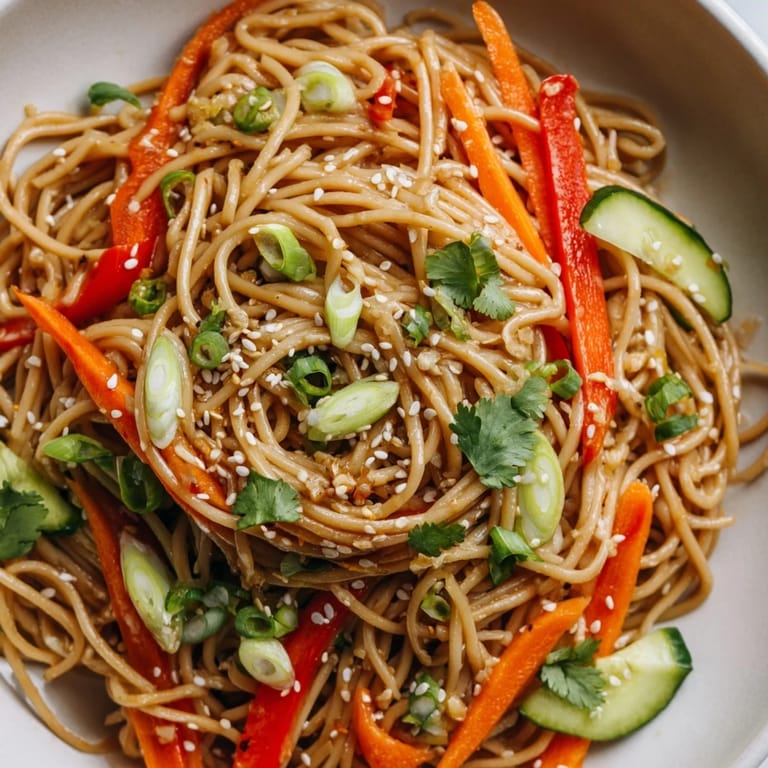
Save There's something about the smell of garlic hitting hot oil that makes me stop whatever I'm doing in the kitchen. One particularly warm afternoon, I had three friends coming over for lunch, and the fridge felt disappointingly bare—just a pile of vegetables, some noodles, and my usual pantry staples. I tossed together what I had, and watching them twirl those garlicky noodles on their forks, asking for the recipe before they'd even finished eating, made me realize I'd stumbled onto something genuinely special. It's become my go-to when I want something that feels effortless but tastes like I actually tried.
I remember serving this at a potluck where I was nervous about contributing a cold dish in the middle of winter, but by the end of the night, the bowl was scraped clean while the heavier casseroles still had half their contents left. One guest even pulled me aside to ask if there was a secret ingredient—which made me laugh because the secret is really just patience with the garlic oil and not overthinking it.
Ingredients
- Dried wheat noodles (250 g): Lo mein, spaghetti, or soba all work beautifully here; the key is cooking them just until tender, then shocking them in cold water so they don't turn to mush by the time you serve.
- Neutral oil (3 tbsp): Grapeseed or vegetable oil won't burn at medium heat and lets the garlic shine without competing flavors.
- Garlic cloves (5 large, minced): Mince them fine so they cook evenly and distribute throughout the oil—chunky bits will overpower individual bites.
- Toasted sesame oil (1 tsp): This is a small amount but it's the difference between a bland noodle salad and one with actual depth; adding it after the oil cools prevents it from losing its nutty character.
- Carrot (1 cup, julienned): The slight sweetness of raw carrot balances the salty-savory dressing beautifully.
- Red bell pepper (1 cup, thinly sliced): Use red or yellow for natural sweetness; green peppers taste more grassy and can throw off the overall balance.
- Cucumber (1 cup, deseeded and julienned): Deseeding keeps the salad from getting watery and soggy as it sits.
- Spring onions (2, thinly sliced): They add a gentle onion flavor without the harsh bite of raw yellow onions.
- Fresh cilantro (1/2 cup, roughly chopped): If you're cilantro-averse, flat-leaf parsley gives you the green freshness without the soapy taste some people get.
- Soy sauce (3 tbsp): Low sodium lets you control the saltiness, which matters when you're using sesame oil and other bold flavors.
- Rice vinegar (1 tbsp): The mild acidity brightens the whole dish without harsh sharpness.
- Honey or maple syrup (1 tsp): Just enough to round out the edges and soften the salt and vinegar slightly.
- Chili flakes (1/2 tsp, optional): I usually skip this because the dish is perfect as is, but if you want heat, go easy—you can always add more at the table.
- Toasted sesame seeds (2 tbsp): Toast them yourself in a dry pan for 2 minutes if you can; store-bought are fine, but fresh-toasted have a deeper, nuttier flavor.
- Lime wedges (optional): A squeeze at the end can brighten everything, or leave them off if your guests prefer the pure garlic flavor.
Tired of Takeout? 🥡
Get 10 meals you can make faster than delivery arrives. Seriously.
One email. No spam. Unsubscribe anytime.
Instructions
- Cook the noodles until just tender:
- Follow the package timing but taste a minute early—you want them cooked through but still with a tiny bit of resistance, because they'll soften slightly as they sit in the dressing. Drain them in a colander and rinse under cold water while tossing gently with your hands or a spoon until they're completely cooled.
- Infuse the oil with garlic:
- Heat the neutral oil in a small saucepan over medium-low heat until it shimmers slightly, then add the minced garlic and let it cook gently for 2 to 3 minutes, stirring often. You're looking for golden, fragrant garlic, not brown—brown garlic tastes bitter and harsh. Remove from heat, stir in the sesame oil, and let it sit for a minute while it cools just slightly.
- Mix the dressing components:
- In a small bowl, whisk together the soy sauce, rice vinegar, honey, chili flakes if using, and a few grinds of black pepper. Taste it and adjust—if it feels too salty, add a touch more vinegar; if too sharp, a bit more honey.
- Combine noodles with garlic oil and dressing:
- Pour the warm (or slightly cooled) garlic oil and the dressing over the cooled noodles in a large bowl. Toss well for a full minute so every strand gets coated; this is not a gentle fold, it's an actual toss.
- Toss in the fresh vegetables:
- Add the carrots, bell pepper, cucumber, spring onions, and cilantro and toss gently just until combined. Over-tossing at this point can bruise the vegetables and make them watery.
- Plate and garnish:
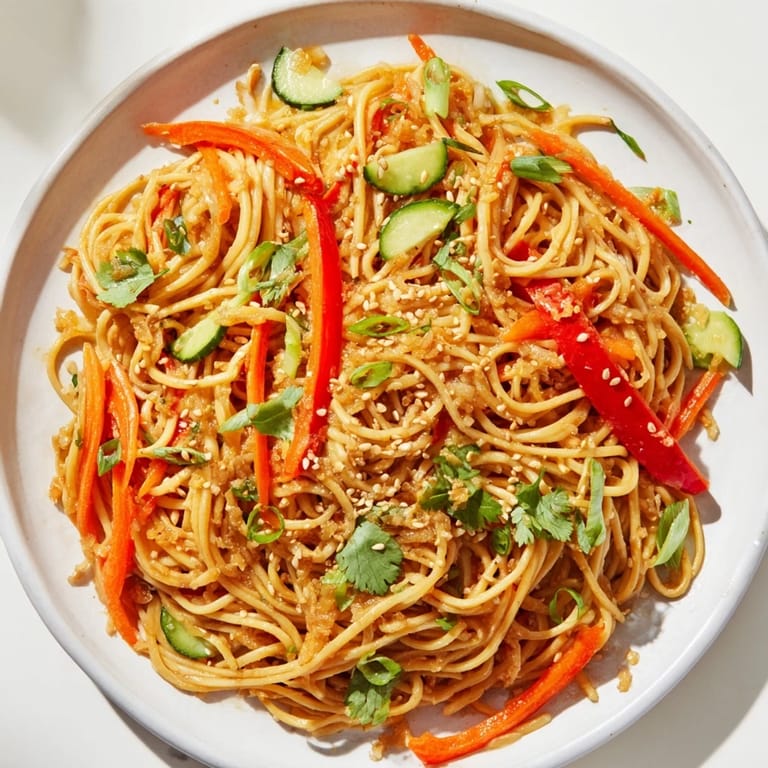
- Transfer to a serving platter or individual bowls and sprinkle the toasted sesame seeds over top. Serve with lime wedges on the side so people can squeeze them over if they want that extra brightness.
 Save
Save The best moment with this dish came when my mother, who usually sticks to traditional recipes from her own kitchen, asked to take home the extra batch and make it for her book club. Seeing her own twist on it, with added edamame and a drizzle of chili oil, made me realize this recipe had stopped being mine and become something she could claim as her own.
Why This Works as a Meal
Cold noodle salads live in this perfect middle ground where they're substantial enough to be a main course but light enough that you don't feel sluggish afterward. The raw vegetables keep everything refreshing, and the garlic oil makes it feel indulgent without any cream or butter. I've served this to vegetarians and meat-eaters alike, and no one feels shortchanged—though adding shredded chicken or crispy tofu does push it into more filling territory if you're feeding people with bigger appetites.
Variations That Work
Once you understand the basic structure, this recipe becomes a blank canvas. I've made it with soba noodles when I wanted an earthier flavor, added shredded cabbage when I ran out of cucumber, and even thrown in snap peas for their satisfying crunch. The dressing ratio stays the same, but the vegetables can shift with the season—summer calls for cucumber and tomato, while fall and winter feel right with radish and shredded daikon.
Storage and Make-Ahead Tips
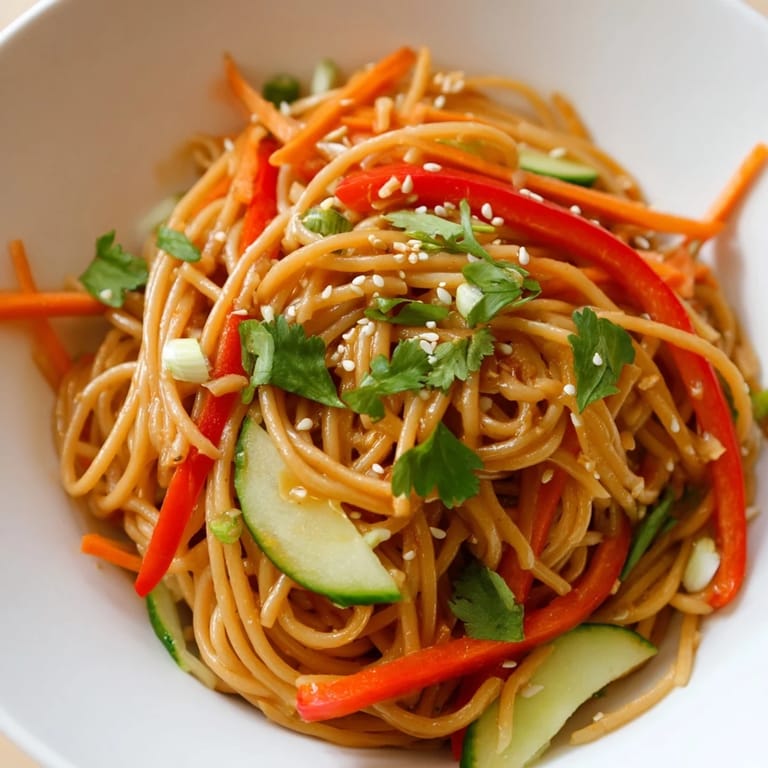
This is one of those dishes that keeps beautifully for 2 days in the fridge, making it perfect for meal prep or when you want lunch sorted before the week gets chaotic. The noodles continue absorbing flavor from the garlic oil as they sit, so the second day is often even more flavorful than the first. I always keep the sesame seeds separate until serving though, because they'll lose their crunch otherwise.
- Cook the noodles and make the garlic oil the day before, and you've cut your prep time in half on lunch day.
- Store everything in one container in the fridge, but add the fresh vegetables and sesame seeds just before eating if you want them crisp.
- If the noodles seem dry after sitting, a small splash of sesame oil or soy sauce brings everything back to life.
 Save
Save This recipe taught me that sometimes the best dishes come together not from careful planning but from working with what you have on a random Tuesday afternoon. It's become the meal I reach for when I want to feed people something that tastes like care without requiring hours in the kitchen.
Recipe Questions & Answers
- → What type of noodles work best?
Dried wheat noodles like lo mein, spaghetti, or soba hold the flavors well and provide a pleasant texture. Gluten-free alternatives can also be used.
- → How is the garlic oil prepared?
Neutral oil is gently heated with minced garlic until golden and fragrant, then combined with toasted sesame oil for a rich, aromatic finish.
- → Can the vegetables be varied?
Yes, you can add or substitute with snap peas, radish, shredded cabbage, or other crisp vegetables to suit your taste and seasonality.
- → Is this served warm or cold?
This dish is best enjoyed chilled or at room temperature, enhancing the refreshing quality of the garlic oil and fresh vegetables.
- → What can be added for extra protein?
Shredded cooked chicken, tofu, or edamame are excellent options to boost protein content without overpowering the fresh flavors.
- → How should leftovers be stored?
Keep leftovers covered in the refrigerator for up to two days to maintain freshness and texture.