 Save
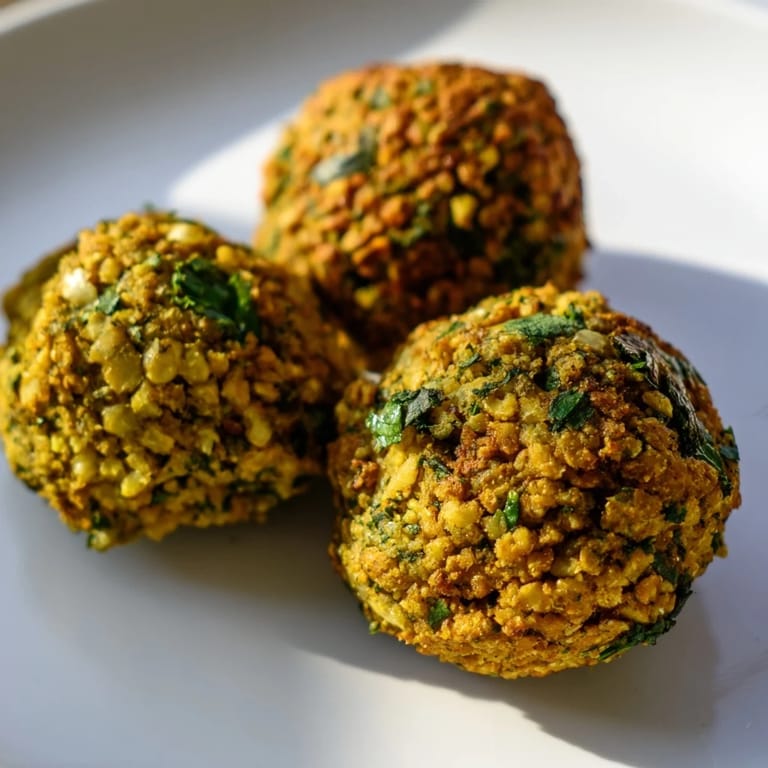
Save My first genuine falafel came not from a recipe but from a friend's grandmother in Beirut, who taught me that the real magic happens when you refuse to over-process the chickpeas. She'd pulse hers just until it looked almost sandy, then hand me a ball to taste raw—bright herb flavor hitting first, then the spices. I remember thinking this couldn't possibly fry up into anything crispy, but it did, emerging from the oil golden and impossibly light inside. That lesson stuck with me more than any ingredient measurement ever could.
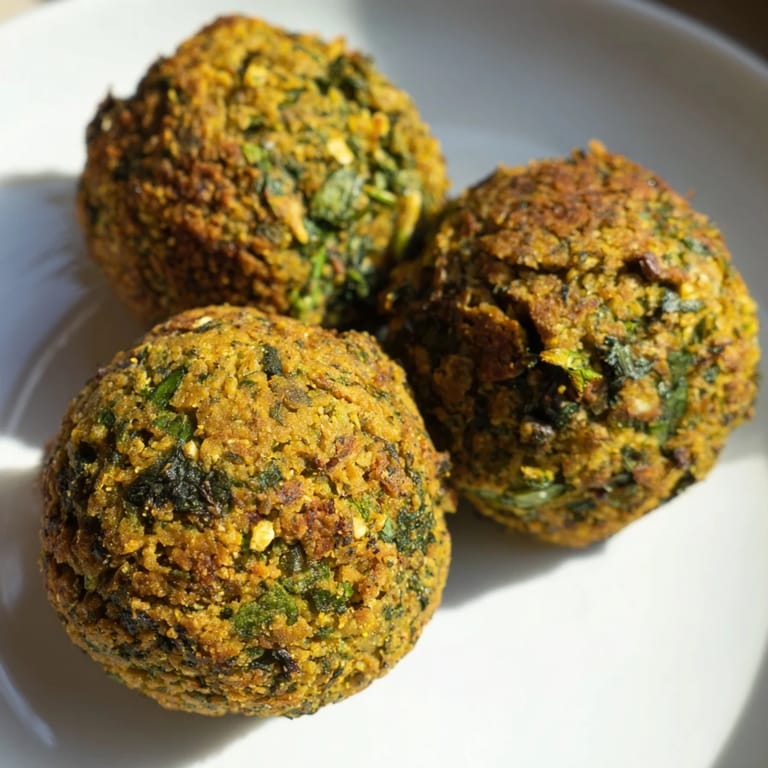
I made these for a group of neighbors on a Thursday evening without much planning, just some chickpeas I'd soaked the night before. Someone's kid asked why they were green inside, and I realized I'd made them differently than expected—more herb than usual. Everyone ate them anyway, and then asked for the recipe immediately. That's when I understood it wasn't about perfection or tradition; it was about the smell of something frying, the steam rising, the moment of sharing food without ceremony.
Ingredients
- Dried chickpeas: One cup whole chickpeas, soaked overnight—never use canned here, they'll turn to mush and lose the structural integrity you need for that crispy exterior.
- Yellow onion: One small onion, just roughly chopped because the processor will do the real work; the freshness matters more than the size.
- Garlic: Three cloves, no more, no less—too much and you lose the herb flavor that makes these special.
- Fresh parsley: One packed cup is your backbone flavor, the green note that makes people say these taste vibrant.
- Fresh cilantro: Half a cup packed, only if you genuinely like it; swap it for more parsley if cilantro tastes like soap to you.
- Ground cumin: Two teaspoons is warming without overwhelming; this is where you taste the Middle Eastern character.
- Ground coriander: One teaspoon adds subtle earthiness that rounds out the spice profile.
- Cayenne pepper: Half a teaspoon optional—I add it for heat, but these are delicious without it if you prefer mild.
- Baking powder: One teaspoon is the secret to that featherlight interior you're after.
- Salt: One teaspoon, though taste the raw mixture and adjust; salt brings everything into focus.
- Black pepper: Half a teaspoon, freshly cracked if possible.
- All-purpose flour: Three tablespoons binds everything just enough without making them dense; chickpea flour works if you're gluten-free.
- Vegetable oil: For frying, neutral oil that won't smoke—you need about two inches depth in your pot.
Tired of Takeout? 🥡
Get 10 meals you can make faster than delivery arrives. Seriously.
One email. No spam. Unsubscribe anytime.
Instructions
- Soak the chickpeas overnight:
- Rinse them well, cover with cold water, and leave them alone for eight to twelve hours. They'll plump up and soften just enough to bind together later, but you want them to stay whole and textured, not waterlogged.
- Drain and dry completely:
- Pat them with paper towels or let them air-dry for a few minutes. Excess moisture will make your final mixture harder to handle and fry properly.
- Pulse the mixture in a food processor:
- Add soaked chickpeas, onion, garlic, parsley, and cilantro. Pulse until it's coarse and sandy-looking, holding together when you squeeze a handful—this takes maybe thirty to forty pulses, not more. You're looking for texture, not a smooth paste.
- Add spices and flour, mix gently:
- Sprinkle in cumin, coriander, cayenne, baking powder, salt, pepper, and flour. Pulse just until combined, then stop and scrape the bowl to fold everything together by hand. The mixture should feel like damp sand, not a batter.
- Form into balls with damp hands:
- Wet your hands slightly so the mixture doesn't stick, then gently roll each ball to about one and a half inches in diameter. If it falls apart, add a bit more flour, one tablespoon at a time. Place finished balls on a tray; you should have about sixteen.
- Heat oil to the right temperature:
- Pour about two inches of vegetable oil into a deep pot and bring it to three hundred fifty degrees Fahrenheit. Test with a small ball first—it should sink slightly, then float and brown within three to four minutes.
- Fry in batches without crowding:
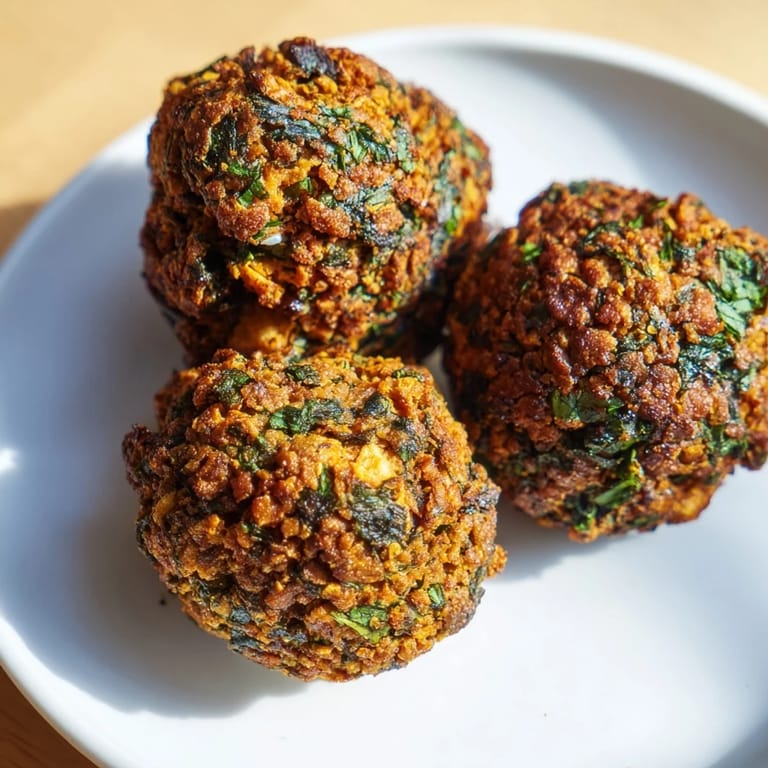
- Work with four to six balls at a time so they have room to move and color evenly. Turn them once or twice until they're deep golden brown on all sides, about three to four minutes total. The outside should sound crispy when you tap it.
- Drain on paper towels and season immediately:
- Pull them out with a slotted spoon and let them rest on paper towels while still warm. A pinch of salt right now makes a real difference.
 Save
Save There's a moment about halfway through frying the first batch when you start to hear the oil settle and the falafel stops sizzling—that's when you know they're done inside. I stood there listening for that quiet, and it reminded me that cooking is as much about sound and instinct as it is about precision. Once you feel that shift, everything tastes better.
Serving and Pairing Ideas
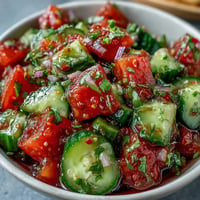
These taste best warm, wrapped in a soft pita or flatbread with tahini sauce drizzled over the top. Fresh tomato, cucumber, and a handful of pickled vegetables brighten everything up, and if you have homemade hummus nearby, you're set. I've also crumbled leftover falafel into salads the next day, and while they lose some crispness, they add a welcome texture and flavor that makes the whole bowl feel more substantial.
Storage and Reheating
Uncooked falafel balls freeze beautifully for up to three months—lay them on a baking sheet, freeze solid, then transfer to a container. You can fry them straight from frozen, adding just a minute or two to the cooking time. Leftover cooked falafel keeps in an airtight container for three days, though they're honestly best eaten the same day.
Variations and Flavor Tweaks
I've experimented with adding ground cardamom or sumac for warmth and subtle tartness, and both completely change the mood of the dish in interesting ways. Some cooks add a teaspoon of baking soda instead of baking powder for an even lighter texture, though I prefer baking powder because it's more forgiving. The herbs are where you can really play—mint instead of cilantro, dill alongside the parsley, or a combination of whatever fresh greens are sitting in your refrigerator.
- A half teaspoon of sumac adds brightness and a slight tang that feels fresh and unexpected.
- Baked falafel brushed with oil at four hundred degrees for twenty-five minutes gives you a lighter option that's still crispy, though they'll never have quite the golden depth of fried ones.
- Don't skip the salt in the raw mixture even if you plan to add more later—it seasons throughout, not just on the surface.
 Save
Save Making falafel feels like a small act of generosity every single time, whether you're serving them to guests or folding them into your own dinner. That warmth is why I keep coming back to them.
Recipe Questions & Answers
- → What is the soaking time for the chickpeas?
Chickpeas should be soaked in cold water for 8 to 12 hours to soften and ensure proper texture in the mixture.
- → Can I bake the falafel instead of frying?
Yes, brushing the formed balls with oil and baking at 400°F (200°C) for 20–25 minutes gives a lighter alternative with a golden crust.
- → Which herbs are used to flavor these falafel balls?
Fresh parsley and cilantro provide the classic bright, herbal notes essential in Levantine falafel.
- → How do I prevent the mixture from falling apart?
Ensure the chickpeas are soaked properly and the mixture is coarse but holds together when pressed. Adding a small amount of flour helps with binding.
- → What spices add flavor to these falafel balls?
Ground cumin, coriander, salt, black pepper, and optional cayenne pepper create a warm and mildly spicy profile.