 Save
Save There's something about the ritual of making hummus that pulls me back to a tiny kitchen in Beirut where my neighbor Lara taught me the real trick: it's not about having fancy ingredients, it's about patience and the right motion of the spoon when you're creating that perfect well in the center. She'd always taste it three times before serving, each time nodding like she was listening to the chickpeas themselves tell her what they needed. Now whenever I blend those creamy chickpeas with tahini and lemon, I can almost hear her voice saying softly, do not rush the swirl.
I made this for my daughter's school potluck last spring, worried it wouldn't stand out next to the store-bought dips and processed platters. When I picked up the empty bowl three hours later, I found a note tucked underneath from another parent asking for the recipe. That moment taught me that simple, honest food made with good tahini and fresh lemon will always win over complicated shortcuts.
Ingredients
- Chickpeas: Use 1 ½ cups of cooked chickpeas or one drained can; canned works beautifully if you rinse them well to remove excess starch.
- Tahini: This is where magic lives—get the real stuff, pure ground sesame paste with nothing else, because it makes the hummus taste like it was meant to taste.
- Lemon juice: Squeeze it fresh and never use the bottled version; the difference is the brightness that makes people ask you what your secret is.
- Garlic: One small clove, minced fine, adds warmth without overwhelming the delicate tahini and chickpea balance.
- Cold water: Start with 3 tablespoons and add more slowly; this gives you control over the texture, thick enough to hold a swirl but loose enough to spread.
- Ground cumin: Half a teaspoon wakes up the earthiness and ties everything together with a subtle warmth.
- Sea salt: Use fine sea salt and taste as you go; it seasons the whole bowl rather than creating gritty surprises.
- Extra virgin olive oil: Drizzle it generously on top; this is not the time to be shy with good oil.
- Paprika or sumac: Either one adds color and a gentle pop of flavor that makes the whole plate look like it belongs in a restaurant.
- Fresh parsley: Chopped fresh and scattered over top, it's both beautiful and a tiny flavor revelation with every bite.
Tired of Takeout? 🥡
Get 10 meals you can make faster than delivery arrives. Seriously.
One email. No spam. Unsubscribe anytime.
Instructions
- Gather and measure everything:
- Before you start blending, have all your ingredients prepped and measured out. This takes just a few minutes and prevents the panic of realizing mid-blend that you forgot the lemon juice.
- Build the base in the food processor:
- Add the chickpeas, tahini, lemon juice, minced garlic, cold water, cumin, and salt all at once, then pulse a few times to break everything down into rough pieces.
- Blend until impossibly smooth:
- Run the food processor continuously, stopping every 30 seconds to scrape down the sides with a spatula and check the texture. You'll feel it transform from grainy to creamy, and when you think it's smooth enough, keep going for another 20 seconds—that's when the real silkiness happens.
- Adjust the consistency slowly:
- If it looks too thick, add cold water one tablespoon at a time and blend after each addition; too-wet hummus can't be fixed, so patience here saves you.
- Taste and balance the flavors:
- Take a small spoon and taste it plain, then decide if it needs more salt, more lemon, or just a touch more garlic to sing.
- Transfer and create the signature swirl:
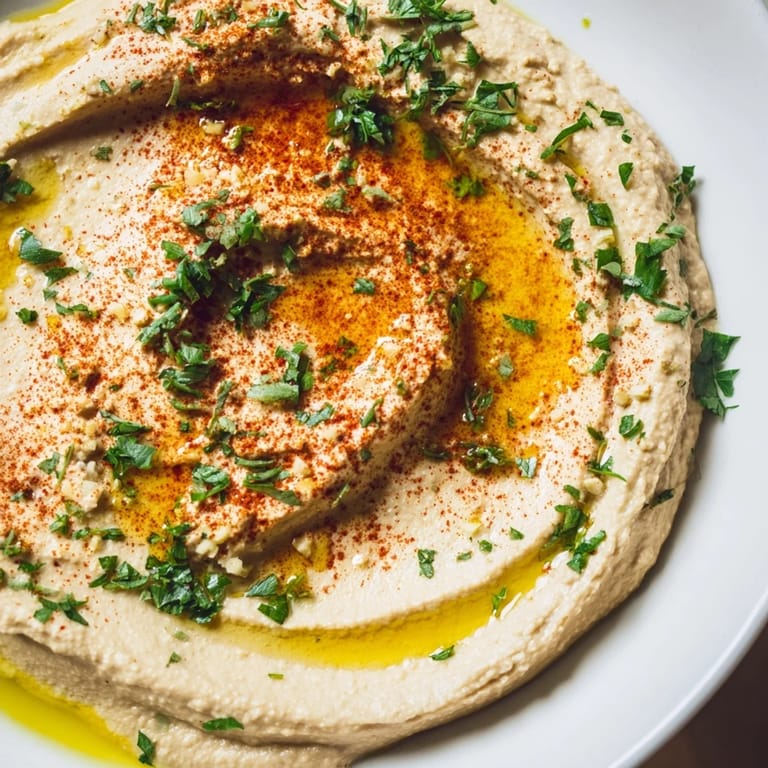
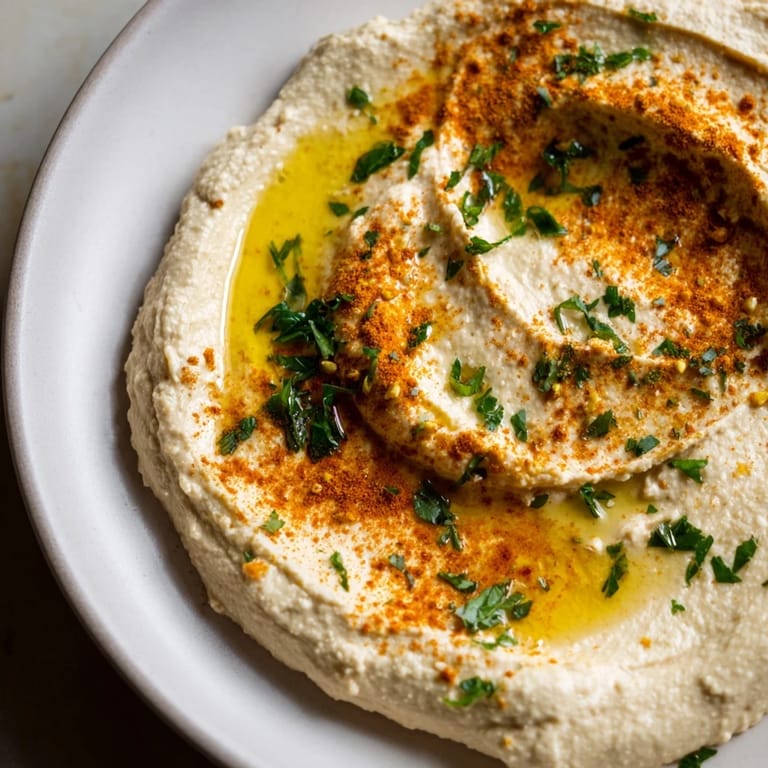
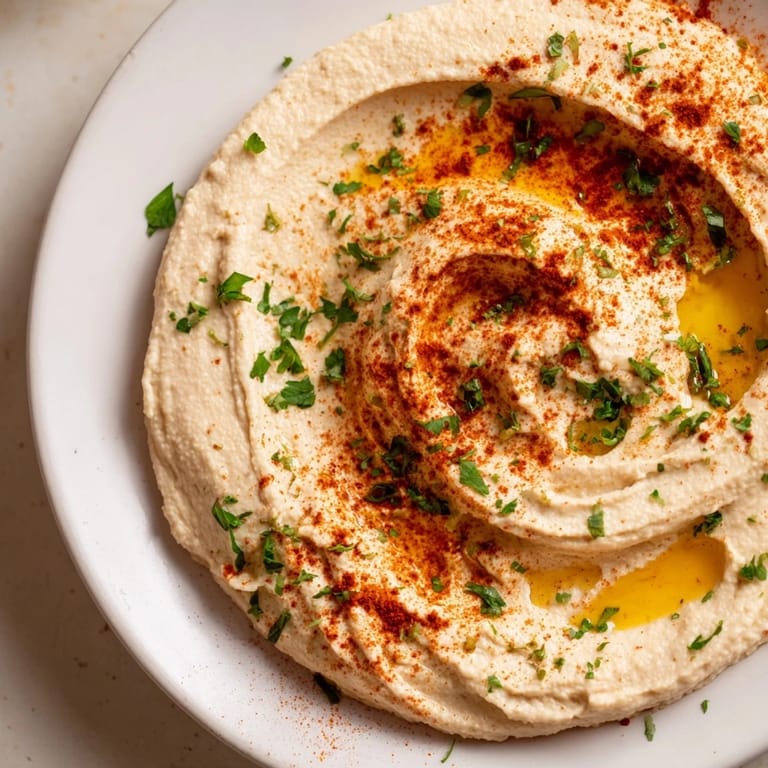
- Pour the hummus into your serving dish and use the back of a spoon to make a gentle well in the center, pushing from the inside out to create those beautiful ridges.
- Dress it like you mean it:
- Drizzle olive oil in a thin stream across the top and into the well, then dust with paprika or sumac and scatter the fresh parsley over everything.
- Serve right away or chill:
- Hummus is best served at room temperature or chilled, with warm pita bread, fresh vegetables, or alongside other mezze dishes.
 Save
Save My son once brought a friend home who'd never had real hummus before, and watching her eyes light up when she tasted that first spoonful was the moment I realized how many meals this simple dish has saved me. It transforms a bare kitchen into something welcoming, something that says you cared enough to make something good.
The Tahini Question
Finding the right tahini changed everything for me. Most grocery stores stock the kind that's been sitting on shelves in plastic jars, and honestly, it does the job, but when I discovered the smaller Middle Eastern markets with fresh tahini in bulk, hummus stopped tasting like work and started tasting like a discovery. The flavor is deeper, almost buttery, and the texture comes together faster because the sesame paste hasn't oxidized as much. I now buy a small amount every few weeks rather than hoarding a big jar, and the difference in each batch is noticeable enough that guests always ask what I changed.
Making It Your Own
Hummus is incredibly forgiving once you understand the base technique. I've made versions with roasted red peppers blended in, others with a pinch of cayenne for people who like heat, and even one memorable batch where I accidentally added smoked paprika instead of sweet and everyone loved it. The foundation of chickpeas, tahini, and lemon is stable enough that you can play around at the edges without ruining anything, so don't be afraid to experiment once you've made it the traditional way a few times.
Serving and Storage
Hummus lives happily in the refrigerator for up to four days in an airtight container, though honestly, most batches disappear long before that. The flavor actually deepens a little after a day, so if you have time, make it ahead and let it rest overnight before serving. Cold hummus is wonderful, but I also love reheating it gently in a small pot with a splash of extra olive oil and serving it warm with bread straight from the toaster.
- For dipping vegetables, arrange cucumber sticks, bell pepper strips, and carrot sticks in a circle around the hummus and let people tear into them.
- If you're building a mezze platter, surround the hummus with brined olives, labneh, feta, and warm pita to create a complete meal that feels generous without being fussy.
- Bring it to potlucks in a sealed container and garnish it fresh when you arrive, because the oil can sometimes separate slightly during transport.
 Save
Save Make this hummus for yourself first, taste it alone, and understand why it's beloved across the entire Mediterranean. Then make it for people, watch their faces, and you'll understand why this simple dish has endured for centuries.
Recipe Questions & Answers
- → What gives this spread its creamy texture?
The creaminess comes from blending cooked chickpeas with tahini and olive oil, creating a smooth, silky consistency.
- → How can I adjust the thickness of the spread?
Add extra cold water, a tablespoon at a time, while blending until reaching the desired smoothness and consistency.
- → What garnishes enhance the flavor and presentation?
Drizzle extra virgin olive oil, sprinkle paprika or sumac, and add fresh chopped parsley for vibrant color and layered flavors.
- → Is peeling chickpeas necessary?
Peeling the chickpeas before blending can result in an extra-smooth texture but is optional based on preference and time.
- → How should this dish be stored?
Store in an airtight container in the refrigerator for up to 4 days to maintain freshness and flavor.
- → Can I add a spicy kick to the spread?
Yes, incorporating a pinch of cayenne pepper adds heat and depth without overpowering the delicate flavors.