 Save
Save The first time I truly understood labneh was not in a restaurant but in my cousin's kitchen on a humid Beirut afternoon, watching her casually strain yogurt while we talked for hours. She treated it like an afterthought—just salt, cloth, and patience—yet somehow this simple ritual transformed something familiar into something impossibly creamy and alive. What started as curiosity became obsession, and now whenever I make it, that same magic happens in my own kitchen, unattended and unhurried.
I remember bringing homemade labneh to a potluck where nobody quite knew what it was, and watching people's faces shift from polite curiosity to genuine delight. Someone asked if I'd bought it from a specialty store, and I had to laugh—the best secret is that this creamy, tangy cheese costs almost nothing and asks for nothing but neglect in a cold refrigerator.
Ingredients
- Full-fat plain yogurt (1 kg or about 4 cups): Use the thickest yogurt you can find—Greek yogurt or strained yogurt works beautifully because it's already started the journey toward cheese, meaning less time waiting for transformation.
- Fine sea salt (½ tsp): This tiny amount awakens the yogurt's natural tang without overwhelming it; it also helps draw out whey and preserve the cheese longer.
- Extra-virgin olive oil (2 tbsp): This is not just a drizzle but a crucial flavor partner—choose one you'd actually want to taste on its own.
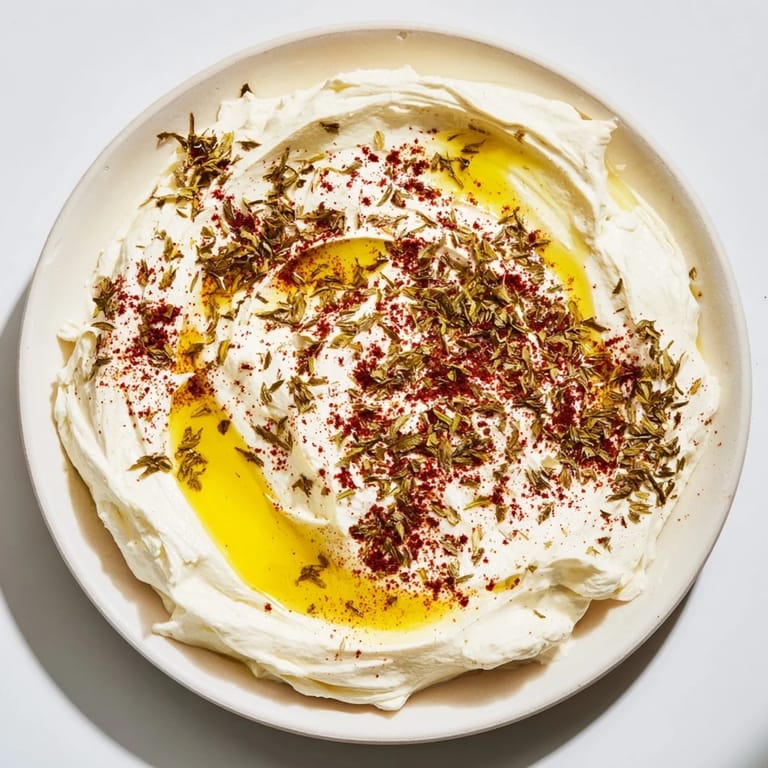
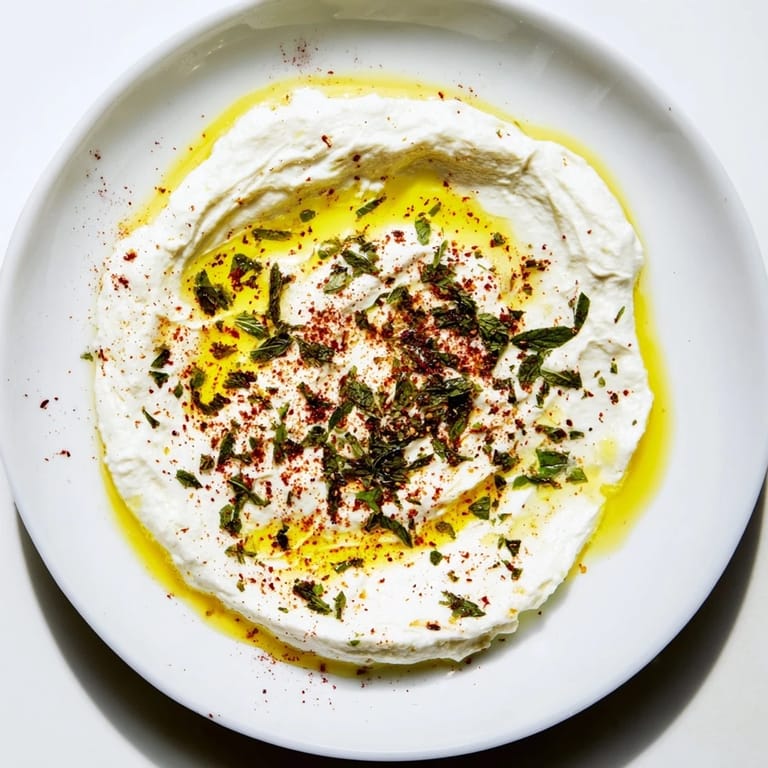
- Dried mint, zaatar, or Aleppo pepper (optional): These garnishes transform labneh from simple to something that looks intentional and layered with flavor.
Tired of Takeout? 🥡
Get 10 meals you can make faster than delivery arrives. Seriously.
One email. No spam. Unsubscribe anytime.
Instructions
- Salt and stir:
- Pour your yogurt into a bowl and sprinkle the salt across the surface, then stir it in gently so every spoonful tastes evenly seasoned. This small step ensures the whey drains steadily and the cheese seasons from the inside out.
- Line and prepare:
- Drape cheesecloth or a clean kitchen towel over your sieve, letting it sink slightly into the bowl beneath. The double layer matters—it keeps tiny yogurt particles from sneaking through while still letting liquid escape.
- Transfer and gather:
- Pour the salted yogurt onto the cloth carefully, then gather the edges up and over like you're wrapping a gift. Tie them loosely if you'd like, but even just folding them over the yogurt works fine.
- Wait with patience:
- Refrigerate and forget about it for a while—twelve hours gives you soft, spreadable labneh that tastes like clouds, while twenty-four hours creates something firmer that you could almost roll. The whey that drips away is liquid gold for soups and baking, so don't discard it.
- Unveil and dress:
- When the time comes, unwrap your cloth to find something transformed—creamy, thick, and tasting like concentrated yogurt dreams. Slide it onto a plate, make a shallow well in the center with the back of a spoon, and pour that olive oil generously over the top.
- Finish and serve:
- Dust with mint, zaatar, or a pinch of Aleppo pepper if you have them, then serve it while it's still cool and slightly cold from the refrigerator. Serve with warm pita, fresh vegetables, or whatever else calls to you.
 Save
Save There's a moment, usually around hour twenty of straining, when I open the refrigerator and realize how quiet and patient this process is—no noise, no stress, just transformation happening behind a cloth. It reminded me that sometimes the best things in cooking happen when we step away and let time do the work.
Making It Your Own
Once you master the basic labneh, the variations become natural and personal. Some days I drain it soft and use it as a breakfast spread under honey and walnuts; other times I let it firm up fully and roll it into small balls that I store in olive oil infused with herbs, peppercorns, or even dried chili. The base recipe stays the same, but your creativity around it is unlimited.
Storage and Keeping
Labneh keeps beautifully in the refrigerator for up to five days in a sealed container, and if you store it submerged in olive oil with herbs, it lasts even longer and develops deeper flavor. I've kept oil-preserved labneh for nearly two weeks and watched guests assume it was bought from somewhere fancy, which is the highest compliment in any kitchen.
Serving Suggestions and Ideas
Labneh is endlessly versatile once you stop thinking of it as just a dip. Spread it thick on a sandwich, dollop it onto roasted vegetables, swirl it into soups right before serving, or use it as a creamy base for grain bowls. It's equally at home at a simple breakfast with olive oil and za'atar as it is at the center of an elaborate mezze spread.
- Serve it at room temperature if you want the olive oil flavor to shine, or keep it chilled if you prefer the creamy coolness to be the main attraction.
- Pair it with anything warm—pita bread, roasted eggplant, warm flatbreads—because the contrast in temperature brings out its subtle tang.
- Don't skip the final olive oil drizzle; it's not decoration but an essential part of how the cheese is meant to taste.
 Save
Save Homemade labneh tastes like connection—to a simpler kitchen, to people who taught you without words, to the quiet satisfaction of making something real with your hands. Once you've made it once, you'll find yourself making it again and again.
Recipe Questions & Answers
- → What is labneh made from?
Labneh is made by straining full-fat yogurt to remove whey, resulting in a creamy, tangy cheese-like spread.
- → How long should yogurt be strained for labneh?
Straining time ranges from 12 to 24 hours depending on the desired thickness, with 12 hours for soft spread and up to 24 hours for firmer texture.
- → Can labneh be served with toppings?
Yes, it is commonly drizzled with extra-virgin olive oil and sprinkled with dried herbs like mint, zaatar, or sumac for enhanced flavor.
- → Is labneh suitable for vegetarians and gluten-free diets?
Labneh is naturally vegetarian and gluten-free, making it suitable for these dietary preferences.
- → How should labneh be stored?
Store labneh refrigerated in an airtight container. It can last up to five days and can also be shaped into balls and preserved in olive oil.
- → Can plant-based yogurt be used to make labneh?
Yes, thick plant-based yogurt can substitute dairy yogurt for a vegan-friendly alternative.