 Save
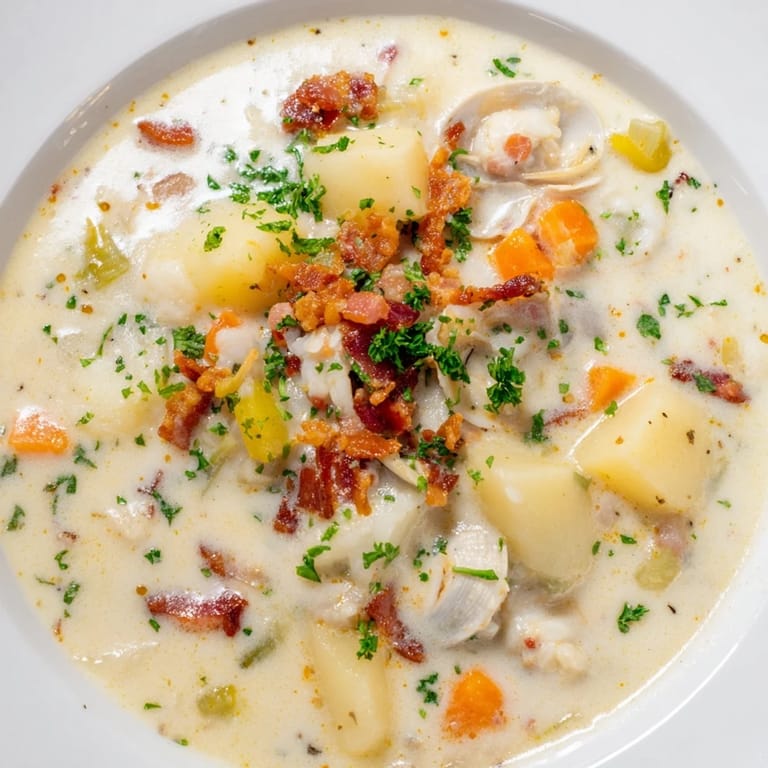
Save There's something about the smell of clams hitting a hot pot that instantly transports me to a weathered seafood shack where my aunt taught me to cook when I was barely tall enough to see over the counter. She'd crack open a clam with her thumb, taste the brine, and nod—that's how you knew it was fresh. This New England clam chowder is pure comfort in a bowl, the kind of soup that fills your kitchen with warmth before you even taste it. Every spoonful carries that sandy, briny sweetness of the ocean mixed with the earthiness of potatoes and cream. Making it feels less like following a recipe and more like continuing a conversation she started decades ago.
I made this the first time someone important was coming to dinner and I panicked about what to serve—something that felt fancy but wouldn't betray my nervous hands in the kitchen. The clams opened right on schedule, releasing that seawater perfume, and when I added the cream, the soup turned a soft white with specks of green parsley like a coastal painting. My guest took the first spoonful, closed their eyes, and said nothing for a moment—the highest compliment I've ever received.
Ingredients
- Fresh littleneck clams (2 lbs): These medium-sized clams are the backbone—they're meaty without being tough, and they release a flavorful broth as they steam that no bottled juice can fully replace.
- Bottled clam juice (1 cup): A safety net for briny depth, especially if your clam steaming liquid tastes off or feels too salty.
- Russet potatoes (2 medium): Starchy and yielding, they break down slightly and thicken the soup naturally while staying intact enough to enjoy.
- Yellow onion, celery, carrot (mirepoix base): This trio is the silent flavor engine—they dissolve into sweetness and create the foundation that makes people ask for your secret.
- Garlic (2 cloves): Just enough to whisper in the background, not shout.
- Heavy cream and whole milk: The cream makes it rich, the milk keeps it from tasting cloying—use both for the right balance.
- Bacon (2 slices): Its fat is liquid gold for sautéing vegetables; the meat adds smokiness that salt alone can't provide.
- All-purpose flour (2 tbsp): Mixed with bacon fat and butter, it thickens without lumps if you stir it into the vegetables before adding liquid.
- Bay leaf and dried thyme: They infuse slowly and remind you this is a soup meant to simmer, not rush.
Tired of Takeout? 🥡
Get 10 meals you can make faster than delivery arrives. Seriously.
One email. No spam. Unsubscribe anytime.
Instructions
- Prepare and steam the clams:
- Scrub the littleneck clams under cold running water until the shells feel clean, then place them in a large pot with 2 cups of water. Bring to a boil, cover tightly, and let them steam for 5–7 minutes—you'll hear them pop open like small applause. Discard any that refuse to open; they're not worth the risk.
- Extract the clam meat:
- Once cooled enough to handle, pry the meat from the shells and chop it roughly into bite-sized pieces. Strain the cooking liquid through a fine sieve to catch any sand, and reserve every precious drop.
- Render the bacon foundation:
- In your Dutch oven, cook the diced bacon over medium heat until the edges crisp and the fat turns translucent. Remove the bacon to a paper towel but leave the fat behind—this is where the soul of the soup lives.
- Build the aromatics:
- Add butter to the bacon fat, then toss in your chopped onion, celery, carrot, and garlic. Stir frequently for about 5 minutes until the vegetables soften and release their sweetness; your kitchen will smell like a New England fishing village.
- Make the roux:
- Sprinkle the flour over the softened vegetables and stir constantly for 1 minute—this cooks out the raw flour taste and creates the paste that will thicken your soup without lumps.
- Add the liquid foundation:
- Pour in the reserved clam cooking liquid and bottled clam juice slowly while stirring, scraping the bottom of the pot to lift any browned, flavorful bits. This deglazing step is where the deep taste comes from.
- Simmer the potatoes:
- Drop in the diced potatoes along with the bay leaf and thyme, bring to a simmer, and cook for 10–12 minutes until a fork slides through the potato with no resistance. Taste the broth here—this is your moment to adjust the seasoning before dairy goes in.
- Gentle finishing:
- Reduce the heat to low and fold in the chopped clams, crispy bacon, cream, and milk, stirring occasionally. Never let this boil once the cream is in, or it might separate into greasy streaks; gentle heat for 5–10 minutes is all it needs to marry the flavors.
- Final seasoning and serve:
- Remove the bay leaf, taste, and season with salt and pepper to your preference. Ladle into bowls, scatter fresh parsley on top, and set out oyster crackers on the side for crunch.
 Save
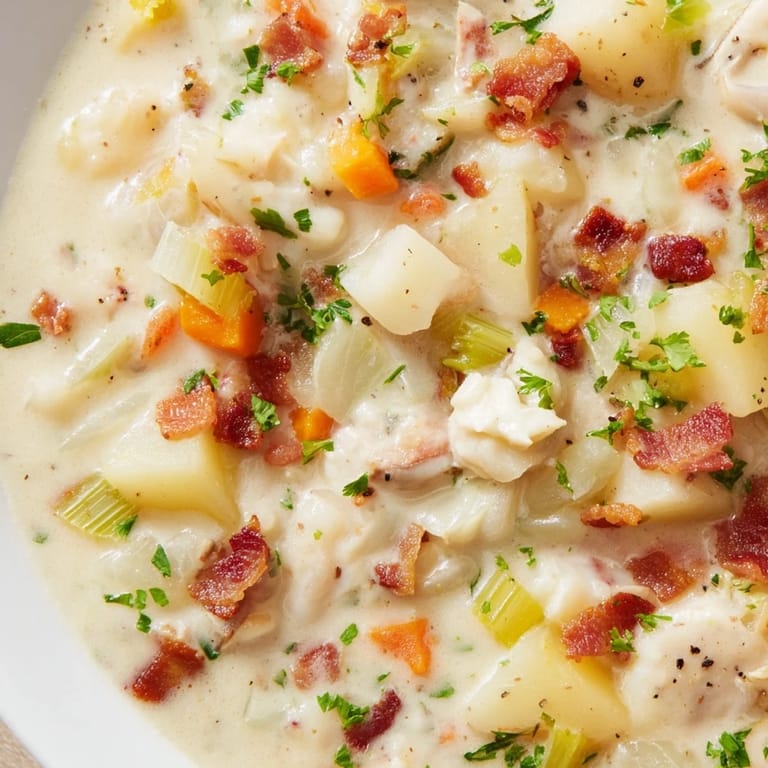
Save I learned years ago that this soup is at its best when people slow down to eat it, when it's the reason everyone's at the table, not something rushed between other tasks. The warmth in the bowl mirrors the warmth of whoever shared the recipe or taught you to love it.
Why Littlenecks Matter
Littleneck clams are the Goldilocks choice for chowder—large enough to give you real bites of clam meat, but small enough to stay tender when cooked. Some cooks use cherrystone clams or even chopped quahog, and that works, but littlenecks have a sweetness that plays beautifully against the richness of cream. The first time I made this with oversized clams, the meat turned rubbery and I learned the hard way that size isn't just about preference—it's about texture and how the clam's brine translates into your pot.
The Roux Question
Some chowder recipes skip the roux and rely on potatoes alone to thicken, which works but gives you an unpredictable texture that depends entirely on how starchy your potatoes are. A proper roux—flour cooked with fat—gives you control and silkiness, a mouthfeel that feels intentional rather than accidental. You only need a minute of cooking the flour in the fat to lose the raw taste; longer and you risk browning it, which colors the soup and changes the flavor in ways you might not want.
Storage and Reheating
This soup keeps for three days in the refrigerator and actually tastes deeper the next day when flavors have had time to settle and mingle. Reheat it gently over low heat with the lid on, stirring occasionally—high heat and rushing it will break the cream emulsion and you'll end up with grease floating on top. If that happens, don't panic; whisk in a splash of cold milk while stirring constantly and it usually comes back together.
- Freeze it without the cream, then thaw and add fresh cream when reheating for best texture.
- A pinch of smoked paprika or a dash of hot sauce at the very end adds complexity without changing what makes it classic.
- Leftover soup becomes a different kind of delicious when you pour it over crushed oyster crackers and eat it with a spoon.
 Save
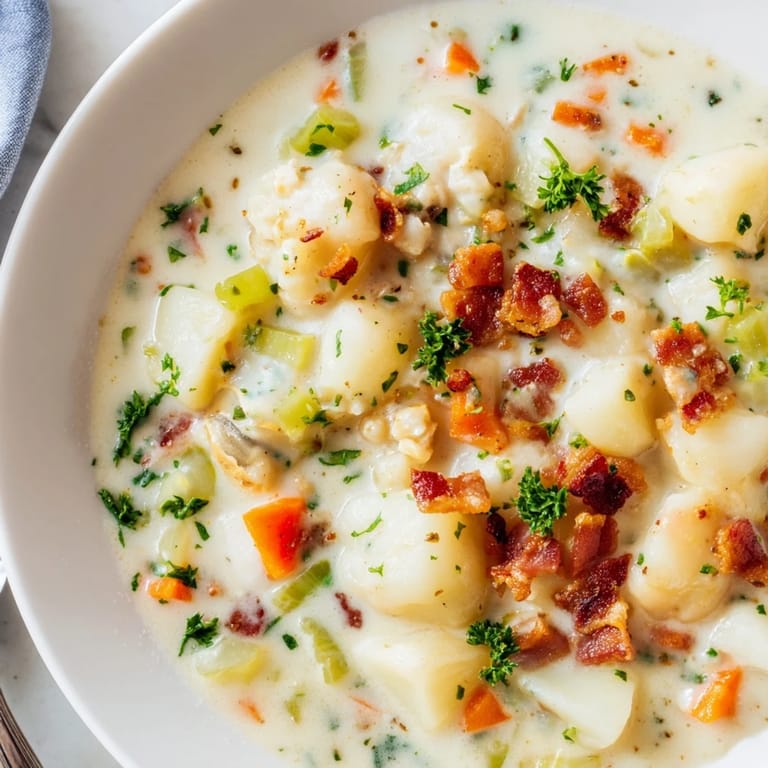
Save This chowder tastes like belonging, like someone's kitchen where you're always welcome. Make it for the people you want to remember you by.
Recipe Questions & Answers
- → How do I prepare fresh littleneck clams for chowder?
Rinse clams thoroughly under cold water and scrub the shells to remove any grit. Steam them in a covered pot with water until they open, discarding any that remain closed.
- → Can I substitute bottled clam juice in this dish?
Yes, bottled clam juice can be used or replaced with reserved clam cooking liquid strained from the steamed clams for maximum flavor.
- → What thickening agent is used to give chowder its creamy texture?
All-purpose flour is sprinkled over sautéed vegetables to form a roux, which thickens the soup when liquids are slowly added.
- → Can I make this dish lighter without losing flavor?
Substitute half-and-half for the cream and milk or reduce the amount of cream used for a lighter texture while preserving richness.
- → What garnishes complement this New England chowder?
Freshly chopped parsley adds color and freshness, and serving with oyster crackers provides a crunchy contrast to the creamy soup.
- → Is bacon essential in this preparation?
Bacon adds a smoky, savory layer that enhances depth but can be omitted or replaced with a similar smoky element if preferred.