 Save
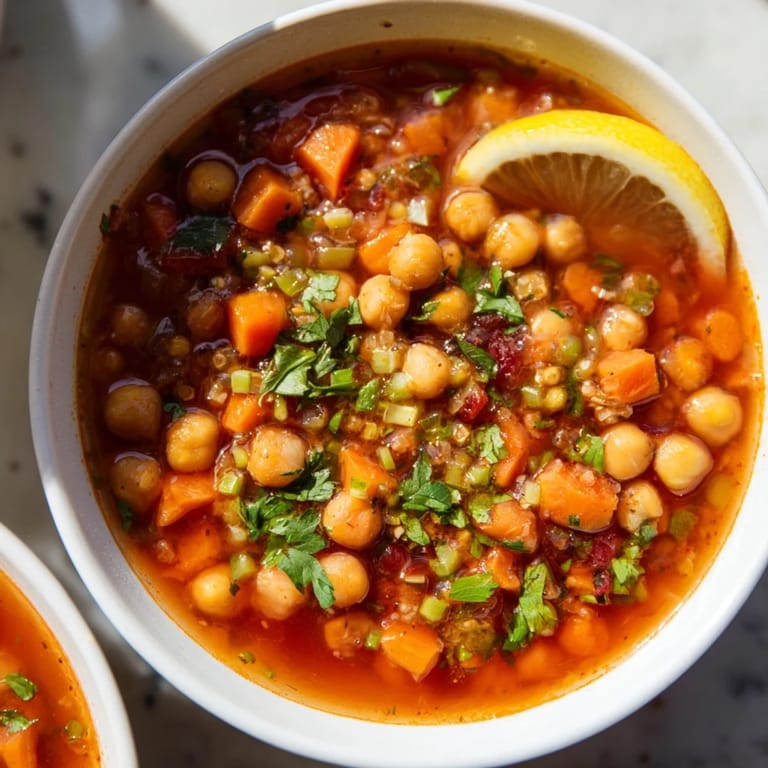
Save The first time I tasted harira, I was sitting in a crowded medina in Marrakech on a cold evening, and the woman ladling it into a clay bowl seemed to know exactly how much warmth I needed. Years later, I found myself chasing that feeling in my own kitchen, layering spices and watching chickpeas soften into something almost creamy, realizing the magic wasn't just in the ingredients but in how they spoke to each other. This soup has become my go-to when the season shifts and I want to feel held by a bowl of food.
I made this for a potluck once and watched people come back for second bowls without saying much, just nodding with their eyes closed. That's when I knew it wasn't about impressing anyone—it was about the quiet way spices and legumes become something people actually want more of.
Ingredients
- Dried chickpeas: Soak them overnight if you have the time; they absorb the broth better and give you a creamier texture than canned, though canned saves you an hour and honestly still tastes wonderful.
- Lentils: Red or brown both work, but brown holds its shape better through the long simmer.
- Olive oil: Use something you actually enjoy tasting, because you'll taste it.
- Onion, celery, and carrots: This trio is your flavor foundation, so don't rush the sautéing—those 6 to 8 minutes matter.
- Garlic: Mince it fine so it melts into the spices rather than sitting as chunks.
- Tomato paste and chopped tomatoes: The paste concentrates flavor; the canned tomatoes add brightness.
- Cumin, cinnamon, ginger, turmeric, and paprika: Toast these mentally as you add them—each one has a purpose, and together they're what make this soup unmistakably North African.
- Cayenne pepper: Optional, but a pinch lifts everything without making it actually spicy.
- Vegetable broth: This is your liquid foundation, so choose one you'd drink on its own.
- Dried apricots: They plump up and add a subtle sweetness that no one quite expects but everyone loves once they taste it.
- Lemon juice: Save this for the end—it's the brightness that keeps the soup from feeling heavy.
- Cilantro and parsley: Fresh herbs scattered at the very end make it feel alive.
Tired of Takeout? 🥡
Get 10 meals you can make faster than delivery arrives. Seriously.
One email. No spam. Unsubscribe anytime.
Instructions
- Build your base:
- Heat olive oil in a large pot and add your onion, celery, and carrots. You're looking for them to soften and turn translucent, which takes 6 to 8 minutes—this is where patience pays off because you're releasing their natural sweetness.
- Wake up the spices:
- Add garlic and all your dry spices, stirring constantly for about 1 minute. The kitchen will smell incredible, and that's your signal they're releasing their oils and flavor.
- Darken the paste:
- Stir in tomato paste and let it cook for another minute, getting a bit darker and more concentrated before you add the wet ingredients.
- Bring it together:
- Add the chopped tomatoes, chickpeas, lentils, and apricots, stirring everything into the spiced base, then pour in your vegetable broth. The pot will look fuller and more alive.
- Low and slow:
- Bring to a boil, then reduce the heat and let it simmer uncovered for 45 to 50 minutes, stirring occasionally. The chickpeas and lentils will gradually soften, and the broth will deepen in color and flavor as everything melds together.
- Finish bright:
- Stir in your cilantro, parsley, and lemon juice, tasting and adjusting salt and pepper until it feels balanced—not too salty, not too sweet, with that lemon cutting through everything.
- Optional heartiness:
- If you want something more substantial, add cooked vermicelli or rice right before serving, or let people stir it into their own bowls.
 Save
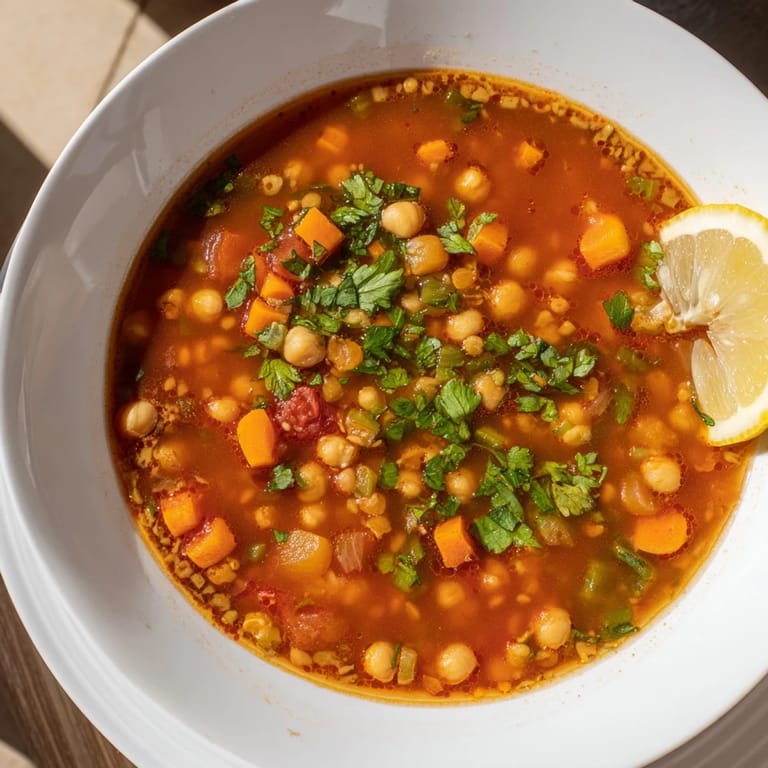
Save There's a moment, usually about halfway through simmering, when you lift the lid and the steam hits your face and you just know this is going to be good. That's the moment I stop rushing and remember why I love cooking.
On Soaking and Shortcuts
If you soak chickpeas overnight, you'll get a slightly creamier texture and a broth that tastes like it's been simmering for longer than it actually has. If you use canned, honestly, no one will know—and sometimes on a weeknight when I don't have that foresight, canned is the right choice. The soup doesn't judge you for taking shortcuts; it just wants to be made.
Flavor Adjustments and Variations
Some days I add a pinch of saffron for a more luxe version, and other times a small spoonful of harissa paste if I want warmth and depth. A squeeze of pomegranate molasses instead of lemon changes the whole character—suddenly it feels more tart and complex. The base recipe is sturdy enough to hold these variations without falling apart, which is part of why this soup has traveled so far.
Serving and Storage Wisdom
Harira tastes noticeably better on its second day, once everything has had time to settle and get to know each other. It keeps well in the refrigerator for up to five days and freezes beautifully if you want to make a double batch. The soup is hearty enough to serve on its own or with warm bread, but if you add vermicelli or rice, it becomes a complete meal that feels almost stew-like.
- Serve it in warmed bowls so the soup stays hot longer and feels more intentional.
- Let people garnish their own with fresh herbs and lemon wedges—it feels more personal that way.
- If you're feeding guests, double the recipe and let it simmer an extra 10 minutes; the flavors only deepen.
 Save
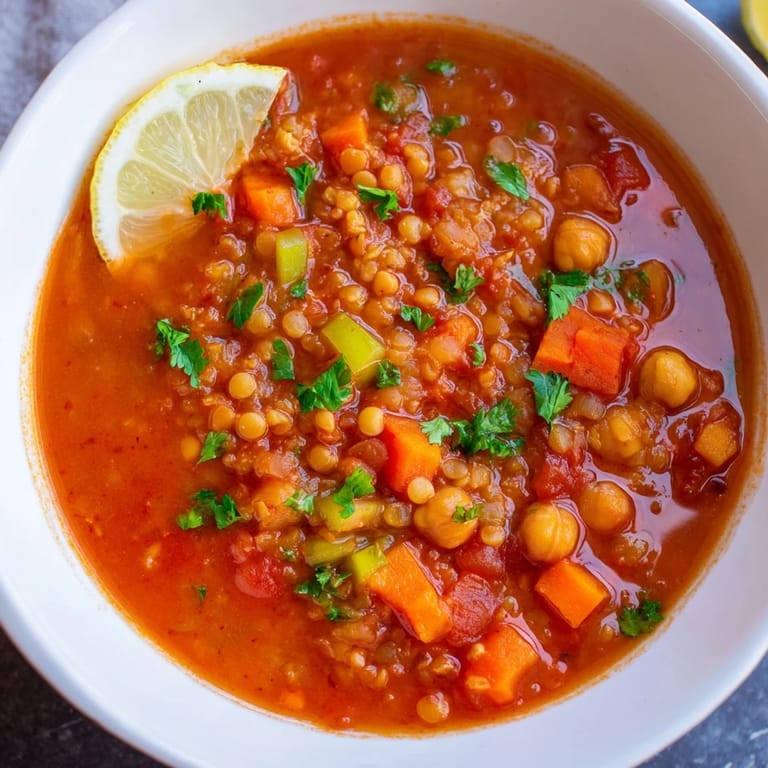
Save This soup is one of those dishes that reminds me why I cook—not for perfection, but for the feeling of sharing something warm and real with people I care about. Make it, taste it, and add whatever memory you bring to it.
Recipe Questions & Answers
- → What legumes are used in this dish?
Chickpeas and lentils form the base, providing texture and protein.
- → Which spices create its signature aroma?
Ground cumin, cinnamon, turmeric, ginger, paprika, and optional cayenne give it a warm and fragrant profile.
- → Can it be made vegan?
Yes, by using plant-based vegetable broth, the dish is suitable for a vegan diet.
- → How long does the simmering process take?
About 45 to 50 minutes until chickpeas and lentils are tender and flavors meld.
- → What garnishes enhance the final flavor?
Fresh cilantro, parsley, lemon juice, and optional lemon wedges brighten and balance the rich broth.
- → Is it possible to add other ingredients?
Cooked vermicelli or rice can be added for a heartier serving.