 Save
Save I discovered the magic of a golden cheese board by accident, really—during a dinner party when I reached for turmeric instead of paprika and created this unexpected warmth across the platter. The way the saffron-tinted cheeses caught the light reminded me of silk catching sunlight, soft and luxurious. My guests lingered longest at that board, picking through the ribboned textures and creamy spreads, more engaged than if I'd served anything hot. It became the dish I reach for when I want to impress without stress, and when elegance needs to feel effortless.
I made this board the night before my sister's book launch, and she later told me it was the thing she remembered most from the evening—not the books, but the golden cheeses gleaming under the restaurant lights. She'd been stressed all day, and watching her suddenly relax with a slice of aged gouda draped over lemon curd made the whole thing worthwhile. That's when I realized this wasn't just a cheese board; it was permission to slow down and notice texture, color, and taste together.
Ingredients
- Triple cream brie, lightly tinted with saffron or turmeric: Choose the deepest gold you can find naturally, or add threads directly into room-temperature brie for a marbled effect—the creaminess is what makes this whole board sing.
- Aged gouda, sliced thin: Thin slices work better than chunks because they catch light differently and feel delicate on your tongue.
- Fontina, room temperature, cut into ribbons: Warm fontina becomes silky; cold fontina snaps—so set it out early and use a vegetable peeler for those signature ribbons.
- Mimolette, shaved: Its natural orange-gold hue adds depth; a y-peeler creates the prettiest shavings.
- Whipped ricotta, blended with a pinch of saffron threads: This is your base magic—blend threads into ricotta hours ahead so the color blooms slowly and the flavor deepens.
- Honeyed mascarpone: Quality honey makes this creamy spread taste like dessert and savory simultaneously.
- Lemon curd (optional, for extra silkiness): A small bowl of bright curd adds contrast and gives guests a reason to explore further.
- Baguette, thinly sliced: Toast lightly if you prefer more structure, or leave soft if you love the contrast with creamy spreads.
- Seed crackers: They hold up to creamy spreads without disappearing like plain crackers.
- Dried apricots, halved: Their tartness cuts through richness and adds color—a textural surprise most people don't expect.
- Roasted, salted pistachios: Buy them shelled to save time, and their slight bitterness balances the silk.
Tired of Takeout? 🥡
Get 10 meals you can make faster than delivery arrives. Seriously.
One email. No spam. Unsubscribe anytime.
Instructions
- Create your creamy base:
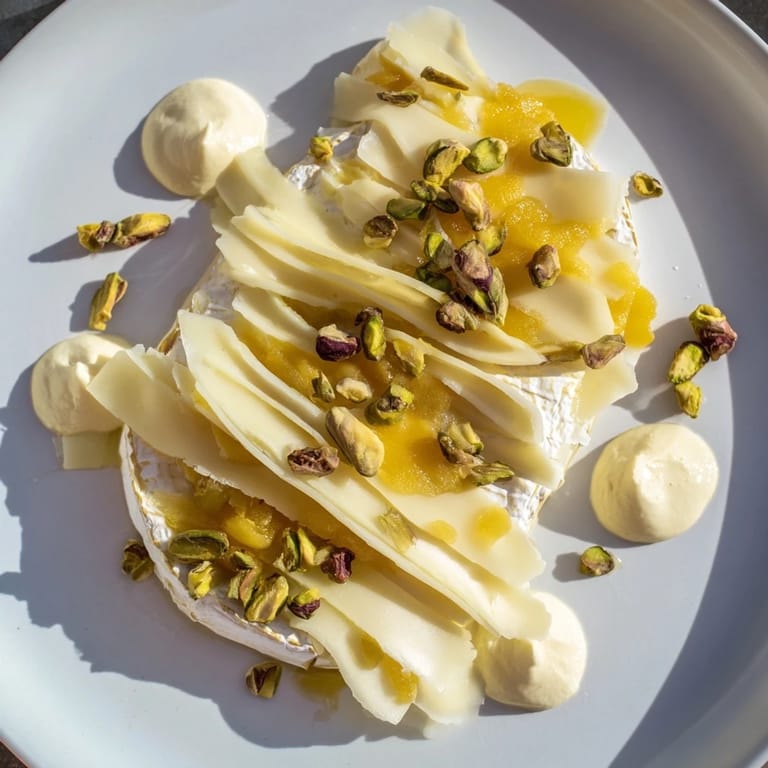
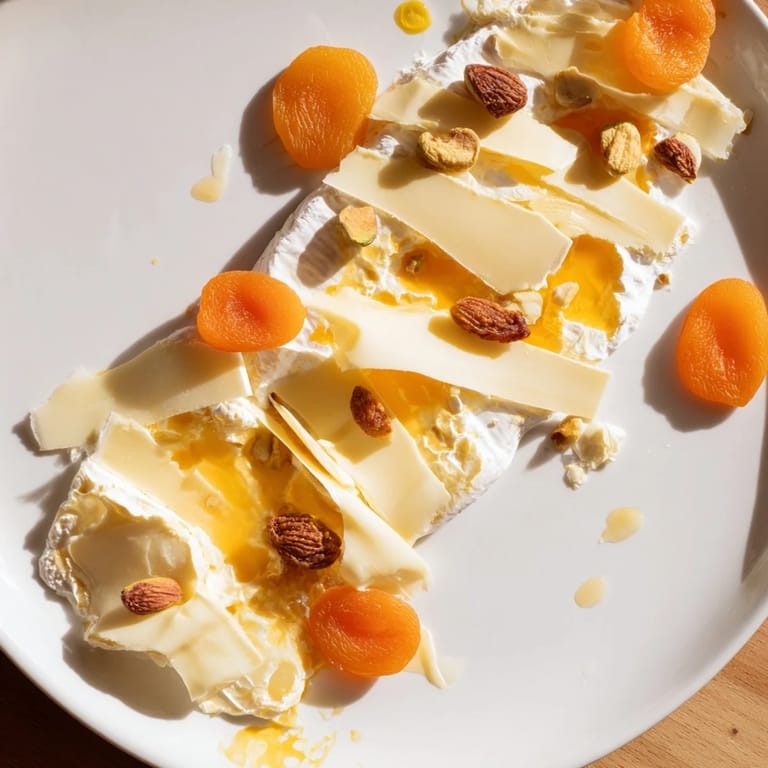
- Use an offset spatula to swoosh the saffron ricotta and honeyed mascarpone across your platter in flowing, puddle-like shapes—think less precise, more organic, like water finding its way. Let them pool and overlap slightly; the imperfection is what makes it look intentional and beautiful.
- Layer the cheeses in curves:
- Arrange your sliced gouda and fontina ribbons so they nestle into the creamy spreads, edges overlapping like they're melting together. This is where the silk effect happens—the softer spreads supporting the cheese's delicate edges.
- Nestle the bright spots:
- Pour lemon curd into a small bowl and position it on the platter, then swirl some of it gently outward if you want that extra golden thread catching the eye. The bowl gives guests permission to explore deeper.
- Scatter and balance:
- Distribute baguette slices, seed crackers, dried apricots, and pistachios around the empty spaces—think constellation rather than grid. Balance color so no single area feels too heavy or sparse.
- Bring to the table while warm:
- Serve everything at room temperature or slightly warmed; cold cheese tightens and loses its creamy melt. Let it sit out for 20 minutes before guests arrive if it's been refrigerated.
 Save
Save A friend once asked why I cared so much about how a cheese board looked when you're just going to eat it anyway, and I realized I couldn't quite explain it—until she actually tasted it and noticed how the soft spreads made the harder cheeses feel delicate, how the colors made her want to try everything slowly instead of grabbing and running. It's because beauty and taste are tangled together in food; one makes the other matter more.
The Gold Standard: Why Saffron?
Saffron feels luxurious because it is—a tiny pinch costs real money, but on a cheese board it does heavy lifting beyond flavor. It gives visual permission to linger, to notice texture and richness, and to treat a simple cheese board like it's the main event. Turmeric works if you need budget-friendly gold, but saffron's earthiness adds a faint complexity that makes people pause mid-bite.
Temperature and Texture: The Overlooked Secret
This board lives or dies on room temperature—not cold, not warm, but that soft middle where cheese becomes silk instead of rubber or greasy puddle. Every time I've rushed and pulled cheese straight from the fridge, guests politely navigate around the hard edges and go straight to bread. Every time I've waited, they linger, spreading softly, tasting thoughtfully. It's the difference between a board and an experience.
Building Your Own Flavor Story
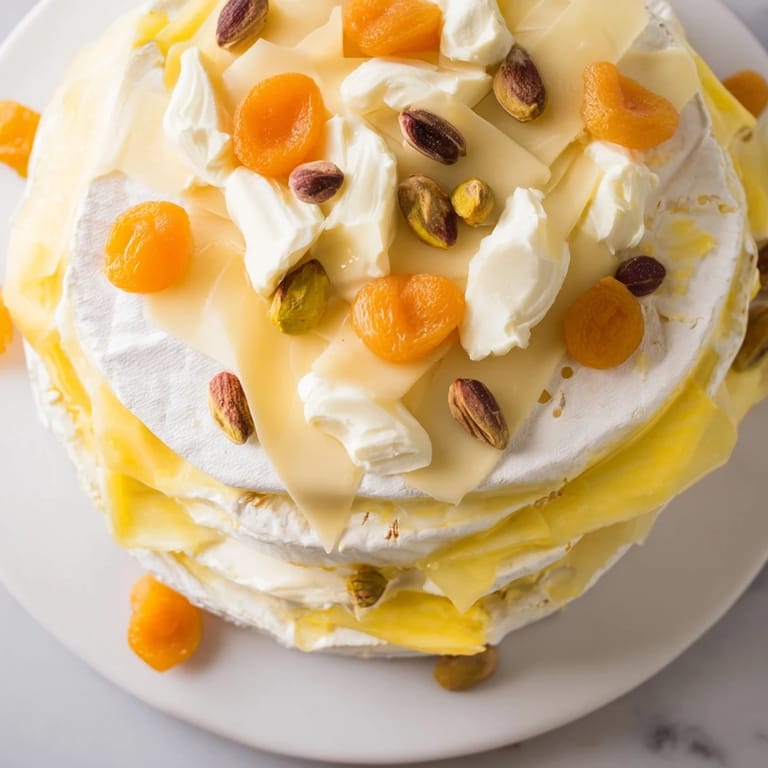
The accompaniments are where you make this board yours—the pistachios bring salt and slight bitterness, the apricots add tart brightness, and the baguette becomes almost a neutral canvas for whatever combination catches your eye. Think of each element as a conversation starter rather than a strict requirement.
- Swap dried apricots for fig paste or candied orange peel if you want sharper brightness.
- Add fresh honeycomb on the side for those who want to drizzle and taste pure sweetness.
- Include a small bowl of fleur de sel so guests can sprinkle intentionally and taste the cheese's subtle differences come alive.
 Save
Save This board taught me that entertaining doesn't mean stress—it means creating a moment where people slow down and notice the small things. Serve it with a dry wine and watch conversations deepen.
Recipe Questions & Answers
- → What cheeses are highlighted in this platter?
It features saffron-tinged triple cream brie, aged gouda, fontina ribbons, and shaved mimolette for varied textures and flavors.
- → How do the spreads enhance the board?
Whipped ricotta infused with saffron threads and honeyed mascarpone add creamy silkiness that complements the cheeses beautifully.
- → What are good accompaniments for this spread?
Thin baguette slices, seed crackers, dried apricots, and roasted salted pistachios provide crunch and sweetness balance.
- → Can this platter accommodate dietary preferences?
Yes, plant-based cheeses and coconut-based spreads can replace dairy components for a vegan-friendly option.
- → What's the best way to serve the cheese and spreads?
Allow all cheeses and spreads to reach room temperature to maximize flavor and ensure a smooth, luscious texture.