 Save
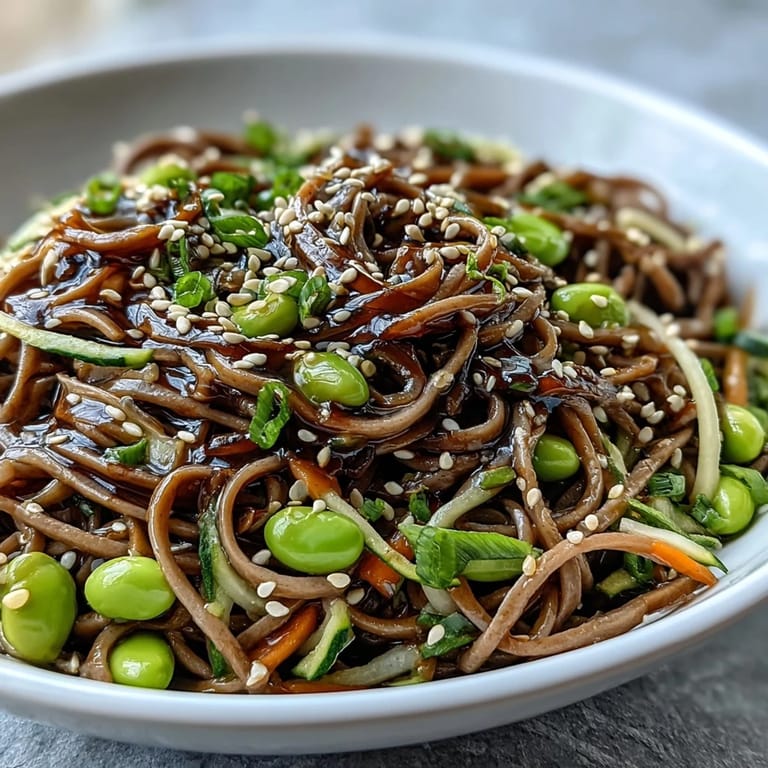
Save My neighbor handed me a takeout container of cold soba noodles one sweltering afternoon, and I remember standing in my kitchen thinking this couldn't possibly be a meal—just noodles and vegetables, nothing warm, nothing complicated. But that first bite changed everything. The nutty buckwheat, the snap of fresh cucumbers, that silky sesame dressing coating everything—it felt less like eating and more like a small act of self-care. Now I make it constantly, especially when the weather turns hot and my appetite shrinks but my body still needs something real.
I served this to my friend who was in the middle of a brutal workweek, and watching her face soften as she ate something cold, clean, and filling reminded me that food doesn't always need to comfort you through warmth. Sometimes it just needs to nourish you honestly, and this bowl does exactly that. She's been making it ever since, with her own tweaks and experiments.
Ingredients
- 250 g dried soba noodles: Look for 100% buckwheat if you're avoiding gluten, though the standard version has a lovely chewiness that makes the dish feel substantial without being heavy.
- 1 cup shelled edamame (fresh or frozen): The slight bitterness balances the sweet sesame dressing perfectly, and they add a pop of color and protein that keeps you satisfied.
- 1 medium cucumber, julienned: Julienne it yourself if you have time—the deliberate cutting slows you down and makes the whole process feel intentional rather than rushed.
- 2 medium carrots, peeled and julienned: Raw carrots bring a satisfying crunch that contrasts beautifully with the tender noodles.
- 2 scallions, thinly sliced: The white and green parts contribute different flavor notes, with the white adding a gentle onion bite and the green bringing fresh, almost grassy brightness.
- 2 tbsp toasted sesame seeds: Buy them already toasted if you can—they're toasted for you and won't scorch in your bowl.
- 1/4 cup fresh cilantro or mint leaves (optional): Neither is essential, but mint especially brightens the whole dish with an unexpected coolness.
- 3 tbsp soy sauce (or tamari for gluten-free): This is the backbone of your dressing; it carries all the umami that makes a simple bowl taste complex and complete.
- 2 tbsp rice vinegar: Rice vinegar is milder and more delicate than other vinegars, letting the sesame flavor shine through rather than overpower.
- 1 tbsp toasted sesame oil: A little goes a long way—this stuff is liquid gold, and you'll notice immediately if you use the non-toasted version, which lacks the nutty depth.
- 1 tbsp tahini or smooth peanut butter: Tahini gives you an authentic nod to Japanese flavors, but peanut butter works beautifully too and some people find it more approachable.
- 1 tbsp honey or maple syrup: The sweetness isn't obvious; it just rounds out all the other flavors and prevents the dressing from tasting too sharp or salty.
- 1 tsp grated fresh ginger: Ginger adds a gentle warmth that makes even a cold bowl feel comforting somehow.
- 1 small garlic clove, minced: One clove is all you need—any more and it becomes aggressive rather than supportive.
- 1 tbsp water (to thin, as needed): You might need more or less depending on how thick your tahini is, so add it gradually and taste as you go.
Tired of Takeout? 🥡
Get 10 meals you can make faster than delivery arrives. Seriously.
One email. No spam. Unsubscribe anytime.
Instructions
- Boil the soba noodles:
- Fill a medium saucepan with water and bring it to a rolling boil, then add the noodles and let them cook according to the package instructions (usually 4 to 5 minutes). You'll smell that distinctive buckwheat aroma filling your kitchen.
- Shock the noodles:
- Drain them immediately in a colander, then rinse under cold running water for a full minute, stirring gently with your fingers. This stops them from cooking further and washes away the starch that makes them stick together.
- Blanch the edamame:
- In that same pot of boiling water (no need to drain it completely), add the edamame and let them cook for 2 to 3 minutes until they're tender but still bright green. Drain and set them aside on a clean kitchen towel.
- Make the sesame dressing:
- Pour the soy sauce, rice vinegar, toasted sesame oil, tahini, honey, ginger, and garlic into a small bowl and whisk everything together until it's smooth and no lumps of tahini remain. If it's too thick to pour, thin it with water one tablespoon at a time, whisking after each addition.
- Prepare the fresh vegetables:
- Cut your cucumber and carrots into thin, uniform matchsticks—this isn't about perfection, just about creating pieces that are roughly the same size so they cook evenly in the dressing and look intentional on the plate. Slice the scallions thin, separating the white and green parts if you want to place them strategically.
- Dress the noodles:
- Place your cooled soba noodles in a large bowl and pour half the sesame dressing over them, then toss everything together gently but thoroughly. The noodles should be evenly coated, with no dry strands hiding at the bottom.
- Assemble the bowls:
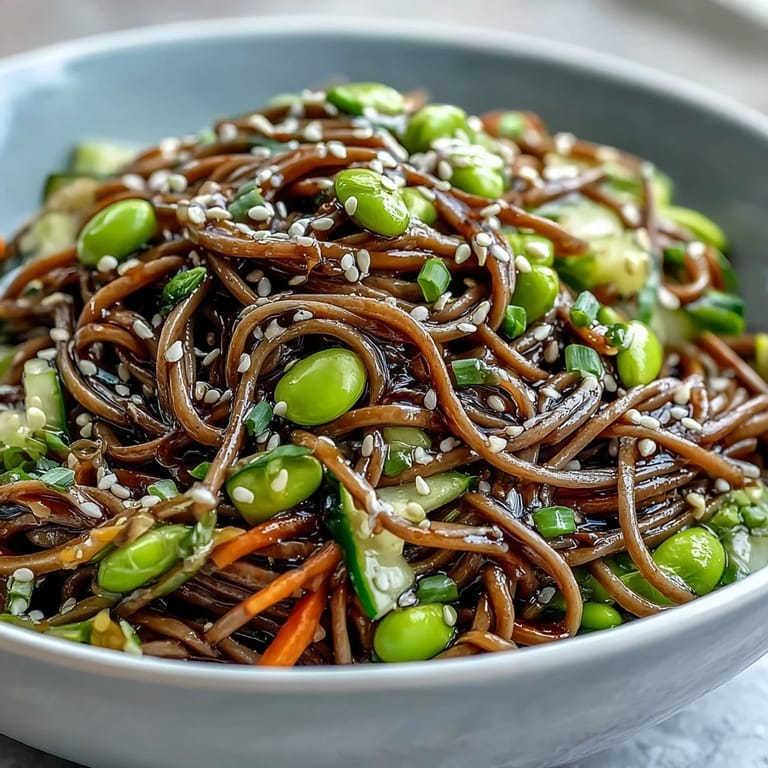
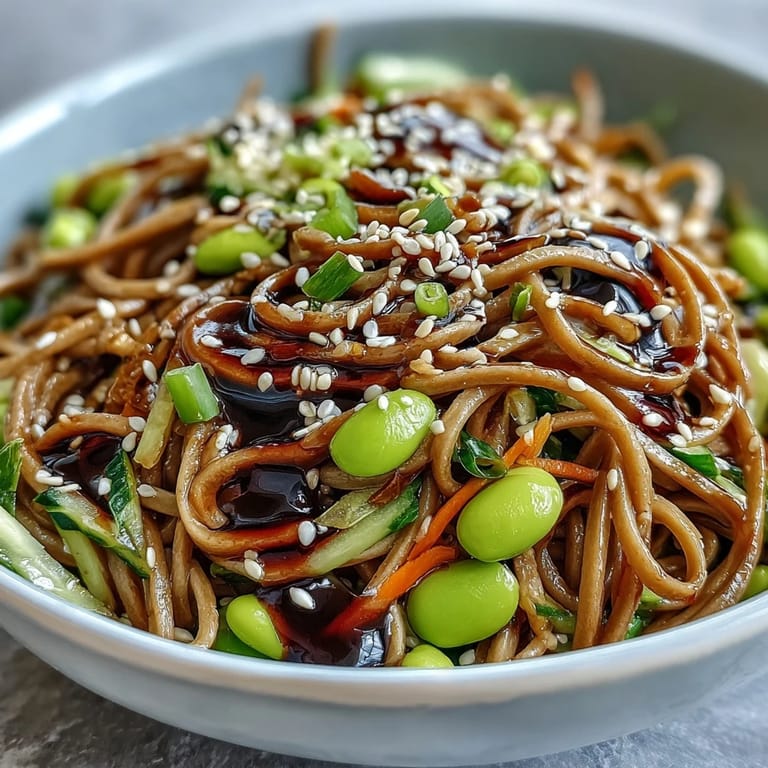
- Divide the dressed noodles among four bowls, then arrange the edamame, cucumber, carrots, and scallions on top in whatever way feels right to you. Drizzle the remaining dressing over each bowl, then sprinkle with toasted sesame seeds and fresh herbs if you're using them.
 Save
Save There's something almost meditative about a cold noodle bowl on a day when everything feels too warm and too much. The simplicity of it—noodles, vegetables, sauce—becomes exactly what you needed without trying too hard. It's the kind of food that proves you don't need complicated recipes to feel genuinely nourished.
When to Serve This
Summer heat demands cold meals, and this bowl answers that call better than almost anything else in your rotation. I make it for lunch when I want something substantial but not heavy, and I've learned that it's perfect served alongside chilled green tea or even a crisp white wine if you're having that kind of evening. The bowl also travels beautifully—pack it in a container with the dressing on the side, and you've got a lunch that tastes intentional rather than sad.
Building Your Own Version
Once you've made this bowl once, you'll start seeing it as a template rather than a strict recipe. Snap peas, bell peppers, radishes, thinly sliced cabbage, roasted mushrooms, or steamed broccoli all work beautifully. I've also added soft-boiled eggs, grilled tofu, and even leftover roasted chicken when the bowl needed more protein. The dressing is flexible too—if tahini isn't your thing, smooth peanut butter works just as well, and you can adjust the soy sauce and vinegar ratios based on whether you want something more savory or more tangy.
Storage and Make-Ahead Tips
This bowl actually improves after sitting in the refrigerator for a few hours as the flavors meld and deepen, making it perfect for meal prep if you've got the time. Keep the dressing separate if you're storing it overnight, then toss everything together when you're ready to eat. The noodles stay tender and the vegetables stay crisp as long as they're kept refrigerated, and the whole thing lasts up to two days before the noodles start to absorb too much moisture and lose their character.
- Store cooked noodles and vegetables in separate containers if possible to maintain texture.
- Keep the dressing in a jar or bottle so you can shake it together quickly before serving.
- Add fresh herbs and sesame seeds right before eating rather than prepping them with everything else.
 Save
Save This bowl has become my go-to when I want to eat well without drama, a reliable friend that shows up the same way every time but never gets boring. Make it once, and I think you'll understand why.
Recipe Questions & Answers
- → Are soba noodles gluten-free?
Traditional soba noodles contain both buckwheat and wheat flour. Look for 100% buckwheat noodles certified gluten-free. Also use tamari instead of soy sauce to make the entire bowl gluten-free.
- → Can I make this ahead of time?
Yes! Prepare components up to 2 days in advance. Store noodles, vegetables, and dressing separately. Toss with dressing just before serving to prevent sogginess. The flavors actually develop nicely overnight.
- → What can I substitute for tahini?
Smooth peanut butter, almond butter, or cashew butter work well. For nut-free, use sunflower seed butter. Each adds slightly different flavor notes but maintains the creamy texture.
- → How do I prevent soba noodles from sticking?
Rinse thoroughly under cold water after cooking to remove excess starch. Toss with a small amount of sesame oil or portion of the dressing immediately. This keeps noodles separate and coated.
- → Can I serve this warm instead of cold?
Absolutely! Serve noodles slightly warm and skip the cold rinse. The vegetables can be lightly steamed or raw, and the dressing works at any temperature. It's particularly comforting during colder months.
- → How do I julienne vegetables efficiently?
Use a julienne peeler, mandoline slicer, or sharp knife. Cut vegetables into thin, uniform matchsticks about 2-3 inches long. This ensures even texture and makes eating easier.