 Save
Save I'll never forget the Hanukkah when my aunt pulled out a massive platter from the kitchen and the whole room fell silent. There, arranged in perfect geometric precision, was a six-pointed Star of David made entirely of fresh vegetables, greens, and cheese. It was so beautiful that nobody wanted to disturb it at first, but the moment someone took that first bite, the whole table erupted. That's when I realized that food could be art, and art could nourish both the soul and the body.
I still remember my neighbor stopping by during a holiday open house and doing a literal double-take when she saw this star arranged on our table. She asked if I'd made it myself, and when I said yes, she wanted the recipe right then and there. Now she makes it every year, and has added her own twist with roasted chickpeas in the center. That's when I knew this recipe had become something special—something worth sharing.
Ingredients
- Baby spinach and arugula: These form your verdant foundation—the peppery arugula adds a subtle bite that makes the vegetables sing. I've learned to dry them really well; even a little moisture can make the whole platter wilt before serving
- Cucumbers: Slice them thin and uniform for a crisp outline. I use a mandoline now, which changed my life and makes the triangles look professionally sharp
- Cherry tomatoes: These little jewels provide sweetness and bright color. Halving them keeps them from rolling around and ruining your geometric vision
- Bell peppers (yellow and red): The color contrast is everything here. I always choose peppers that are firm and glossy—they hold their shape and look vibrant for hours
- Purple cabbage: The slight crunch and earthy color add sophistication. I love how it brings depth to the design
- Red onion: Just a whisper of sharpness. I slice it paper-thin so it doesn't overpower
- Feta cheese: Use quality feta if you can—it's worth it. The briny, creamy texture anchors the whole composition
- Kalamata olives: These add that Mediterranean soul to the dish. Halving them helps them nestle into the design
- Capers: Optional, but I find they add a delightful briny surprise
- Toasted pine nuts: The nutty richness and golden color frame the star beautifully. Toast them yourself for the best flavor
- Extra virgin olive oil: Don't skimp here. A good oil elevates the entire platter
- Lemon juice and red wine vinegar: This combination creates the perfect balance—bright and slightly sophisticated
- Honey and Dijon mustard: These tiny amounts emulsify the dressing and add subtle depth
Tired of Takeout? 🥡
Get 10 meals you can make faster than delivery arrives. Seriously.
One email. No spam. Unsubscribe anytime.
Instructions
- Start with your canvas:
- Choose a large, flat platter—ideally something white or neutral so your colors really pop. I use an old ceramic platter my grandmother gave me, which makes this feel even more meaningful. The size matters; you want enough room for the vegetables to breathe and for the star to be unmistakably clear
- Lay your green foundation:
- Spread the spinach and arugula in an even, thin layer. Imagine you're painting with greens—you want to see the platter just barely peeking through. This isn't the time to pile. The greens are your canvas, and they should support the art you're about to make
- Map out your star:
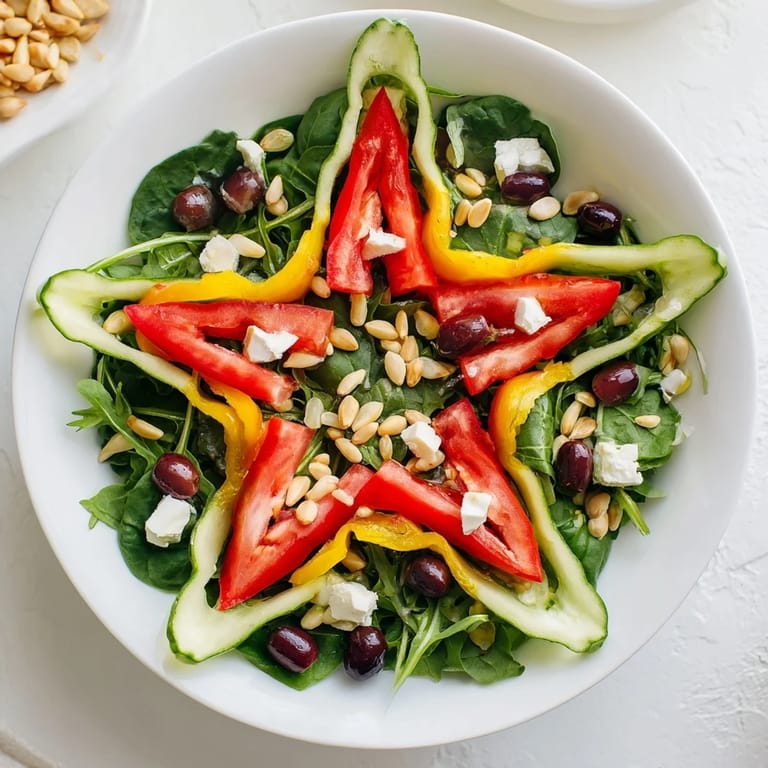
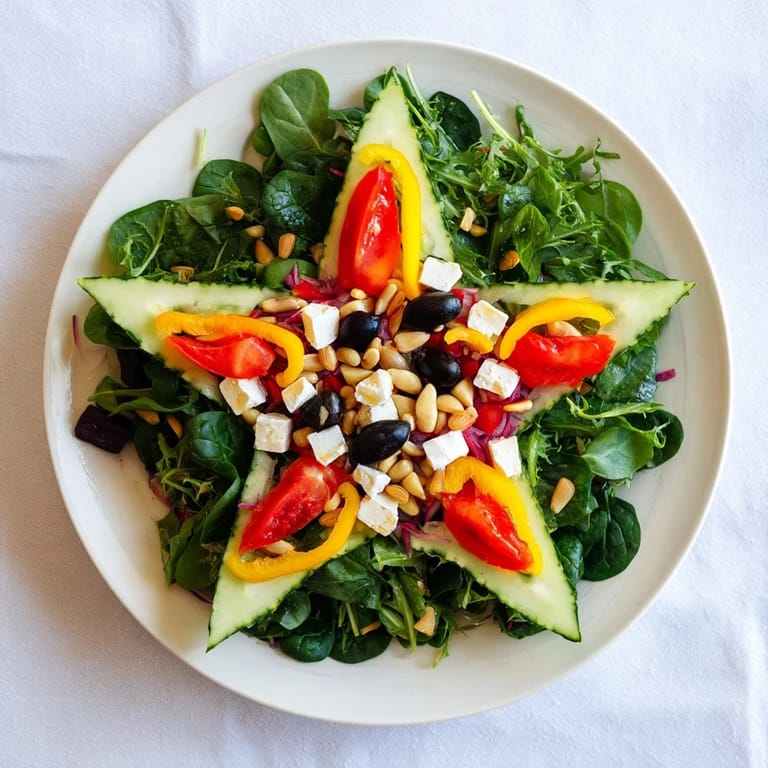
- Take a step back and imagine the geometry. Two overlapping equilateral triangles, one pointing up, one pointing down. I sometimes use a ruler and lightly mark it with a thin piece of thread or even just visualize it. If you're nervous, practice on paper first. The cucumber slices form this outline—arrange them slowly, adjust as you go, and step back frequently to check your angles
- Build the sections:
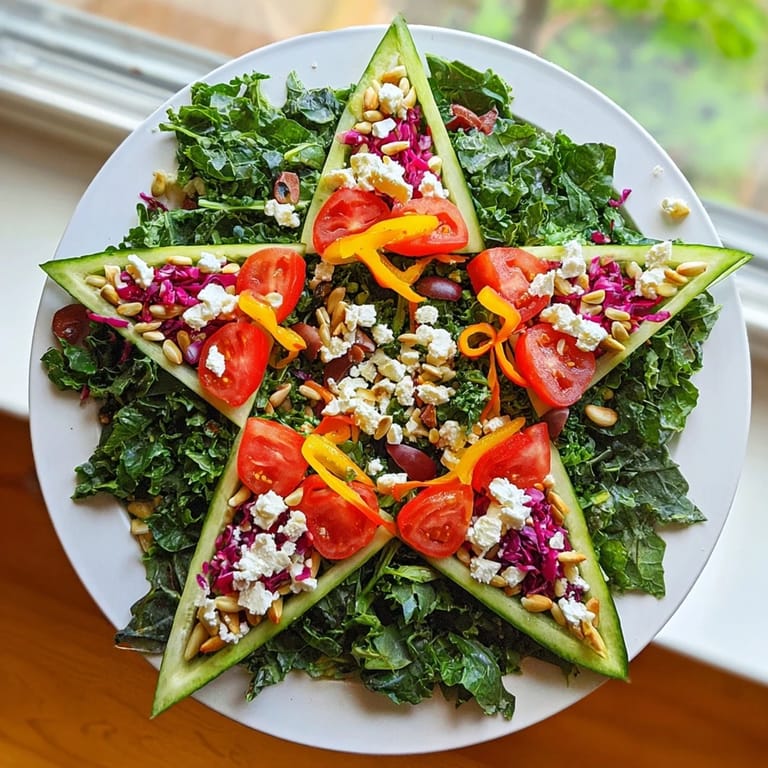
- This is where the magic happens. Within each triangular section, group different vegetables to create color blocking. Cherry tomatoes in one section, bell peppers in another, purple cabbage in another. Think of it like watercolor—let the colors sit next to each other and let your eyes enjoy the transition. There's no rush here; this is meditation
- Add the sparkle:
- Use the feta, olives, capers, and pine nuts to outline the points of the star and accent the edges. These are your jewels—place them with intention. This is where precision matters because these little elements are what catch the eye and make people gasp
- Whisk your dressing:
- In a small bowl, combine the oil, lemon juice, vinegar, honey, and mustard. Whisk it really well—you'll feel it coming together, becoming silkier. Taste it and adjust. This is your moment to make it yours. I usually add a touch more lemon juice because I love brightness
- The final touch:
- Drizzle the dressing just before serving, or pass it on the side. This is important—a wet salad is a sad salad. Let people add dressing to taste. Serve immediately and watch their faces
 Save
Save Last Hanukkah, my youngest daughter asked if we could make the star salad for her school potluck. Watching her carefully arrange the vegetables, tongue poking out in concentration, made me realize this wasn't just about food anymore. It was about creating something beautiful together, something that connected us to tradition and to each other. When her teacher asked where the recipe came from, my daughter said, 'My mom taught me,' and I've never felt prouder.
Making It Your Own
This recipe is a foundation, not a rulebook. I've made it with baby kale instead of spinach, with heirloom tomatoes in late summer, with roasted beets for a deeper color palette. One year, I added shredded carrots for a brighter orange note. The beauty of a composed salad is that it welcomes your creativity. Think about what you love, what looks beautiful to you, and let that guide your choices. The only rule is that it should make your heart happy.
Serving Suggestions
This star is magnificent on its own, but it also plays beautifully with other dishes. I serve it at the start of a meal as a showstopping appetizer, or as part of a larger spread with grilled meats, fresh pita, and hummus. For a lighter meal, we add chickpeas or grilled chicken strips right into the vegetables. The dressing is robust enough to carry the meal, but you can also serve it alongside other condiments so guests can customize their plates.
The Deeper Meaning
Every time I make this salad, I think about what the Star of David means—protection, wholeness, the balance of masculine and feminine. Creating it from fresh, life-giving vegetables feels like a small act of intention. It's a way of saying that celebration doesn't have to be complicated or time-consuming to be meaningful. Sometimes the most powerful moments come from taking simple ingredients and arranging them with care.
- Make the dressing ahead and let the flavors meld for even better taste
- Use a salad spinner to dry your greens perfectly—damp greens will wilt
- If you're making this for a large crowd, you can assemble it on a sheet pan instead of a platter for easier transport
 Save
Save This salad is more than just vegetables on a plate. It's an invitation to slow down, to create beauty, to celebrate. Every time you make it, you're participating in something ancient and meaningful. I hope it brings as much joy to your table as it has to mine.
Recipe Questions & Answers
- → How is the Star of David shape formed with the vegetables?
Two overlapping equilateral triangles are outlined using thin cucumber slices, creating the recognizable six-pointed star shape on the salad platter.
- → Can I substitute the feta cheese for a dairy-free option?
Yes, you can use vegan feta or omit cheese altogether to keep the dish dairy-free.
- → What dressing complements this salad best?
A lemony olive oil dressing with red wine vinegar, honey, and Dijon mustard adds bright and balanced flavors that complement the fresh ingredients.
- → Are there any suggested additions for extra protein?
Cooked chickpeas or grilled chicken strips can be scattered within the star to increase protein content.
- → What tools help in creating the geometric shapes?
A sharp knife and optionally cookie cutters can assist in maintaining clean, precise triangle shapes for the star.
- → Is the salad suitable for gluten-free diets?
Yes, all ingredients are naturally gluten-free, making this an excellent option for gluten-sensitive diets.