 Save
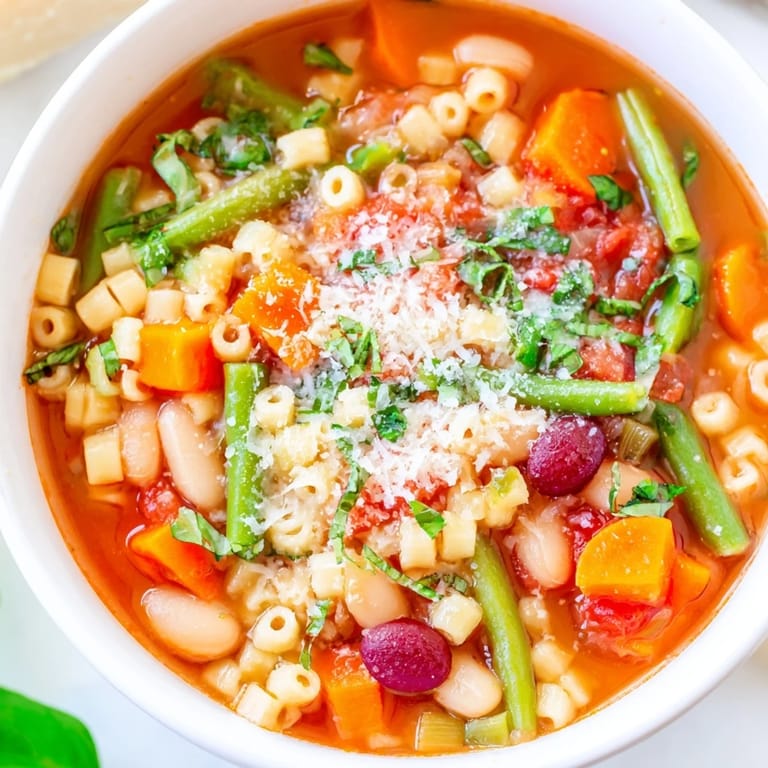
Save I discovered minestrone not in a cookbook but in a kitchen filled with the smell of my neighbor's simmering pot on a cold October afternoon. She'd invited me over after I'd mentioned feeling under the weather, and the first spoonful transported me instantly—warm, alive, genuinely nourishing in a way that felt like care itself. That moment taught me that the best soups aren't complicated; they're just honest vegetables cooked with intention and a little bit of love.
I made this for my family on a rainy Tuesday when nobody wanted to go anywhere, and somehow a simple soup became the reason everyone came home early just to eat together. The basil at the end—fresh and bright against all that deep tomato—felt like opening a window in the middle of winter. That's when I realized minestrone wasn't just food; it was a way to bring people back to the table.
Ingredients
- Olive oil: Don't skip this or use a substitute; it's the foundation that carries everything else forward and prevents the vegetables from sticking as they soften.
- Onion, carrots, celery: These three build the flavor base—the holy trinity that every good soup starts with, and they teach your palate what's coming.
- Garlic: Added after the softer vegetables so it doesn't burn, bringing a sharp warmth that deepens as it cooks.
- Zucchini and green beans: Cut them the same size as your pasta so every bite feels intentional and balanced.
- Diced and crushed tomatoes: Together they create body and texture; the diced ones give you something to bite, the crushed ones melt into the broth.
- Vegetable broth: Use the good stuff here—it's not a background player, it's part of the soul of the soup.
- Oregano and thyme: Dried herbs work beautifully in long-simmered soups because the heat opens them up over time.
- Tomato paste: Just two tablespoons concentrates all the tomato flavor and adds a subtle richness that keeps people guessing what makes it taste so good.
- Small pasta: Ditalini is traditional, but elbow works just as well; tiny shapes mean every spoonful has some.
- Cannellini beans: They soften without falling apart and add protein that makes this a meal instead of just a starter.
- Fresh basil and parsley: Add these at the very end so they stay bright and alive; this is where the soup goes from warm to vivid.
Tired of Takeout? 🥡
Get 10 meals you can make faster than delivery arrives. Seriously.
One email. No spam. Unsubscribe anytime.
Instructions
- Build your aromatics:
- Heat the olive oil over medium heat and add your onion, carrots, and celery. You'll know they're ready when the onion turns translucent and you can smell the sweetness releasing—about five minutes, and don't rush it because this is where everything gets its foundation.
- Wake up the vegetables:
- Stir in the garlic, zucchini, and green beans, cooking for just three minutes. The garlic should smell fragrant and the green beans should still have a slight crunch because they'll keep cooking later.
- Build the broth:
- Add all your tomatoes, broth, herbs, and tomato paste. Stir it well so the paste dissolves evenly, then bring the whole pot to a boil—you'll see the surface shimmer and small bubbles race across it.
- Let it simmer:
- Drop the heat down and let it cook uncovered for fifteen minutes. The soup will deepen in color and the vegetables will soften further, and the flavors will start talking to each other instead of being separate ingredients.
- Add the pasta and beans:
- This is when the soup transforms into something more substantial. Stir them in and let everything simmer together for another ten to twelve minutes—the pasta will soften and the beans will warm through, and the broth will become a little creamy from the starch released by the pasta.
- Finish with fresh herbs:
- Right before you serve, stir in your basil and parsley. Taste it and adjust the salt and pepper—remember that Parmesan is salty if you're going to top it with cheese.
 Save
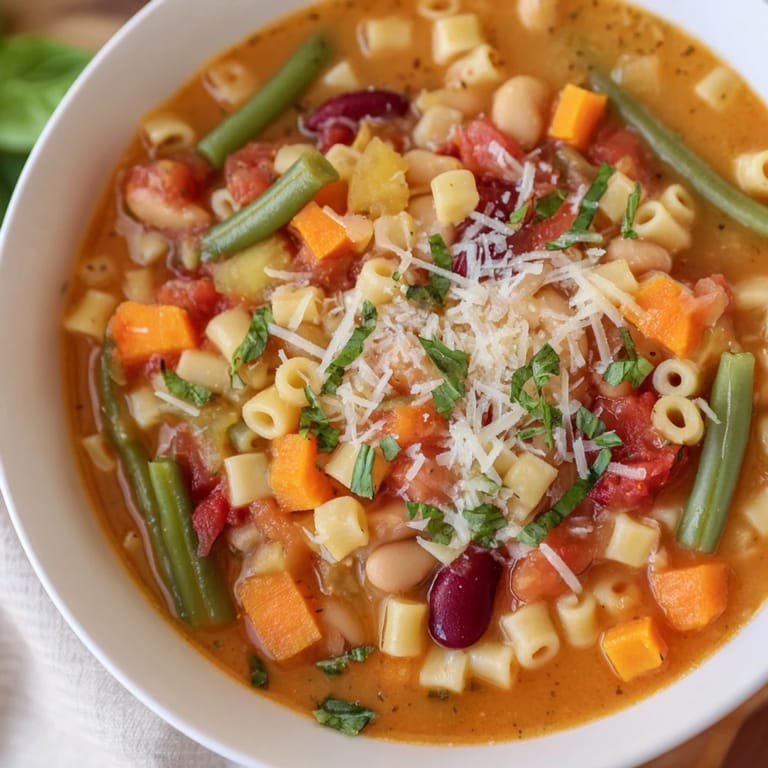
Save I learned something important the night I forgot the basil and served the soup anyway—my daughter asked if something was wrong with it before she'd even tasted it, because it looked flat and tired. The next time I made it with fresh basil stirred in at the last second, she didn't ask questions; she just asked for more. That's when I understood that recipes aren't just measurements; they're conversations between intention and instinct.
The Magic of Layered Flavors
What makes minestrone special isn't any single ingredient but the way each one arrives at its own moment. The tomato paste gets cooked into the oil so it develops depth; the herbs have time to release themselves into the broth; the fresh basil keeps its brightness because it never sees direct heat. This is how a simple soup becomes something you remember, not just something you eat.
Making It Your Own
The beauty of minestrone is that it wants to be adapted—add spinach or kale in the last few minutes if you want more greens, swap the green beans for something in season, use whatever small pasta you have on hand. I've made versions with roasted red peppers, added a splash of balsamic vinegar, thrown in leftover roasted vegetables. Each time the soup absorbs what you give it and becomes a little more yours, a little more about the season you're in.
Serving and Storage
Minestrone tastes even better the next day when the flavors have settled in together, so it's perfect for making ahead. The soup keeps in the fridge for up to five days and freezes beautifully for months—just freeze it before adding the pasta and fresh herbs, then cook those when you reheat.
- Always serve it hot with a drizzle of good olive oil and a handful of Parmesan if you like, or let everyone customize their own bowl.
- Have some crusty bread nearby because the soup wants to be sopped up and savored, not rushed.
- Remember that this is the kind of dish that improves with time, so never apologize for cooking it ahead.
 Save
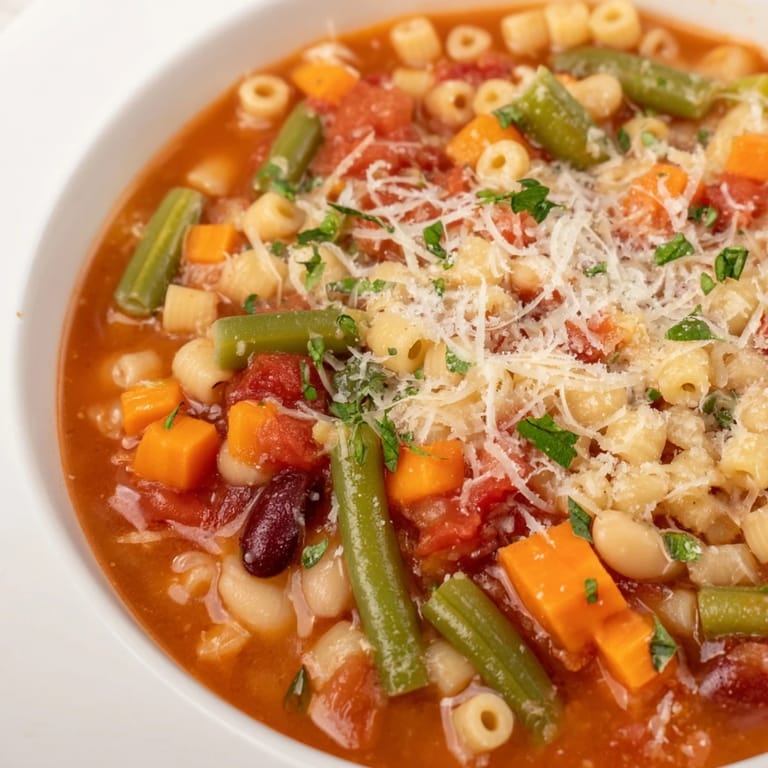
Save There's something about a bowl of minestrone that makes you slow down and pay attention—to the flavors, to the people across the table, to the fact that something this warming started with nothing but vegetables and patience. Make it when you need comfort, when you want to feed people well, whenever you want proof that the simplest things done with care are always the most worth remembering.
Recipe Questions & Answers
- → Can I make this soup gluten-free?
Yes, simply use gluten-free pasta instead of traditional wheat pasta to keep the dish gluten-free.
- → What vegetables are included in this minestrone?
It includes onion, carrots, celery, zucchini, green beans, and canned tomatoes for a hearty vegetable mix.
- → How long does it take to cook?
The soup requires about 35 minutes of cooking time after 20 minutes of preparation.
- → Can I add extra greens to this dish?
Yes, spinach or kale can be added towards the end of cooking for additional nutrients and flavor.
- → What herbs enhance the flavor in this dish?
Dried oregano, thyme, and fresh basil and parsley provide aromatic freshness and depth to the broth.
- → Is Parmesan cheese necessary?
Parmesan is optional and can be omitted for a vegan version without compromising the overall taste.