 Save
Save On a sweltering afternoon, I stood in my kitchen watching mango juice drip down my wrists, suddenly craving something that felt like summer in a glass. I'd been thinking about my grandmother's mango sago—that silky, nostalgic dessert—but wanted to make it work with what I actually keep in my pantry these days. Chia seeds caught my eye, and coconut milk was already there, and somehow those humble ingredients transformed into something that tastes like a tropical escape without any dairy at all. The first spoonful surprised me: creamy, fruity, and impossibly easy to pull together.
Last summer, I brought four of these cups to my partner's family dinner, nervous because everyone there seemed like "real" cooks. His mother took one spoonful and asked if I'd learned to make it in Thailand, which made me laugh—I'd invented it on a Tuesday at home. That moment taught me that sometimes the best dishes aren't the ones following tradition perfectly, but the ones made with intention and a little bit of creative mixing. Now whenever someone asks for a make-ahead dessert, this is what I reach for.
Ingredients
- Chia seeds: These tiny powerhouses absorb liquid and thicken the pudding into something luxuriously creamy without any dairy or strange additives, and they're worth buying from a good source because quality makes a real difference in taste.
- Full-fat canned coconut milk: Shake the can well or it'll be mostly water at the top, and that matters—you need the richness to carry the whole dessert, so don't reach for the lite version here.
- Maple syrup or agave: Either works beautifully, though maple syrup adds a gentle warmth that agave doesn't quite match, but follow your heart and what you have on hand.
- Vanilla extract: A teaspoon goes a long way and ties the tropical flavors together in a way that feels complete rather than one-note.
- Fresh ripe mangoes: This is where you can't cut corners—an unripe mango will taste green and chalky, so squeeze gently and choose ones that yield slightly to pressure and smell sweet at the stem.
- Lime juice: A tablespoon or two brightens the mango and prevents it from tasting flat or overly sweet, which is the difference between this tasting fresh and tasting cloying.
- Coconut cream: This is the thick cream that rises to the top of a full-fat coconut milk can if you don't shake it, and it's the indulgent finishing touch that makes people pause mid-bite.
Tired of Takeout? 🥡
Get 10 meals you can make faster than delivery arrives. Seriously.
One email. No spam. Unsubscribe anytime.
Instructions
- Whisk and combine the pudding base:
- Pour your shaken coconut milk into a medium bowl and add the chia seeds, maple syrup, vanilla, and salt, then whisk everything together for a full minute so the chia seeds don't clump into little pockets. This moment feels simple, but thorough mixing is the whole secret to a smooth pudding texture.
- Let time do the work:
- Cover the bowl and slide it into the fridge for at least 2 hours, though overnight is genuinely better—stir it once after 30 minutes when you hear it calling you from the cold. You'll watch it transform from liquid to something that holds a spoon, which never stops feeling like a small kitchen miracle.
- Blend the mango into silk:
- While the pudding sets, peel and dice your mangoes, then blend them with lime juice until completely smooth and pourable. Taste as you go and add a touch more syrup only if the mango tastes tart or underwhelming, but most ripe mangoes are naturally sweet enough to shine alone.
- Build your cups with intention:
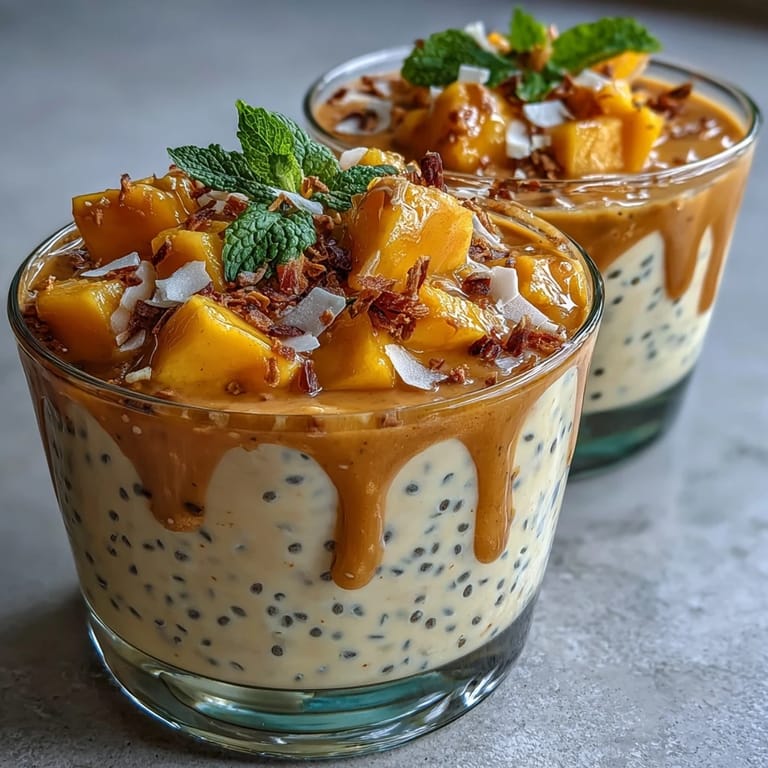
- Spoon a layer of thickened chia pudding into each serving glass, then top with a generous pour of mango purée, then repeat so you have beautiful visible stripes. Some people layer perfectly; I usually just create pleasant chaos and it looks just as good.
- Crown with toppings:
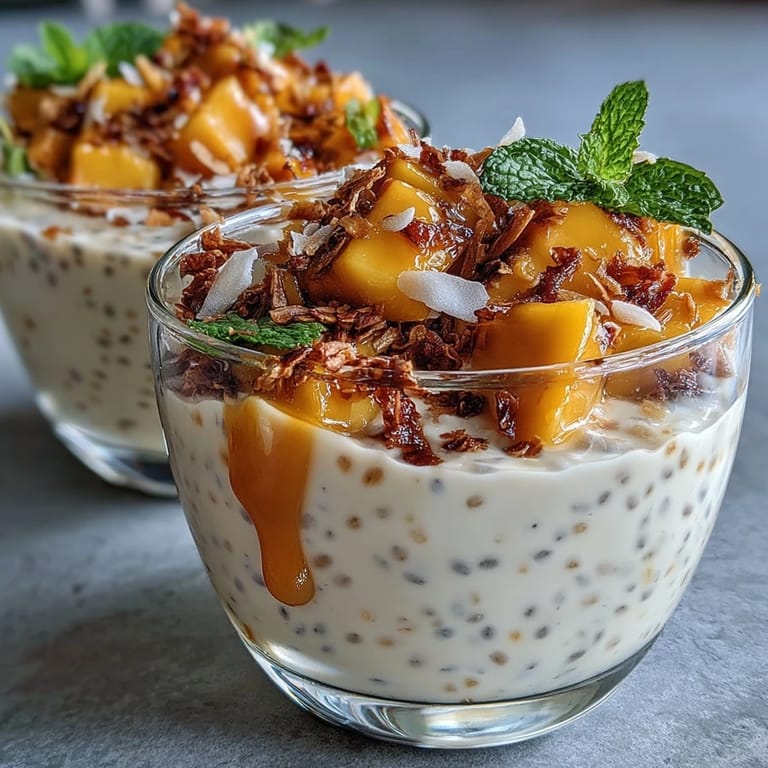
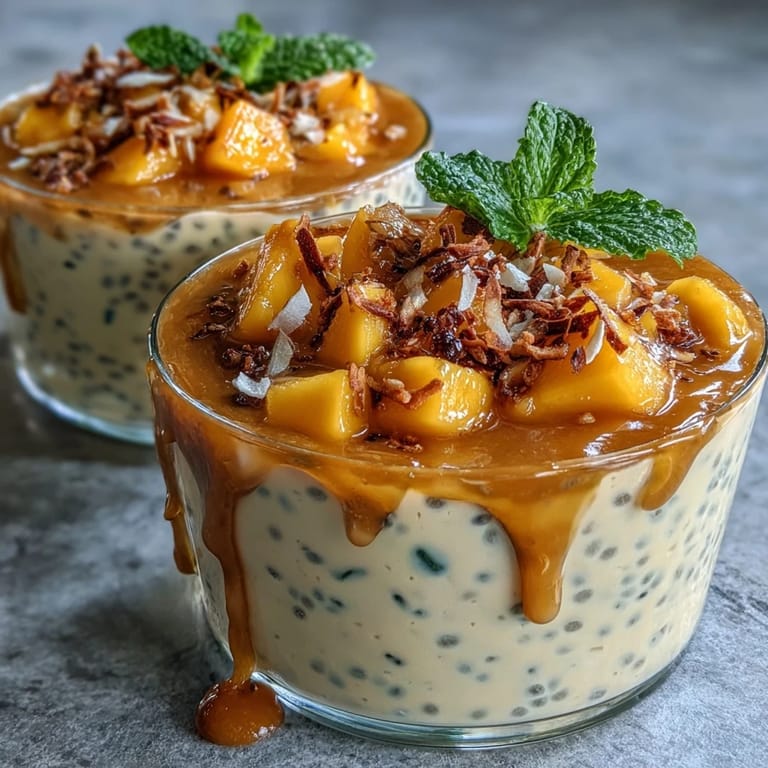
- Top each cup with a dollop of coconut cream, a scatter of toasted coconut flakes, some fresh diced mango, and a leaf or two of mint if you're feeling fancy. This is where the dish stops being practical and starts feeling like something you'd order at a beach café.
- Chill until ready to serve:
- Pop the assembled cups back into the fridge until you're ready to eat them, and they'll taste even better the next day as the flavors meld and settle.
 Save
Save There's a moment after the first spoonful where people always pause and look a little surprised, like they didn't expect something so simple to taste so complete. That's when I know this dish has done what I made it to do—transport someone to somewhere warmer, slower, easier. It's become the dessert I make when I want to feel good about what I'm offering without stressing about technique or timing.
The Beauty of Chia Pudding
Chia pudding sounds complicated when you first hear about it, but it's honestly just chia seeds swimming in liquid until they plump up and create a pudding texture all on their own. The first time I made it, I thought I'd messed up—why would tiny seeds thicken something?—but then I tasted it and understood. The seeds absorb the coconut milk and release something gelatinous that's somehow both creamy and light, which is a texture you can't fake with cornstarch or gelatin no matter how hard you try.
Why Mango and Chia Work Together
Mango brings brightness and sweetness while chia brings body and subtle earthiness, and together they create a balance that feels tropical without being cloying. The tartness from lime juice keeps everything tasting fresh rather than heavy, which matters especially if you're eating this on a warm day or after something savory. It's the kind of combination that tastes like it took planning to develop, but really it's just natural ingredients knowing how to get along.
Make It Your Own
This recipe is sturdy enough to bend with what you have and what you love—swap mango for passion fruit if that's what's calling to you, or add cardamom to the chia base if you want to echo your favorite chai. Some people fold small mango cubes directly into the pudding instead of pureeing it, which changes the texture in a nice way that feels less refined but somehow more real. The coconut cream topping is non-negotiable in my mind, but if you want to add crushed pistachios or a drizzle of something sweet, you won't hear me argue.
- Fold diced fresh mango directly into the chia pudding base if you prefer chunks over smooth layers, which gives it a more textured, almost chunky feel.
- Swap the mango purée for passion fruit pulp or even a blend of both if you want something tangier and more complex.
- Make it ahead up to three days in advance and it will actually taste better as the flavors settle and meld together in the cold.
 Save
Save This dessert has become my proof that cooking doesn't have to be complicated to feel nourishing and special. Whether you're making it for yourself after a long day or bringing it to share with people you care about, it asks nothing of you but good ingredients and a little patience.
Recipe Questions & Answers
- → How do I prevent chia seeds from clumping?
Whisk chia seeds vigorously with coconut milk and sweetener, then stir once after 30 minutes of chilling to break up any lumps for smooth texture.
- → Can I use fresh mango instead of purée?
Yes, ripe diced mango can be folded into the chia layer for extra texture or used as a topping for added freshness.
- → Is it possible to substitute tapioca pearls for chia seeds?
Small cooked tapioca pearls can replace or be combined with chia seeds to replicate a classic sago texture.
- → What sweeteners suit this dish best?
Maple syrup or agave syrup enhance natural sweetness without overpowering the tropical flavors.
- → How long should the pudding chill before serving?
Chill for at least 2 hours or overnight until the chia seeds absorb the liquid and the pudding thickens.
- → What are ideal drink pairings?
Lightly sweet Riesling or iced jasmine tea complement the fruity, creamy layers beautifully.